

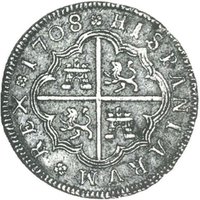
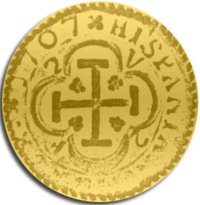
½ Real – Spain
Spain
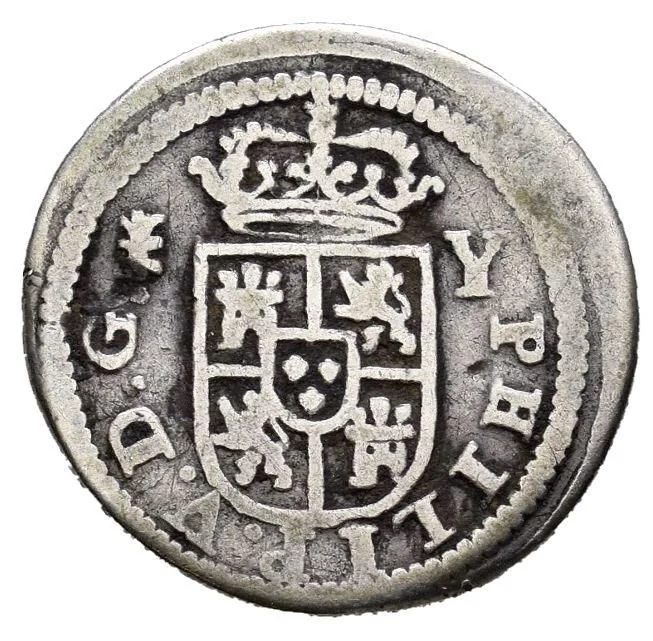
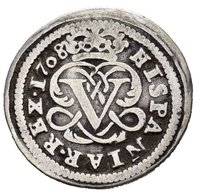
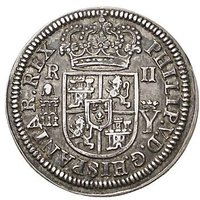
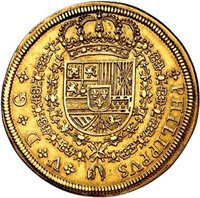
Obverse
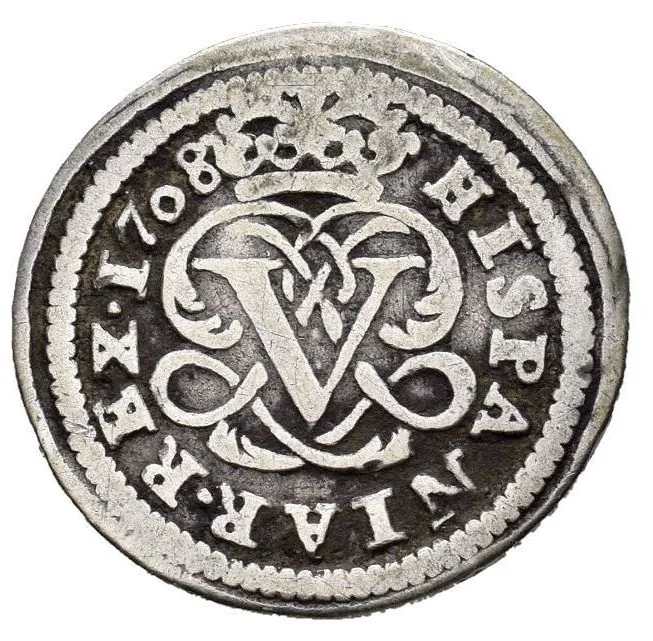
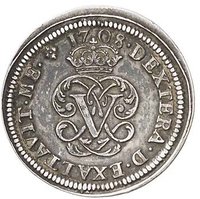
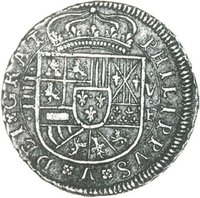
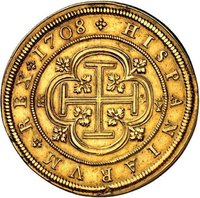
Reverse
Edge
Categories
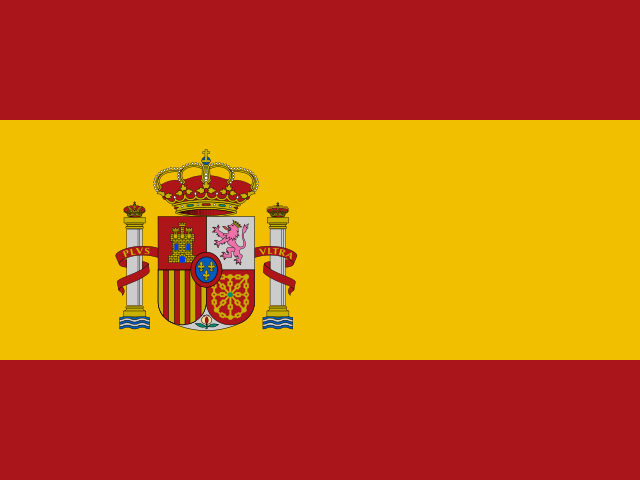
| Symbols> Coat of Arms |
| Symbols> Monogram |
Mints
| Name | Mark |
|---|---|
| Royal Mint of Segovia | — |
Mintings
| Year | Mint Mark | Mintage | Quality | Collection |
|---|---|---|---|---|
| 1708 | Y | — |
Historical background
In 1708, Spain was embroiled in the War of the Spanish Succession (1701-1714), a devastating European-wide conflict over the throne of the ailing and childless King Charles II. The war's immense financial demands placed the Spanish monarchy under extreme strain. To fund its armies and allies, the Crown resorted to desperate fiscal measures, including the repeated debasement of the silver real and the gold escudo. This meant reducing the precious metal content in coins while maintaining their face value, a practice that led to rampant inflation, a loss of public confidence in the currency, and severe economic disruption across the empire.
The monetary system itself was complex and fragmented. Alongside the official coinage, various regions, particularly the Crown of Aragon (Catalonia, Valencia, Aragon), often operated with a degree of fiscal autonomy and sometimes issued their own vellón (copper or billon) currency for local use. Furthermore, the widespread use of vales reales (royal promissory notes) as a form of paper credit to pay state suppliers had begun, but these quickly traded at a steep discount, further complicating the financial landscape. The economy was effectively sustained by the influx of silver from the American colonies, but even this vital flow was increasingly intercepted by foreign powers or diverted to service debts.
Consequently, the currency situation in 1708 was one of profound instability and devaluation. Prices soared as the intrinsic value of coins plummeted, causing hardship for the populace and crippling legitimate commerce. This financial chaos was both a cause and a symptom of the broader political crisis, as control of Spain's treasury became a key strategic objective for both the Bourbon claimant, Philip V, and his Habsburg rival, Archduke Charles. The eventual Bourbon victory would lead to centralizing reforms, but in 1708, Spain's monetary system was a battlefield in its own right, reflecting the kingdom's precarious and fractured state.
The monetary system itself was complex and fragmented. Alongside the official coinage, various regions, particularly the Crown of Aragon (Catalonia, Valencia, Aragon), often operated with a degree of fiscal autonomy and sometimes issued their own vellón (copper or billon) currency for local use. Furthermore, the widespread use of vales reales (royal promissory notes) as a form of paper credit to pay state suppliers had begun, but these quickly traded at a steep discount, further complicating the financial landscape. The economy was effectively sustained by the influx of silver from the American colonies, but even this vital flow was increasingly intercepted by foreign powers or diverted to service debts.
Consequently, the currency situation in 1708 was one of profound instability and devaluation. Prices soared as the intrinsic value of coins plummeted, causing hardship for the populace and crippling legitimate commerce. This financial chaos was both a cause and a symptom of the broader political crisis, as control of Spain's treasury became a key strategic objective for both the Bourbon claimant, Philip V, and his Habsburg rival, Archduke Charles. The eventual Bourbon victory would lead to centralizing reforms, but in 1708, Spain's monetary system was a battlefield in its own right, reflecting the kingdom's precarious and fractured state.
✨ Legendary