

1 maravedi – Spain
Add to wishlist
Spain
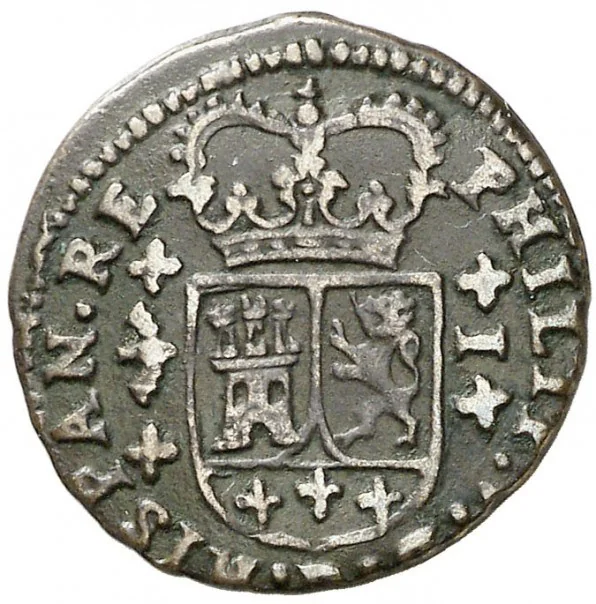
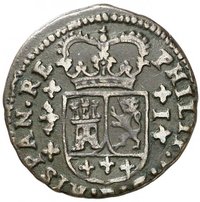
Obverse
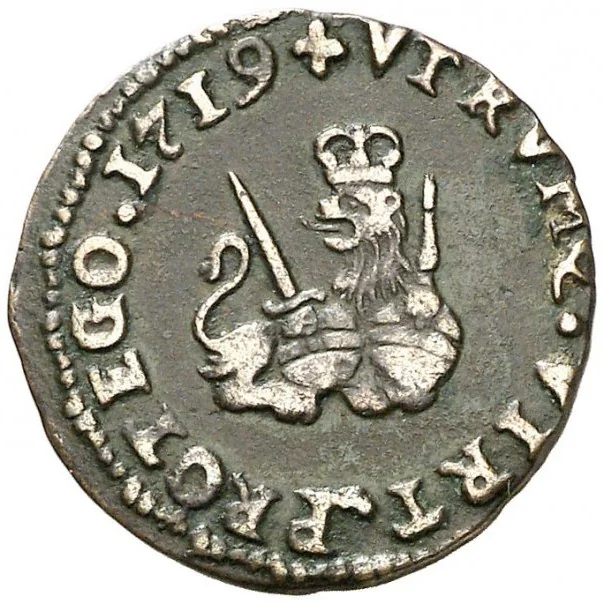
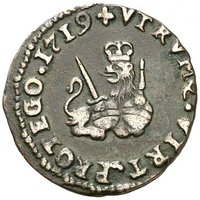
Reverse
Description:
Crowned lion holding a scepter and saber, with two globes at its feet.
Inscription:
VTRVMQ. VIRT. PROTEGO.
1719 ✣
1719 ✣
Script: Latin
Edge
Mints
| Name | Mark |
|---|---|
| Valencia | — |
Mintings
| Year | Mint Mark | Mintage | Quality | Collection |
|---|---|---|---|---|
| 1719 | — | — | ||
| 1720 | — | — |
Historical background
In 1719, Spain’s currency system was in a state of profound crisis, a direct legacy of the costly War of the Spanish Succession (1701-1714). The new Bourbon monarchy under Philip V, while having secured the throne, inherited a treasury drained by decades of conflict and a complex, debased coinage. To finance ongoing military campaigns, such as the War of the Quadruple Alliance (1718-1720), the crown repeatedly resorted to the short-term expedient of devaluing the coinage by reducing the silver content in coins like the real and the peso. This practice, while generating immediate revenue, fueled rampant inflation and shattered public confidence in the currency.
The monetary landscape was chaotic and fragmented. Alongside officially minted but debased coins, a vast quantity of inferior vellón (copper alloy) currency flooded the economy from earlier emergency mintings. Furthermore, different regions, particularly the formerly independent Kingdom of Aragon, still operated under their own monetary systems, hindering national economic unity. The result was a confusing multiplicity of coins with fluctuating intrinsic and face values, which disrupted trade, encouraged hoarding of older, purer coins (Gresham’s Law in action), and created a speculative black market in currency exchange.
Recognizing the unsustainable situation, the crown had already begun attempts at reform. The pivotal Real Pragmática of 1718 aimed to stabilize the system by calling in old, debased coins for reminting at a higher standard and establishing a new national currency based on the escudo of gold and the real de plata of silver. However, in 1719, this ambitious reform was in its fraught early stages, meeting resistance and practical difficulties. Thus, the year represents a tense transitional moment—caught between the severe monetary disorders of the past and the uncertain, enforced stabilization efforts of the early Bourbon reformers.
The monetary landscape was chaotic and fragmented. Alongside officially minted but debased coins, a vast quantity of inferior vellón (copper alloy) currency flooded the economy from earlier emergency mintings. Furthermore, different regions, particularly the formerly independent Kingdom of Aragon, still operated under their own monetary systems, hindering national economic unity. The result was a confusing multiplicity of coins with fluctuating intrinsic and face values, which disrupted trade, encouraged hoarding of older, purer coins (Gresham’s Law in action), and created a speculative black market in currency exchange.
Recognizing the unsustainable situation, the crown had already begun attempts at reform. The pivotal Real Pragmática of 1718 aimed to stabilize the system by calling in old, debased coins for reminting at a higher standard and establishing a new national currency based on the escudo of gold and the real de plata of silver. However, in 1719, this ambitious reform was in its fraught early stages, meeting resistance and practical difficulties. Thus, the year represents a tense transitional moment—caught between the severe monetary disorders of the past and the uncertain, enforced stabilization efforts of the early Bourbon reformers.
Series: 1719 Spain circulation coins
💎 Extremely Rare