

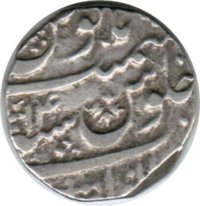
1 Ashrafi – Afghanistan
Afghanistan
Context
Year: 1758
Islamic (Hijri) Year: 1171
Issuer: Afghanistan 
Ruler: Ahmad Shah
Currency:
(1747—1891)
Demonetization: 1922
Material
Diameter: 24 mm
Weight: 3.5 g
Gold weight: 3.50 g
Shape: Irregular round
Composition: Gold
Magnetic: No
References
KM: #Click to copy to clipboard114
Numista: #10474
Value
Bullion value: $583.79
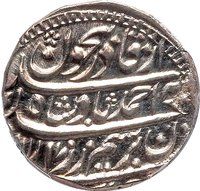
Obverse
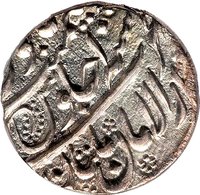
Reverse
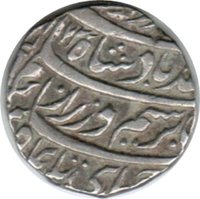
Edge
Mintings
| Year | Mint Mark | Mintage | Quality | Collection |
|---|---|---|---|---|
| 1758 | — | — |
Historical background
In 1758, Afghanistan was not a unified nation but a contested region at the crossroads of three crumbling empires: the Persian Afsharids to the west, the Mughals to the east, and the emerging Durrani Empire from within. The dominant currency in circulation was the Persian silver rupee (often called the rupiah or qiran), a legacy of Nadir Shah Afshar's earlier conquests. These coins, along with older Mughal rupees and various local and tribal issues, formed a complex and fragmented monetary landscape. The primary metal of value was silver, with gold coins like the mohur used for larger state transactions and copper dams or fulus for everyday local trade.
This year fell squarely within the reign of Ahmad Shah Durrani (r. 1747–1772), founder of the modern Afghan state, who was actively consolidating his empire from his capital in Kandahar. While Ahmad Shah continued to use the existing Persian monetary system for administration, he also began to issue his own imperial coinage to assert sovereignty and fund his military campaigns. His minting, however, was not yet fully systematized across his vast and newly conquered territories, which stretched from Khorasan to Delhi. Consequently, the money in use in a specific Afghan city—whether Herat, Kabul, or Peshawar—depended heavily on its recent political history and trade routes.
The currency situation was therefore one of transition and uncertainty. The influx of plunder from Ahmad Shah's repeated invasions of India, particularly the sack of Delhi in 1757, injected massive amounts of Mughal silver and jewels into the Afghan economy, destabilizing older currency values. Trade and taxation relied on a mixture of freshly minted Durrani rupees, older foreign coins, and even weighed bullion. This heterogeneity reflected the political reality: a powerful new kingdom was being forged on the battlefield, but its economic and monetary institutions were still catching up to the ambitions of its ruler.
This year fell squarely within the reign of Ahmad Shah Durrani (r. 1747–1772), founder of the modern Afghan state, who was actively consolidating his empire from his capital in Kandahar. While Ahmad Shah continued to use the existing Persian monetary system for administration, he also began to issue his own imperial coinage to assert sovereignty and fund his military campaigns. His minting, however, was not yet fully systematized across his vast and newly conquered territories, which stretched from Khorasan to Delhi. Consequently, the money in use in a specific Afghan city—whether Herat, Kabul, or Peshawar—depended heavily on its recent political history and trade routes.
The currency situation was therefore one of transition and uncertainty. The influx of plunder from Ahmad Shah's repeated invasions of India, particularly the sack of Delhi in 1757, injected massive amounts of Mughal silver and jewels into the Afghan economy, destabilizing older currency values. Trade and taxation relied on a mixture of freshly minted Durrani rupees, older foreign coins, and even weighed bullion. This heterogeneity reflected the political reality: a powerful new kingdom was being forged on the battlefield, but its economic and monetary institutions were still catching up to the ambitions of its ruler.
💎 Extremely Rare