

¼ Gulden – Spanish Netherlands
Netherlands
Context

Material
Diameter: 27 mm
Weight: 4.28 g
Silver weight: 2.85 g
Shape: Irregular round
Composition: 66.7% Silver
Magnetic: No
Technique: Hammered
Alignment: Coin alignment
flip
References
KM: #Click to copy to clipboard20
Numista: #104689
Value
Bullion value: $8.08
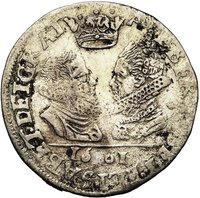
Obverse
Description:
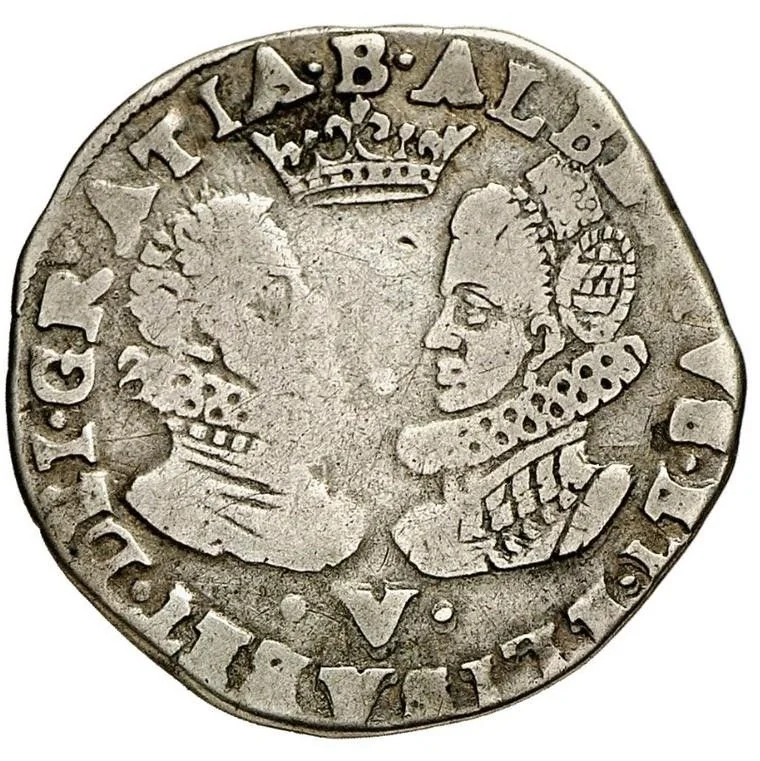
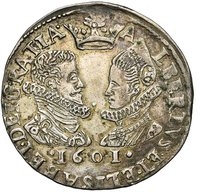
Facing bareheaded busts of Albert and Isabella, with a crown above and value below. Mintmark follows the legend.
Inscription:
ALBERTVS · ET · ELISABETH · DEI · GRATIA ·
V
V
Script: Latin
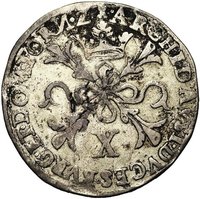
Reverse
Description:
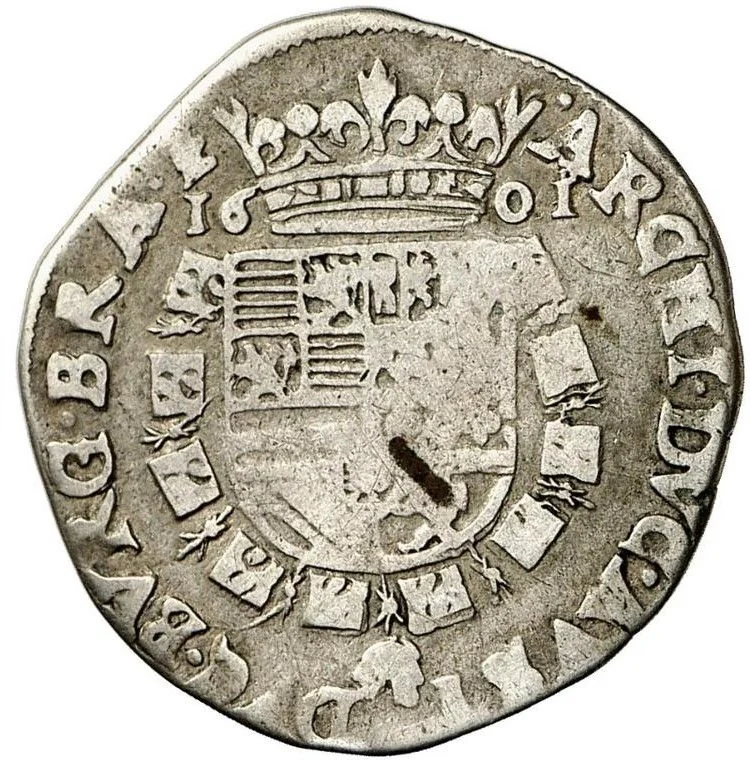
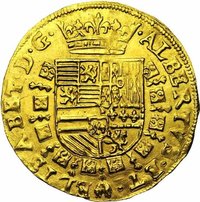
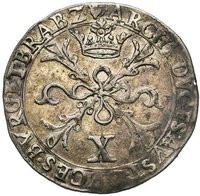
Crowned eight-fold arms divides date within the Golden Fleece collar.
Inscription:
ARCHIDVC AVST DVC BVRG BRA Z
Script: Latin
Edge
Mints
| Name | Mark |
|---|---|
| Royal Mint of Belgium | B |
Mintings
| Year | Mint Mark | Mintage | Quality | Collection |
|---|---|---|---|---|
| 1601 | B | — |
Historical background
In 1601, the Spanish Netherlands was embroiled in the Eighty Years' War (1568-1648), a protracted conflict for independence fought against the Spanish Habsburg crown. The region, a vital economic hub, faced severe monetary instability exacerbated by the immense costs of warfare. The Spanish government, struggling to finance its military campaigns, frequently resorted to debasing coinage—reducing the precious metal content in coins while maintaining their face value. This practice, aimed at creating more currency from limited silver and gold, led to rampant inflation and a loss of public trust in the official currency.
The monetary landscape was chaotic, characterized by a confusing circulation of both good and debased coins from various states. According to Gresham's Law, "bad money drives out good," meaning people hoarded full-weight coins and passed on the debased ones, worsening the quality of money in everyday use. Furthermore, the war had disrupted trade routes, particularly the critical blockade of the Scheldt River leading to Antwerp, strangling the commercial lifeblood of the region and reducing the inflow of sound foreign currency. Local authorities and merchants often had to negotiate exchange rates for dozens of different coins, creating a cumbersome and inefficient economy.
Attempts were made to address the crisis. The Habsburg authorities issued ordinances to fix official values for the myriad of coins in circulation, but these measures were largely ineffective. Enforcement was difficult, and the relentless financial demands of the war undermined any lasting reform. Thus, in 1601, the currency situation was one of profound disorder, reflecting the broader political and military turmoil. It was a key factor in the economic decline of once-prosperous cities and contributed to the growing war-weariness and shifting allegiances within the population.
The monetary landscape was chaotic, characterized by a confusing circulation of both good and debased coins from various states. According to Gresham's Law, "bad money drives out good," meaning people hoarded full-weight coins and passed on the debased ones, worsening the quality of money in everyday use. Furthermore, the war had disrupted trade routes, particularly the critical blockade of the Scheldt River leading to Antwerp, strangling the commercial lifeblood of the region and reducing the inflow of sound foreign currency. Local authorities and merchants often had to negotiate exchange rates for dozens of different coins, creating a cumbersome and inefficient economy.
Attempts were made to address the crisis. The Habsburg authorities issued ordinances to fix official values for the myriad of coins in circulation, but these measures were largely ineffective. Enforcement was difficult, and the relentless financial demands of the war undermined any lasting reform. Thus, in 1601, the currency situation was one of profound disorder, reflecting the broader political and military turmoil. It was a key factor in the economic decline of once-prosperous cities and contributed to the growing war-weariness and shifting allegiances within the population.
✨ Legendary