

½ Groat – England
United Kingdom
Context
Years: 1603–1604
Country: United Kingdom 
Issuer: England 
Ruler: James I
Currency:
(1158—1970)
Demonetized: Yes
Material
References
KM: #Click to copy to clipboard10
Numista: #104461
Value
Bullion value: $2.76
Obverse
Description:
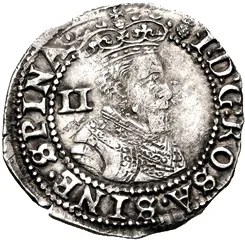
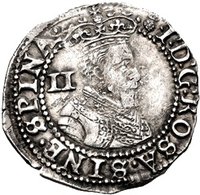
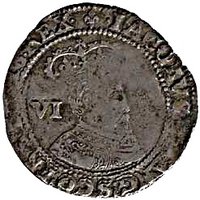
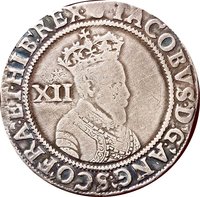
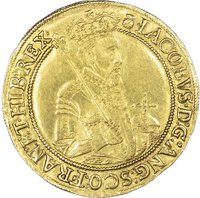
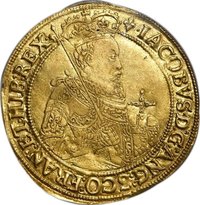
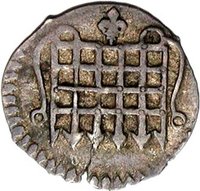
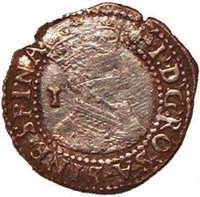
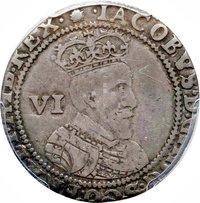
King James I crowned bust right, with denomination behind and legend encircling.
Inscription:
I: D : G : ROSA • SINE • SPINA
Reverse
Description:
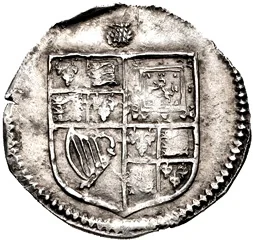
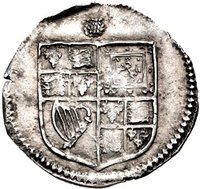
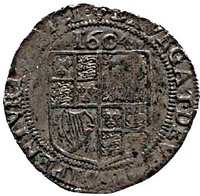
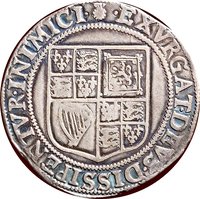
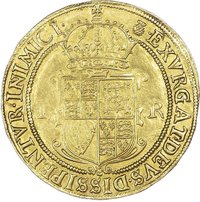
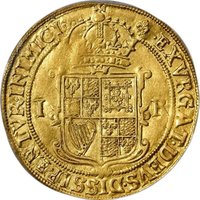
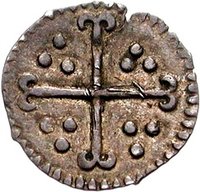
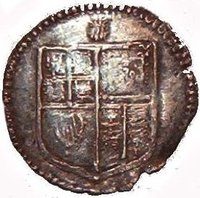
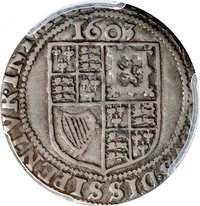
Quartered shield, mintmark above.
Edge
Categories
| Animal> Feline |
| Symbols> Coat of Arms |
Mintings
| Year | Mint Mark | Mintage | Quality | Collection |
|---|---|---|---|---|
| — | — | — | ||
| 1604 | — | — |
Historical background
In 1603, England’s currency system was in a state of significant debasement and instability, a legacy of the Tudor period. The primary coins in circulation were silver—the pound, shilling, and penny—but their precious metal content had been steadily eroded. Most notably, Henry VIII’s "Great Debasement" in the 1540s had drastically reduced the silver content in coins, a practice only partially reversed by Elizabeth I’s recoinage of 1560-61. While Elizabeth restored the silver purity, she reduced the weight of the coins, meaning the pound sterling contained less precious metal than it had a century before. This created a persistent problem of underweight and clipped coins in everyday use, undermining public confidence and facilitating fraud.
The monetary situation was further strained by the "Price Revolution," a Europe-wide phenomenon of sustained inflation driven by the influx of silver from the Spanish New World. While England itself had limited direct imports of bullion, the increased supply of precious metals in Europe devalued money and drove up prices throughout the 16th century. This inflation eroded the real value of fixed rents and wages, causing social tension and complicating royal finance. Consequently, the face value of coins was increasingly divorced from their intrinsic metal worth, prompting hoarding of good-quality coins and the circulation of worn or inferior ones, which disrupted trade.
Upon James VI of Scotland ascending the English throne as James I in 1603, he inherited these deep-seated monetary challenges. The union of the crowns also created an immediate and practical currency problem: Scotland’s coinage was of much lower intrinsic value than England’s. This disparity threatened to cause economic dislocation along the border, as bad money could potentially drive out the good. While a full recoinage or formal union of the currencies was considered, James initially opted for a proclamation affirming the separate currencies at a fixed exchange rate, a stopgap measure that proved difficult to enforce. Thus, the currency situation in 1603 was one of underlying weakness, inflationary pressure, and new complications born from the Union of the Crowns, setting the stage for future financial reforms and crises.
The monetary situation was further strained by the "Price Revolution," a Europe-wide phenomenon of sustained inflation driven by the influx of silver from the Spanish New World. While England itself had limited direct imports of bullion, the increased supply of precious metals in Europe devalued money and drove up prices throughout the 16th century. This inflation eroded the real value of fixed rents and wages, causing social tension and complicating royal finance. Consequently, the face value of coins was increasingly divorced from their intrinsic metal worth, prompting hoarding of good-quality coins and the circulation of worn or inferior ones, which disrupted trade.
Upon James VI of Scotland ascending the English throne as James I in 1603, he inherited these deep-seated monetary challenges. The union of the crowns also created an immediate and practical currency problem: Scotland’s coinage was of much lower intrinsic value than England’s. This disparity threatened to cause economic dislocation along the border, as bad money could potentially drive out the good. While a full recoinage or formal union of the currencies was considered, James initially opted for a proclamation affirming the separate currencies at a fixed exchange rate, a stopgap measure that proved difficult to enforce. Thus, the currency situation in 1603 was one of underlying weakness, inflationary pressure, and new complications born from the Union of the Crowns, setting the stage for future financial reforms and crises.
Series: 1603 England circulation coins
💎 Very Rare