

1 dollar – United States
Add to wishlist
United States
Context
Years: 1795–1798
Issuer: United States
Period:
(since 1776)
Currency:
(since 1785)
Total mintage: 370,274
Material
References
KM: #
Numista: #10355
Value
Exchange value: 1 USD = $1.00
Bullion value: $60.05
Obverse
Description:
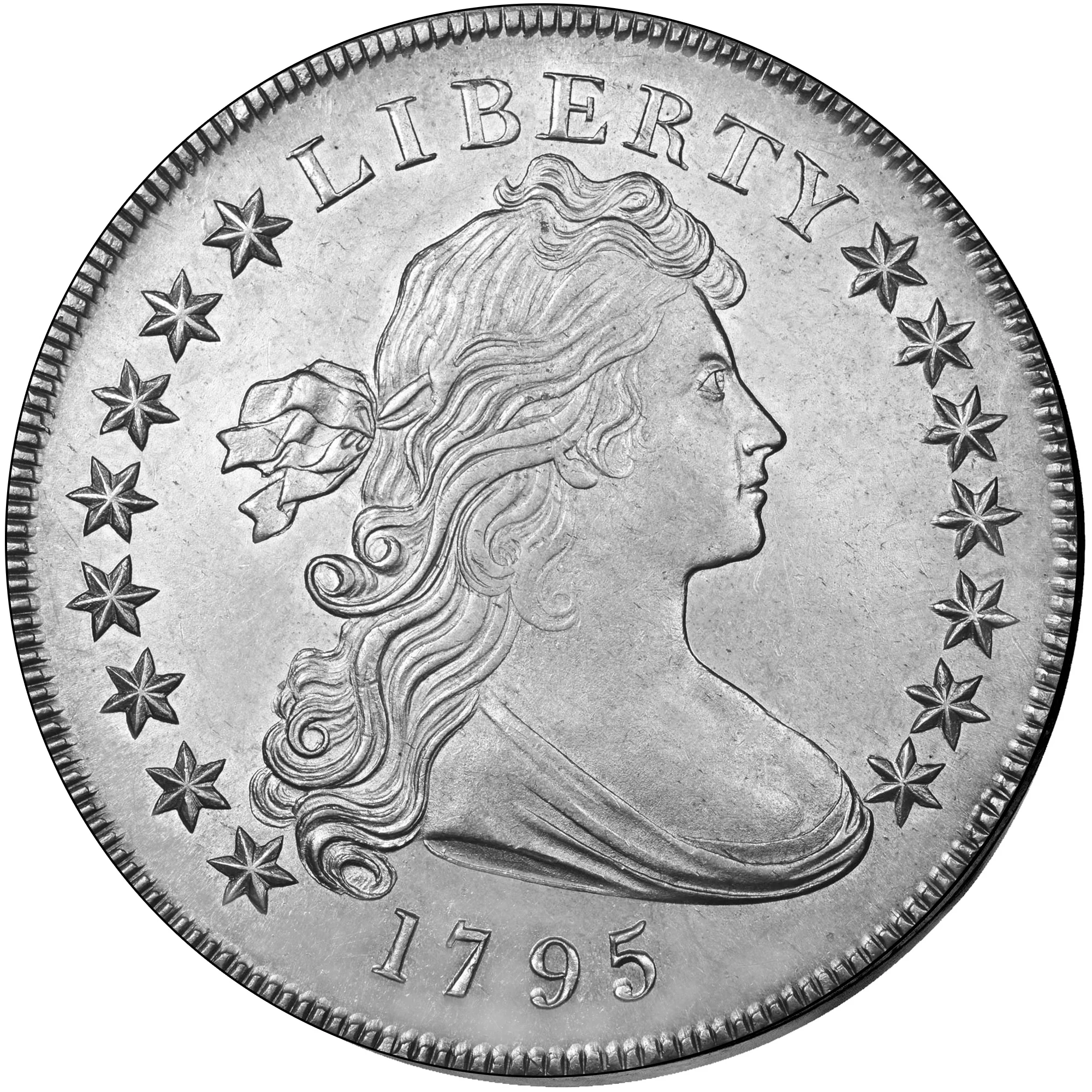
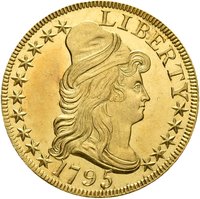
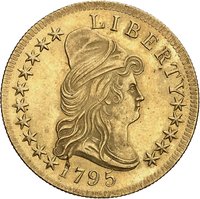
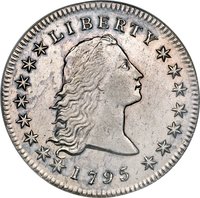
Draped bust right, surrounded by 15 stars.
Inscription:
LIBERTY
1795
1795
Script: Latin
Designer: Robert Scot
Reverse
Description:
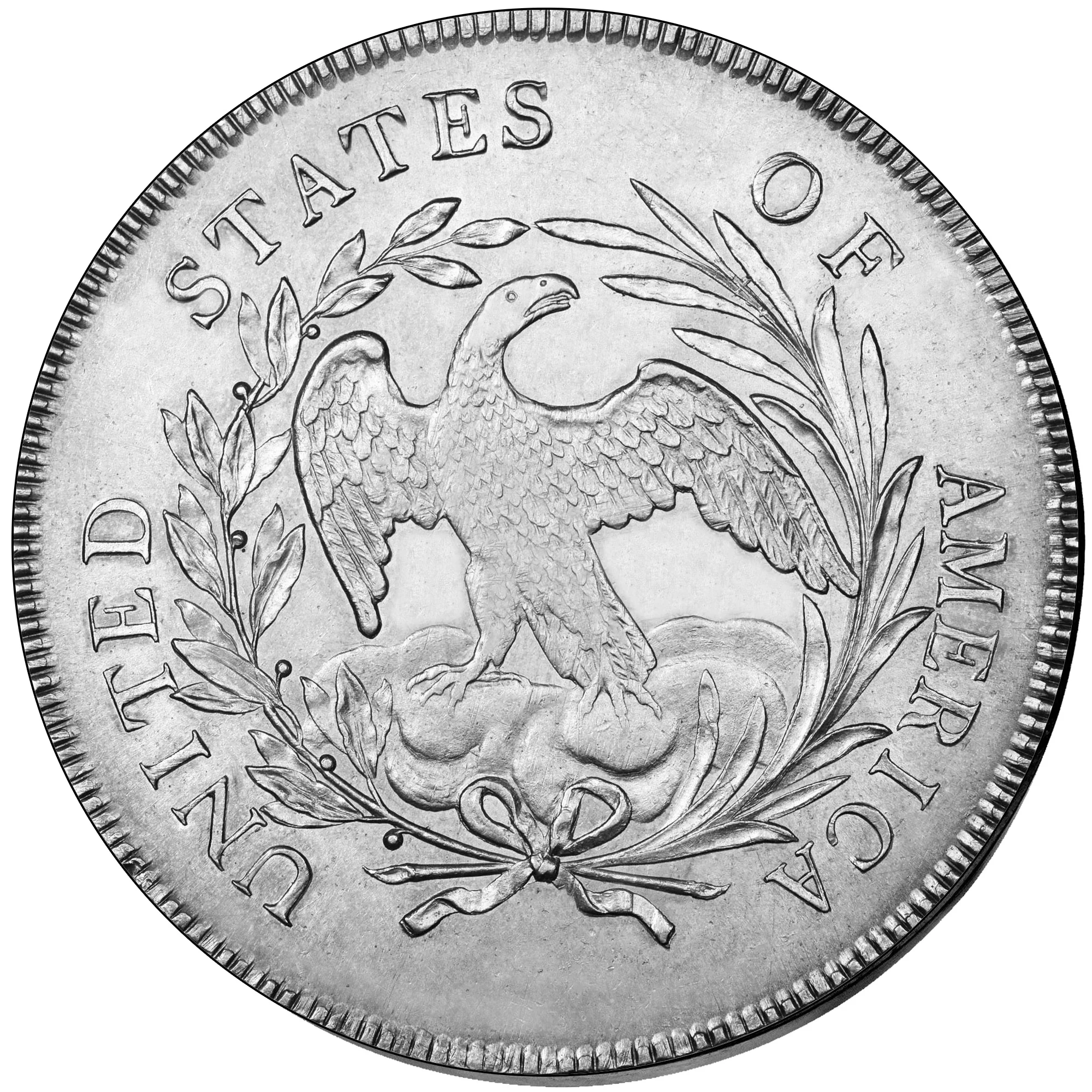
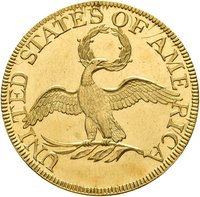
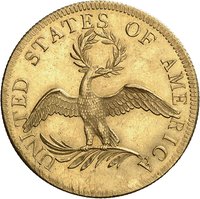
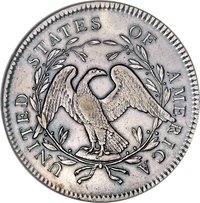
Eagle in wreath.
Inscription:
UNITED STATES OF AMERICA
Script: Latin
Designer: Robert Scot
Edge
Lettered with decorations between words
Legend:
HUNDRED CENTS ONE DOLLAR OR UNIT
Mints
| Name | Mark |
|---|---|
| United States Mint of Philadelphia | — |
Mintings
| Year | Mint Mark | Mintage | Quality | Collection |
|---|---|---|---|---|
| 1795 | — | 42,738 | BU | |
| 1796 | — | — | ||
| 1797 | — | — | ||
| 1798 | — | 327,536 |
Historical background
In 1795, the United States was in the early stages of establishing a stable and unified monetary system under the new federal government. The cornerstone of this effort was the Coinage Act of 1792, which created the United States Mint and defined the nation's currency in a bimetallic standard of gold and silver. The basic units were the dollar, disme (dime), and cent, with the iconic Flowing Hair silver dollar being among the first coins struck. However, production at the fledgling Philadelphia Mint was slow and limited, meaning that foreign coins—especially Spanish silver dollars and their fractional parts—remained the dominant circulating medium in everyday commerce.
The financial landscape was complex, as the federal government and the states also issued paper money, but with critical distinctions. The First Bank of the United States, chartered in 1791, issued banknotes that were widely accepted and helped provide a reliable national paper currency. Meanwhile, numerous state-chartered banks also issued their own notes, but their value and credibility varied dramatically, leading to frequent discounts and uncertainty. This period was marked by a tension between the desire for a uniform national currency and the practical reality of a heterogeneous mix of specie and paper from diverse sources.
Underpinning this entire system was the fiscal policy of Treasury Secretary Alexander Hamilton, who had successfully argued for the federal assumption of state debts and the establishment of the nation's credit. By 1795, the government was issuing its own bonds and securities, which traded actively and were considered sound investments. Thus, the currency situation was one of transition and foundational building, where precious metal coins defined value but were scarce, while a patchwork of paper instruments facilitated the growing economy, all set against a backdrop of increasing public confidence in the federal government's financial integrity.
The financial landscape was complex, as the federal government and the states also issued paper money, but with critical distinctions. The First Bank of the United States, chartered in 1791, issued banknotes that were widely accepted and helped provide a reliable national paper currency. Meanwhile, numerous state-chartered banks also issued their own notes, but their value and credibility varied dramatically, leading to frequent discounts and uncertainty. This period was marked by a tension between the desire for a uniform national currency and the practical reality of a heterogeneous mix of specie and paper from diverse sources.
Underpinning this entire system was the fiscal policy of Treasury Secretary Alexander Hamilton, who had successfully argued for the federal assumption of state debts and the establishment of the nation's credit. By 1795, the government was issuing its own bonds and securities, which traded actively and were considered sound investments. Thus, the currency situation was one of transition and foundational building, where precious metal coins defined value but were scarce, while a patchwork of paper instruments facilitated the growing economy, all set against a backdrop of increasing public confidence in the federal government's financial integrity.
🌟 Limited