

1 Florin – Spanish Netherlands
Netherlands
Context
Years: 1599–1603
Country: Netherlands 
Issuer: Spanish Netherlands
Currency:
(1506—1713)
Demonetized: Yes
Material
Diameter: 35 mm
Weight: 13.71 g
Silver weight: 11.42 g
Shape: Irregular round
Composition: 83.3% Silver
Magnetic: No
Technique: Hammered
Alignment: Coin alignment
flip
References
KM: #Click to copy to clipboard7
Numista: #103349
Value
Bullion value: $32.92
Obverse
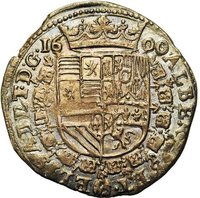
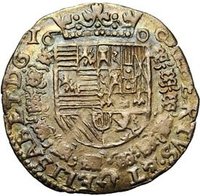
Description:
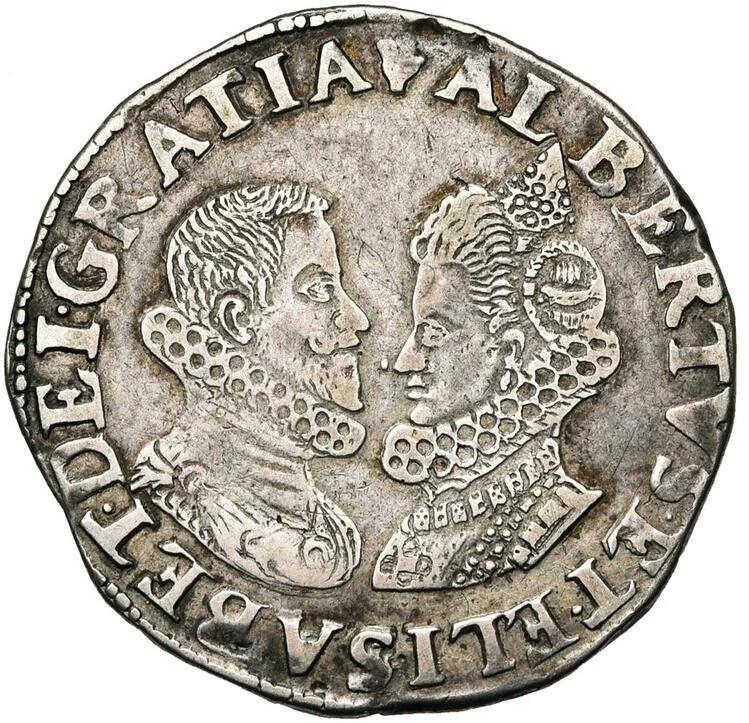
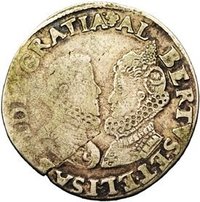
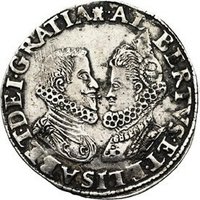
Facing busts of Albert and Isabella. Mint mark above.
Inscription:
ALBERTVS · ET · ELISABET · DEI · GRATIA
Script: Latin
Reverse
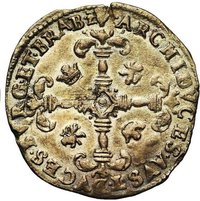
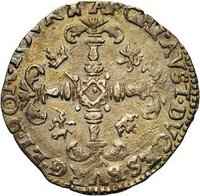
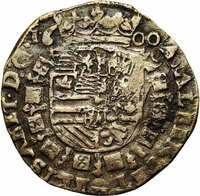
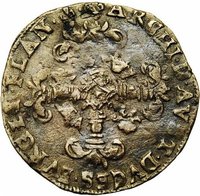
Description:
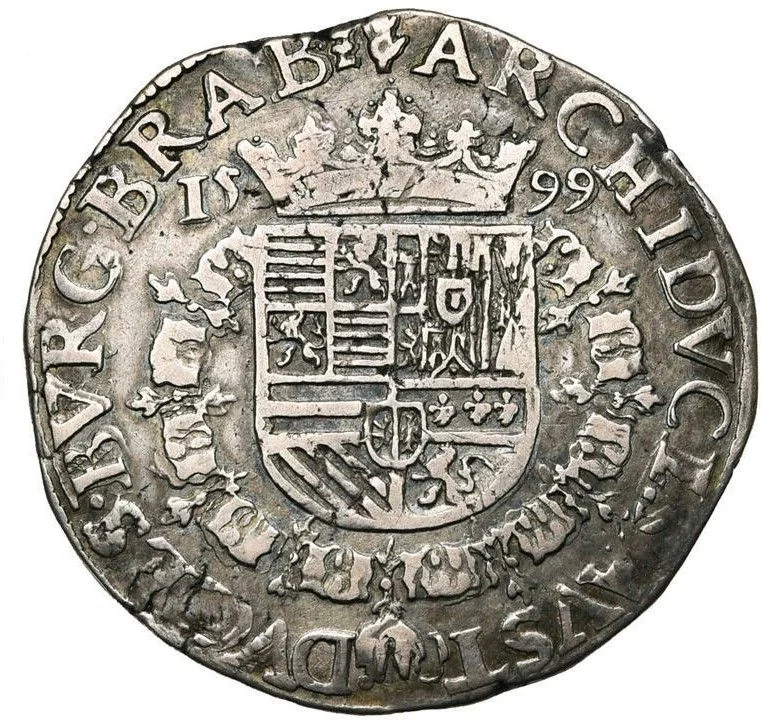
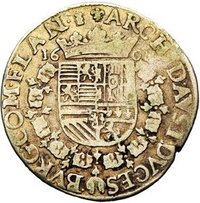
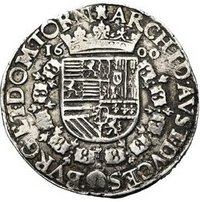
Arms with Golden Fleece collar divide date; mint mark above.
Inscription:
ARCHIDVCES · AVST · DVCES · BVRG · BRAB · Z
15 99
15 99
Script: Latin
Edge
Categories
| Symbols> Coat of Arms |
Mints
| Name | Mark |
|---|---|
| Antwerp | (Hand) |
| Maastricht | Star |
| 's-Hertogenbosch | Tree |
Mintings
| Year | Mint Mark | Mintage | Quality | Collection |
|---|---|---|---|---|
| 1599 | — | — | ||
| 1600 | — | — | ||
| 1601 | — | — | ||
| 1602 | — | — | ||
| 1603 | — | — |
Historical background
In 1599, the Spanish Netherlands found itself in a profound monetary crisis, a direct consequence of the ongoing Eighty Years' War (1568-1648). The costly conflict against the Dutch Republic had drained the Spanish treasury, leading the government of Philip III and his governor, Archduke Albert of Austria, to repeatedly debase the coinage. By lowering the silver content in coins like the patagon and real, authorities aimed to create more money from the same amount of bullion to pay soldiers and fund the war effort. However, this practice severely eroded public trust and destabilized the economy.
The situation was exacerbated by the circulation of a chaotic mix of currencies. Alongside the debased local coins, high-quality money from the rebellious Dutch provinces, older Spanish reales, and various foreign currencies from trade all competed in the marketplace. This led to Gresham's Law in action: "bad money drives out good." People hoarded full-weight coins for their intrinsic metal value or for international trade, while using the debased currency for daily transactions. This created a two-tier system, distorted prices, and made commerce fraught with uncertainty as the value of coins fluctuated wildly.
Facing economic paralysis and popular discontent, the authorities in Brussels enacted a major monetary ordinance on September 20, 1599. This decree aimed to standardize the coinage by introducing new, properly valued silver coins and setting fixed exchange rates for the myriad of currencies in circulation. While a necessary attempt to restore order, the success of this reform was limited in the short term. The fundamental pressures of the war continued, and establishing confidence in the new system proved a slow process, meaning the currency instability remained a defining feature of the region's early 17th-century economy.
The situation was exacerbated by the circulation of a chaotic mix of currencies. Alongside the debased local coins, high-quality money from the rebellious Dutch provinces, older Spanish reales, and various foreign currencies from trade all competed in the marketplace. This led to Gresham's Law in action: "bad money drives out good." People hoarded full-weight coins for their intrinsic metal value or for international trade, while using the debased currency for daily transactions. This created a two-tier system, distorted prices, and made commerce fraught with uncertainty as the value of coins fluctuated wildly.
Facing economic paralysis and popular discontent, the authorities in Brussels enacted a major monetary ordinance on September 20, 1599. This decree aimed to standardize the coinage by introducing new, properly valued silver coins and setting fixed exchange rates for the myriad of currencies in circulation. While a necessary attempt to restore order, the success of this reform was limited in the short term. The fundamental pressures of the war continued, and establishing confidence in the new system proved a slow process, meaning the currency instability remained a defining feature of the region's early 17th-century economy.
✨ Legendary