

1 beslik – Damascus Eyalet
Add to wishlist
Syria
Context
Year: 1648
Islamic (Hijri) Year:: 1058
Country: Syria
Issuer: Damascus Eyalet
Ruler: Mehmed IV
Currency:
(1516—1687)
Demonetized: Yes
Material
References
KM: #
Numista: #103093
Value
Bullion value: $3.45
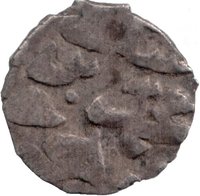
Obverse
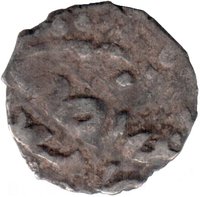
Reverse
Edge
Mints
| Name | Mark |
|---|---|
| Damascus | — |
Mintings
| Year | Mint Mark | Mintage | Quality | Collection |
|---|---|---|---|---|
| 1648 | — | — |
Historical background
In 1648, the currency situation in Damascus Eyalet, a key Ottoman province encompassing much of the Levant, was characterized by instability and complexity, mirroring the broader fiscal strains of the empire. The primary unit of account was the silver akçe, but its value had been severely eroded by decades of debasement and chronic budget deficits. Concurrently, the Spanish silver real and its Ottoman derivative, the piastre (kuruş), circulated as higher-value coins for larger transactions, creating a bimetallic system prone to fluctuation. This monetary environment was further complicated by the widespread use of a multitude of older and foreign coins, leading to a fragmented and unreliable marketplace where exchange rates shifted frequently.
The local economy faced acute pressure from the central Ottoman government's relentless demand for tax revenue, siphoned primarily in silver to finance military campaigns, particularly the long-running war against Safavid Persia. This drain of specie from the province created chronic shortages of sound currency. Artisans, merchants, and peasants in Damascus and its hinterlands consequently struggled with unpredictable prices and the practical difficulties of daily exchange, as the intrinsic metal value of coins often fell below their nominal face value, fostering distrust and market inefficiencies.
Furthermore, the year 1648 fell within the turbulent period known as the Sultanate of Women and high-level political intrigue, which saw a weak central administration in Istanbul. This political instability exacerbated monetary policy neglect, leaving provincial authorities in Damascus with little support to standardize circulation or curb inflationary practices. The currency disorder thus reflected deeper systemic issues: an overstretched empire financing war, a weakening central mint authority, and the resulting socioeconomic strain on one of its most important Arab provinces, where the reliability of money itself was in question.
The local economy faced acute pressure from the central Ottoman government's relentless demand for tax revenue, siphoned primarily in silver to finance military campaigns, particularly the long-running war against Safavid Persia. This drain of specie from the province created chronic shortages of sound currency. Artisans, merchants, and peasants in Damascus and its hinterlands consequently struggled with unpredictable prices and the practical difficulties of daily exchange, as the intrinsic metal value of coins often fell below their nominal face value, fostering distrust and market inefficiencies.
Furthermore, the year 1648 fell within the turbulent period known as the Sultanate of Women and high-level political intrigue, which saw a weak central administration in Istanbul. This political instability exacerbated monetary policy neglect, leaving provincial authorities in Damascus with little support to standardize circulation or curb inflationary practices. The currency disorder thus reflected deeper systemic issues: an overstretched empire financing war, a weakening central mint authority, and the resulting socioeconomic strain on one of its most important Arab provinces, where the reliability of money itself was in question.

✨ Legendary