

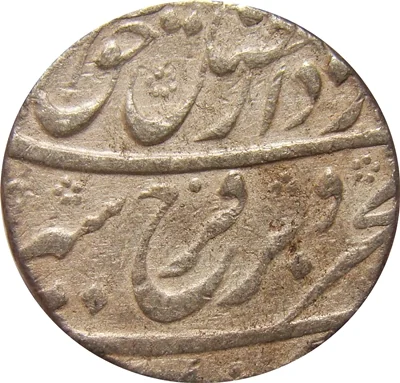
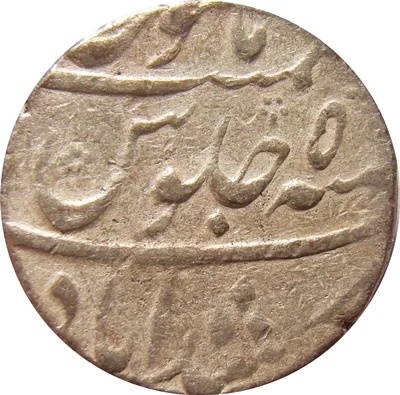
1 Rupee – Mughal Empire
India
Context
Years: 1713–1719
Country: India 
Issuer: Mughal Empire
Ruler: Farrukhsiyar
Currency:
(1540—1842)
Demonetized: Yes
Material
References
KM: #Click to copy to clipboard377.49
Numista: #136794
Value
Bullion value: $33.38
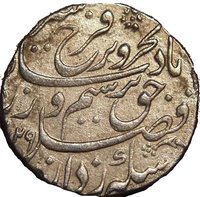
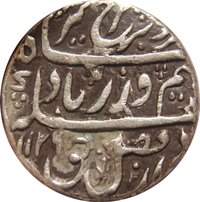
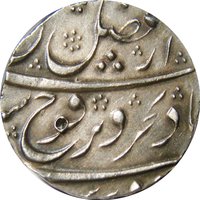
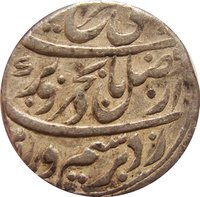
Obverse
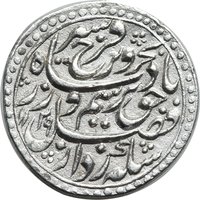
Description:
Inscription, dated AH.
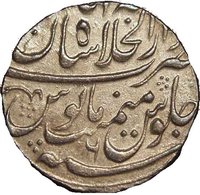
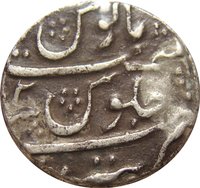
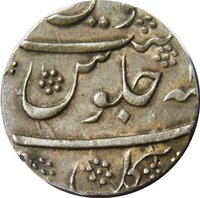
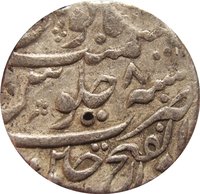
Reverse
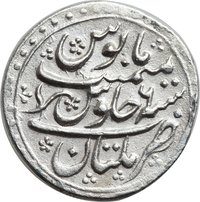
Description:
Regnal year, mint, inscription
Edge
Mintings
| Year | Mint Mark | Mintage | Quality | Collection |
|---|---|---|---|---|
| 1713 | — | — | ||
| 1714 | — | — | ||
| 1715 | — | — | ||
| 1716 | — | — | ||
| 1717 | — | — | ||
| 1718 | — | — | ||
| 1719 | — | — |
Historical background
By 1713, the Mughal Empire's currency system, once a pillar of its centralized power and economic integration, was under severe strain. The standard silver rupee, established by Emperor Akbar, remained the primary circulating medium, but its integrity was being compromised. The empire faced a chronic shortage of silver, partly due to a decline in imports from the New World and the diversion of bullion to regional powers and European trading companies. This scarcity led to the increased production of copper dams and gold mohurs to facilitate everyday and high-value transactions, respectively, but the crucial silver rupee's scarcity caused economic friction.
The reign of Emperor Farrukhsiyar (1713-1719), who ascended the throne in 1713, exemplified the growing fiscal crisis. To finance immense war expenditures, succession conflicts, and a bloated nobility, the imperial treasury resorted to debasement. The purity and weight of newly minted coins, particularly from provincial mints, began to vary, eroding public trust in the currency's intrinsic value. Furthermore, powerful regional governors and bankers started to assert greater control over local mints, a process that would accelerate and further fragment the imperial monetary authority in the coming decades.
Consequently, the currency situation in 1713 represented a critical inflection point. While the system still functioned and the rupee's name held authority, the underlying mechanisms were weakening. The scarcity of silver, the trend toward debasement, and the loss of exclusive minting control were early symptoms of the empire's declining central power. This monetary fragility mirrored and exacerbated the broader political decentralization, setting the stage for the eventual rise of independent regional currencies later in the 18th century.
The reign of Emperor Farrukhsiyar (1713-1719), who ascended the throne in 1713, exemplified the growing fiscal crisis. To finance immense war expenditures, succession conflicts, and a bloated nobility, the imperial treasury resorted to debasement. The purity and weight of newly minted coins, particularly from provincial mints, began to vary, eroding public trust in the currency's intrinsic value. Furthermore, powerful regional governors and bankers started to assert greater control over local mints, a process that would accelerate and further fragment the imperial monetary authority in the coming decades.
Consequently, the currency situation in 1713 represented a critical inflection point. While the system still functioned and the rupee's name held authority, the underlying mechanisms were weakening. The scarcity of silver, the trend toward debasement, and the loss of exclusive minting control were early symptoms of the empire's declining central power. This monetary fragility mirrored and exacerbated the broader political decentralization, setting the stage for the eventual rise of independent regional currencies later in the 18th century.

✨ Legendary