

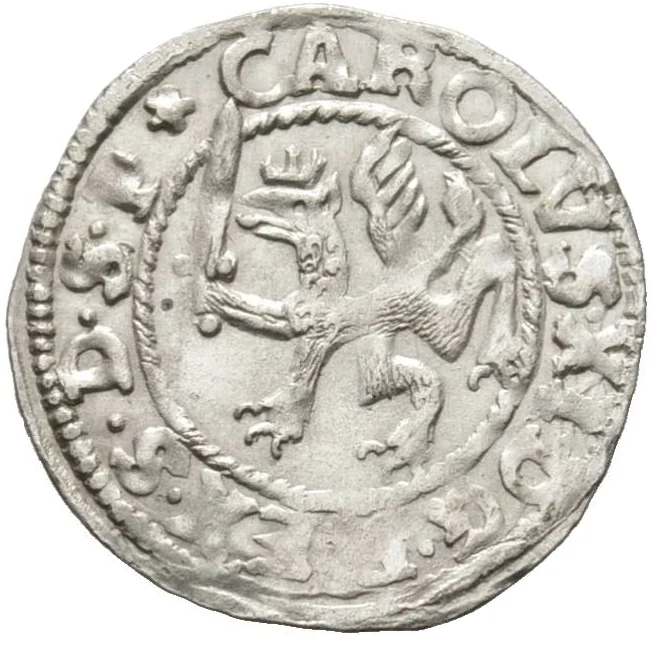
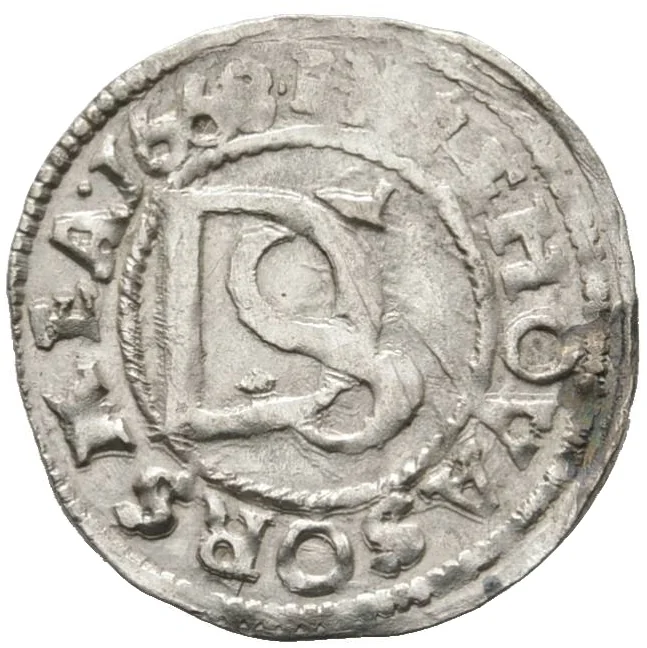
2 schilling – Swedish dominion of Pomerania
Add to wishlist
Sweden
Context
Years: 1662–1670
Country: Sweden
Issuer: Swedish dominion of Pomerania
Ruler: Charles XI
Currency:
(1630—1815)
Demonetized: Yes
References
KM: #
Numista: #136777
Value
Bullion value: $3.68
Obverse
Description:
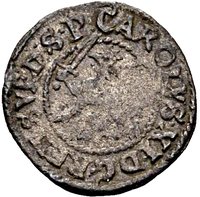
Crowned griffin, sword in left claw.
Script: Latin
Reverse
Description:
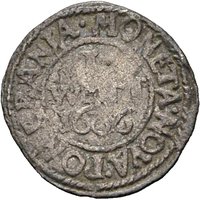
Initials in a single design.
Script: Latin
Edge
Mintings
| Year | Mint Mark | Mintage | Quality | Collection |
|---|---|---|---|---|
| 1662 | — | — | ||
| 1666 | — | — | ||
| 1666 | HIH | — | ||
| 1667 | — | — | ||
| 1668 | — | — | ||
| 1669 | — | — | ||
| 1670 | — | — |
Historical background
In 1662, the currency situation in Swedish Pomerania was complex and challenging, shaped by its position as a Swedish dominion within the fragmented monetary landscape of the Holy Roman Empire. The province did not have a unified currency; instead, it circulated a multitude of coins from various German states, neighbouring Poland, and Sweden itself. The primary accounting unit was the Pomeranian mark, divided into shillings and pfennigs, but this existed largely on paper as a measure of value for the wide array of physical coins in use, including thalers, ducats, and smaller regional issues. This multiplicity led to chronic confusion, uncertainty in trade, and susceptibility to debasement.
Swedish authorities in Stettin struggled to exert monetary control, facing the constant problem of inferior foreign coins, particularly small change, flooding the market. The Thirty Years' War (1618-1648), which had ended just 14 years prior, had left a legacy of severely debased coinage and monetary disorder across Germany. While Sweden attempted to introduce its own coinage, like the Swedish copper daler and silver daler, these competed with and were often evaluated against the dominant Reichsthaler of the Empire. The result was a dual-pressure system: the need to align with imperial monetary circles for regional commerce, while also integrating with Sweden's own fiscal and military requirements, including the payment of troops garrisoned in the province.
Consequently, the year 1662 fell within a period of ongoing monetary instability and ad-hoc management. The Swedish government likely issued ordinances to regulate exchange rates and combat the inflow of "bad money," but these measures were difficult to enforce permanently. The fundamental tension between local economic integration within Germany and the political control from Stockholm created a persistent and inefficient monetary environment, where exchange rates fluctuated and transaction costs remained high, hindering economic recovery in the postwar era.
Swedish authorities in Stettin struggled to exert monetary control, facing the constant problem of inferior foreign coins, particularly small change, flooding the market. The Thirty Years' War (1618-1648), which had ended just 14 years prior, had left a legacy of severely debased coinage and monetary disorder across Germany. While Sweden attempted to introduce its own coinage, like the Swedish copper daler and silver daler, these competed with and were often evaluated against the dominant Reichsthaler of the Empire. The result was a dual-pressure system: the need to align with imperial monetary circles for regional commerce, while also integrating with Sweden's own fiscal and military requirements, including the payment of troops garrisoned in the province.
Consequently, the year 1662 fell within a period of ongoing monetary instability and ad-hoc management. The Swedish government likely issued ordinances to regulate exchange rates and combat the inflow of "bad money," but these measures were difficult to enforce permanently. The fundamental tension between local economic integration within Germany and the political control from Stockholm created a persistent and inefficient monetary environment, where exchange rates fluctuated and transaction costs remained high, hindering economic recovery in the postwar era.
✨ Legendary