

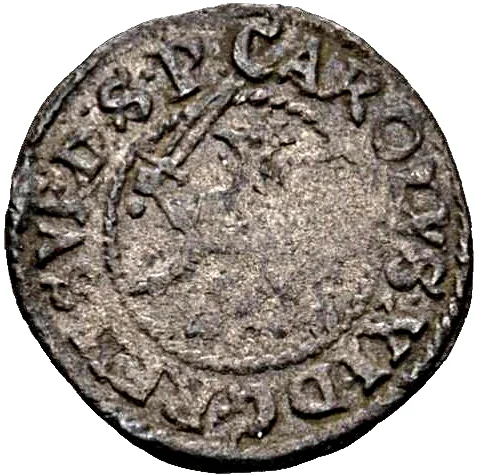
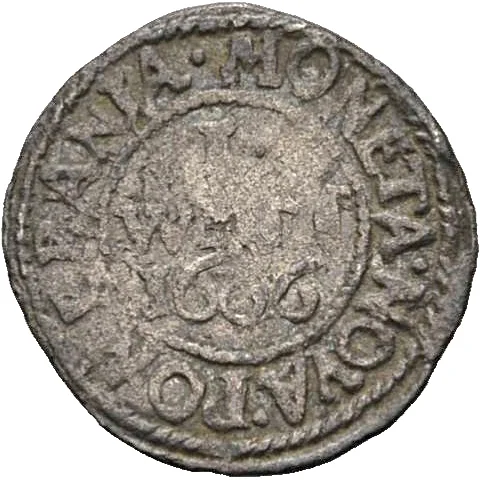
1 witten – Swedish dominion of Pomerania
Add to wishlist
Sweden
Context
Year: 1666
Country: Sweden
Issuer: Swedish dominion of Pomerania
Ruler: Charles XI
Currency:
(1630—1815)
Demonetized: Yes
References
KM: #
Numista: #136775
Value
Bullion value: $1.93
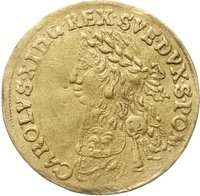
Obverse
Description:
Crowned griffin, sword in left claw.
Script: Latin
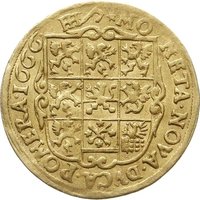
Reverse
Description:
Value and date inside circle.
Script: Latin
Edge
Mintings
| Year | Mint Mark | Mintage | Quality | Collection |
|---|---|---|---|---|
| 1666 | — | — |
Historical background
In 1666, the currency situation in Swedish Pomerania was complex and challenging, reflecting the province's position as a contested borderland and a secondary territory within the Swedish Empire. The monetary system was not unified, operating under the 1621 "Kipper und Wipper" ordinance, which set a fixed but outdated exchange rate between the large silver coins used for foreign trade (Reichsthaler) and the smaller, debased coins (Schillinge and Pfennige) used for daily local transactions. This rigid system failed to reflect the actual, fluctuating silver content of the coins in circulation, leading to chronic instability. The market was flooded with inferior coins from neighbouring German states, while good Swedish and full-weight imperial coins were often hoarded or exported, exacerbating a shortage of reliable currency.
The root of the problem lay in the discrepancy between the nominal and intrinsic value of coins. While accounts were kept in Reichsthalers, actual payments were made in a confusing mix of Swedish, local Pomeranian, and various German regional coins, each with different metallic values. This created significant obstacles for trade and taxation, as merchants and officials constantly had to negotiate exchange rates and assess the true worth of payments. For the Swedish administration in Stettin, this monetary chaos complicated revenue collection and increased the cost of maintaining the garrison and fleet, which were crucial for controlling this strategically vital Baltic possession.
Efforts to reform the system were piecemeal and largely ineffective in 1666. The Swedish crown, preoccupied with wars and domestic finances, provided little direct monetary leadership for Pomerania. Local attempts to regulate currency often failed because the problem was regional; without cooperation from neighbouring states like Brandenburg and Mecklenburg, which also circulated their debased coins in the duchy, any unilateral action by Stettin was undermined. Consequently, the currency situation remained a persistent economic burden, hindering development and embedding a sense of financial uncertainty that would persist until more comprehensive reforms were attempted in the following decades.
The root of the problem lay in the discrepancy between the nominal and intrinsic value of coins. While accounts were kept in Reichsthalers, actual payments were made in a confusing mix of Swedish, local Pomeranian, and various German regional coins, each with different metallic values. This created significant obstacles for trade and taxation, as merchants and officials constantly had to negotiate exchange rates and assess the true worth of payments. For the Swedish administration in Stettin, this monetary chaos complicated revenue collection and increased the cost of maintaining the garrison and fleet, which were crucial for controlling this strategically vital Baltic possession.
Efforts to reform the system were piecemeal and largely ineffective in 1666. The Swedish crown, preoccupied with wars and domestic finances, provided little direct monetary leadership for Pomerania. Local attempts to regulate currency often failed because the problem was regional; without cooperation from neighbouring states like Brandenburg and Mecklenburg, which also circulated their debased coins in the duchy, any unilateral action by Stettin was undermined. Consequently, the currency situation remained a persistent economic burden, hindering development and embedding a sense of financial uncertainty that would persist until more comprehensive reforms were attempted in the following decades.
✨ Legendary