

1 Witten – Swedish dominion of Pomerania
Sweden
Context
Years: 1668–1670
Country: Sweden 
Issuer: Swedish dominion of Pomerania
Ruler: Charles XI
Currency:
(1630—1815)
Demonetized: Yes
References
KM: #Click to copy to clipboard240
Numista: #136776
Value
Bullion value: $1.73
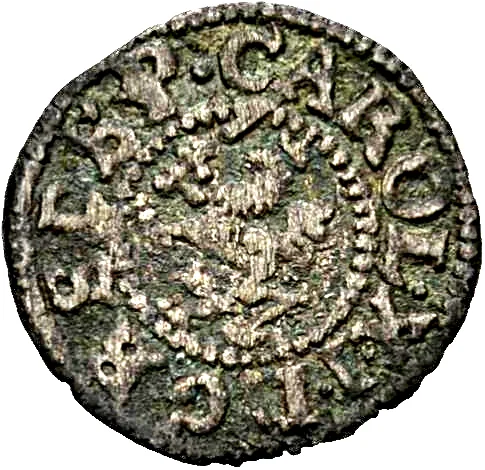
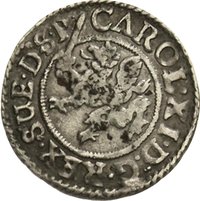
Obverse
Description:
Crowned griffin with sword in beaded circle.
Script: Latin
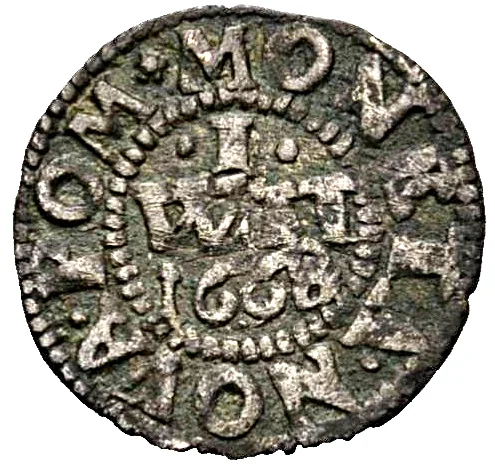
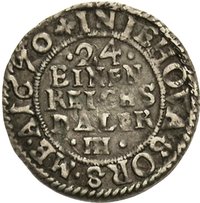
Reverse
Description:
Denomination and date in three lines.
Script: Latin
Edge
Mintings
| Year | Mint Mark | Mintage | Quality | Collection |
|---|---|---|---|---|
| 1668 | — | — | ||
| 1670 | — | — |
Historical background
In 1668, the currency situation in Swedish Pomerania was complex and challenging, characterized by a chaotic multiplicity of circulating coins and severe inflationary pressure. The territory, a remnant of Sweden's gains in the Thirty Years' War, did not have a unified monetary system. Alongside official Swedish issues, a plethora of coins from neighboring German states, the Holy Roman Empire, the Netherlands, and Poland circulated freely. This led to a chronic problem of "bad money driving out good," as debased and underweight foreign coins flooded the market, while full-weight Swedish silver coins were often hoarded or exported.
The root of the instability lay in the monetary policies of the Swedish crown, which frequently manipulated currency to fund its military ambitions. Sweden itself was engaging in deliberate coinage debasement, reducing the silver content of its currency to generate seigniorage revenue for the state treasury. These debased coins naturally flowed into the Pomeranian economy, exacerbating local inflation and undermining trade. Furthermore, the Swedish government often demanded that taxes and dues from Pomerania be paid in high-quality specie, creating a drain of sound money from the province and worsening the circulation of inferior coinage.
Local authorities in Pomerania had limited power to rectify the situation, as monetary policy was dictated from Stockholm. Attempts to set fixed exchange rates between the various circulating coins (Kurantgeld) and the accounting unit (the Reichsthaler in specie) were largely ineffective in practice. The result in 1668 was an economy suffering from high transaction costs, uncertain prices, and eroded public confidence in the currency—a microcosm of the wider monetary crises affecting Northern Europe during the period of Swedish imperial expansion.
The root of the instability lay in the monetary policies of the Swedish crown, which frequently manipulated currency to fund its military ambitions. Sweden itself was engaging in deliberate coinage debasement, reducing the silver content of its currency to generate seigniorage revenue for the state treasury. These debased coins naturally flowed into the Pomeranian economy, exacerbating local inflation and undermining trade. Furthermore, the Swedish government often demanded that taxes and dues from Pomerania be paid in high-quality specie, creating a drain of sound money from the province and worsening the circulation of inferior coinage.
Local authorities in Pomerania had limited power to rectify the situation, as monetary policy was dictated from Stockholm. Attempts to set fixed exchange rates between the various circulating coins (Kurantgeld) and the accounting unit (the Reichsthaler in specie) were largely ineffective in practice. The result in 1668 was an economy suffering from high transaction costs, uncertain prices, and eroded public confidence in the currency—a microcosm of the wider monetary crises affecting Northern Europe during the period of Swedish imperial expansion.
✨ Legendary