

8 Gute Groschen – Swedish dominion of Pomerania
Sweden
Context
Years: 1758–1760
Country: Sweden 
Issuer: Swedish dominion of Pomerania
Ruler: Adolphus Frederick
Currency:
(1630—1815)
Demonetized: Yes
References
KM: #Click to copy to clipboard398
Numista: #136763
Obverse
Description:
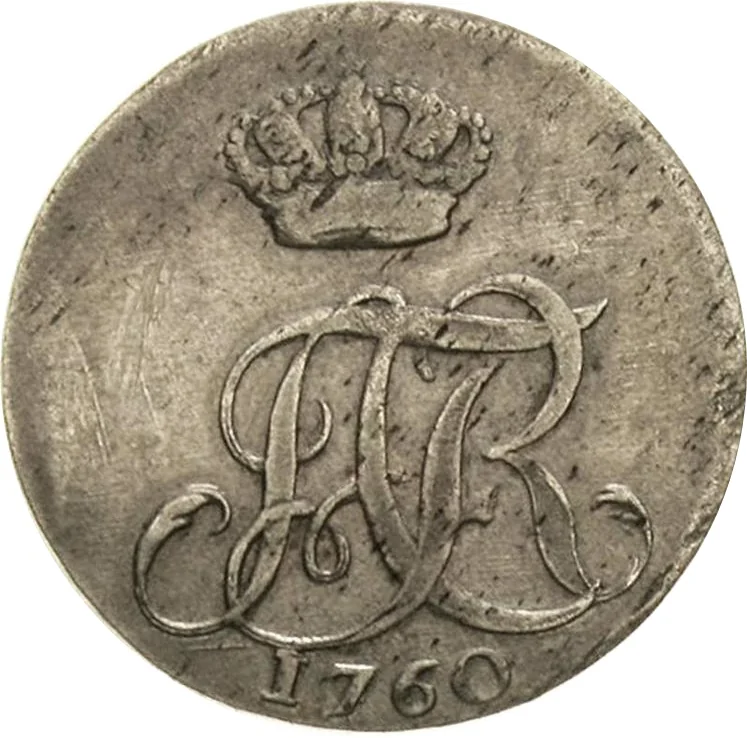
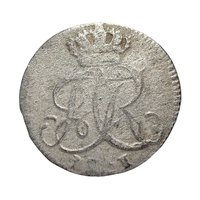
Monogram above date.
Script: Latin
Reverse
Description:
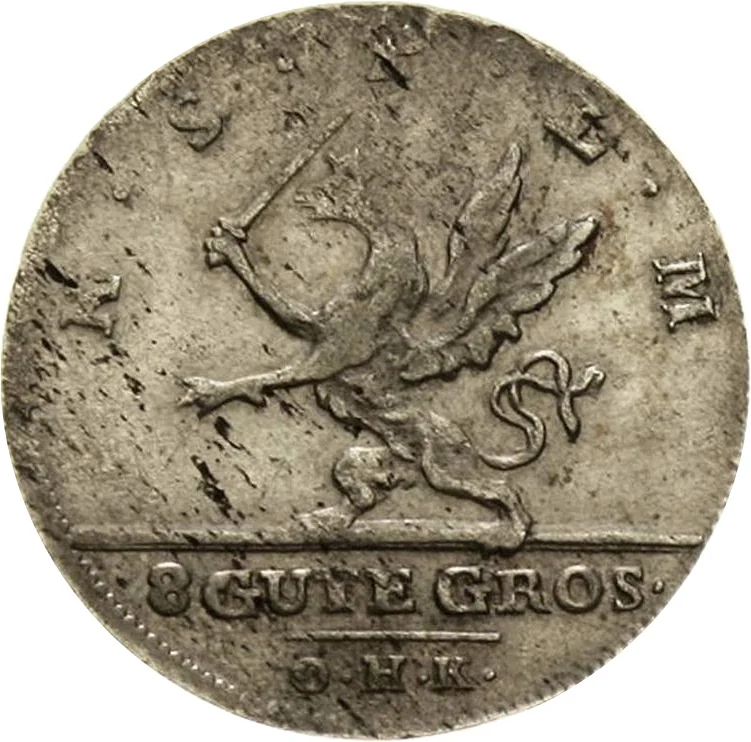
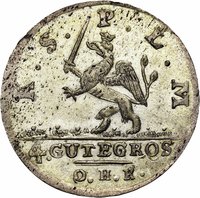
Crowned left-facing griffin with sword; value below.
Script: Latin
Edge
Mints
| Name | Mark |
|---|---|
| Stralsund | — |
Mintings
| Year | Mint Mark | Mintage | Quality | Collection |
|---|---|---|---|---|
| 1758 | — | — | ||
| 1759 | — | — | ||
| 1760 | — | — |
Historical background
In 1758, the Swedish dominion of Pomerania was caught in the severe economic and monetary pressures of the Seven Years' War. As a non-combatant but strategically vital Swedish possession on the southern Baltic coast, the region became a crucial financial and logistical base for Sweden's own military involvement in the conflict. This placed an enormous strain on its local economy, as demands for requisitions and supplies to support the Swedish army led to significant resource extraction and disrupted normal trade.
The currency situation was characterised by acute instability and depreciation. To cover soaring war expenses, the Swedish authorities, both in Stockholm and locally, increasingly resorted to the minting of low-quality subsidiary coinage and the issue of paper money, known as transportsedlar. These bills of credit, intended to pay for army supplies and transport, flooded the Pomeranian market. With public confidence low and metallic coinage being hoarded, these paper notes rapidly depreciated in value, leading to price inflation and a effective breakdown of the established monetary system.
Furthermore, the region experienced a complex circulation of multiple currencies. Alongside the devalued Swedish copper and paper money, older Swedish silver coins, Prussian thalers (from neighbouring occupied territories), and various German state coins all circulated simultaneously. This monetary chaos created a confusing and inefficient market, harming merchants and the local population alike. The situation in 1758 thus reflected a wartime economy where financial expediency for military survival had彻底 overridden monetary stability, pushing the Pomeranian dominion toward a fiscal crisis.
The currency situation was characterised by acute instability and depreciation. To cover soaring war expenses, the Swedish authorities, both in Stockholm and locally, increasingly resorted to the minting of low-quality subsidiary coinage and the issue of paper money, known as transportsedlar. These bills of credit, intended to pay for army supplies and transport, flooded the Pomeranian market. With public confidence low and metallic coinage being hoarded, these paper notes rapidly depreciated in value, leading to price inflation and a effective breakdown of the established monetary system.
Furthermore, the region experienced a complex circulation of multiple currencies. Alongside the devalued Swedish copper and paper money, older Swedish silver coins, Prussian thalers (from neighbouring occupied territories), and various German state coins all circulated simultaneously. This monetary chaos created a confusing and inefficient market, harming merchants and the local population alike. The situation in 1758 thus reflected a wartime economy where financial expediency for military survival had彻底 overridden monetary stability, pushing the Pomeranian dominion toward a fiscal crisis.
✨ Legendary