

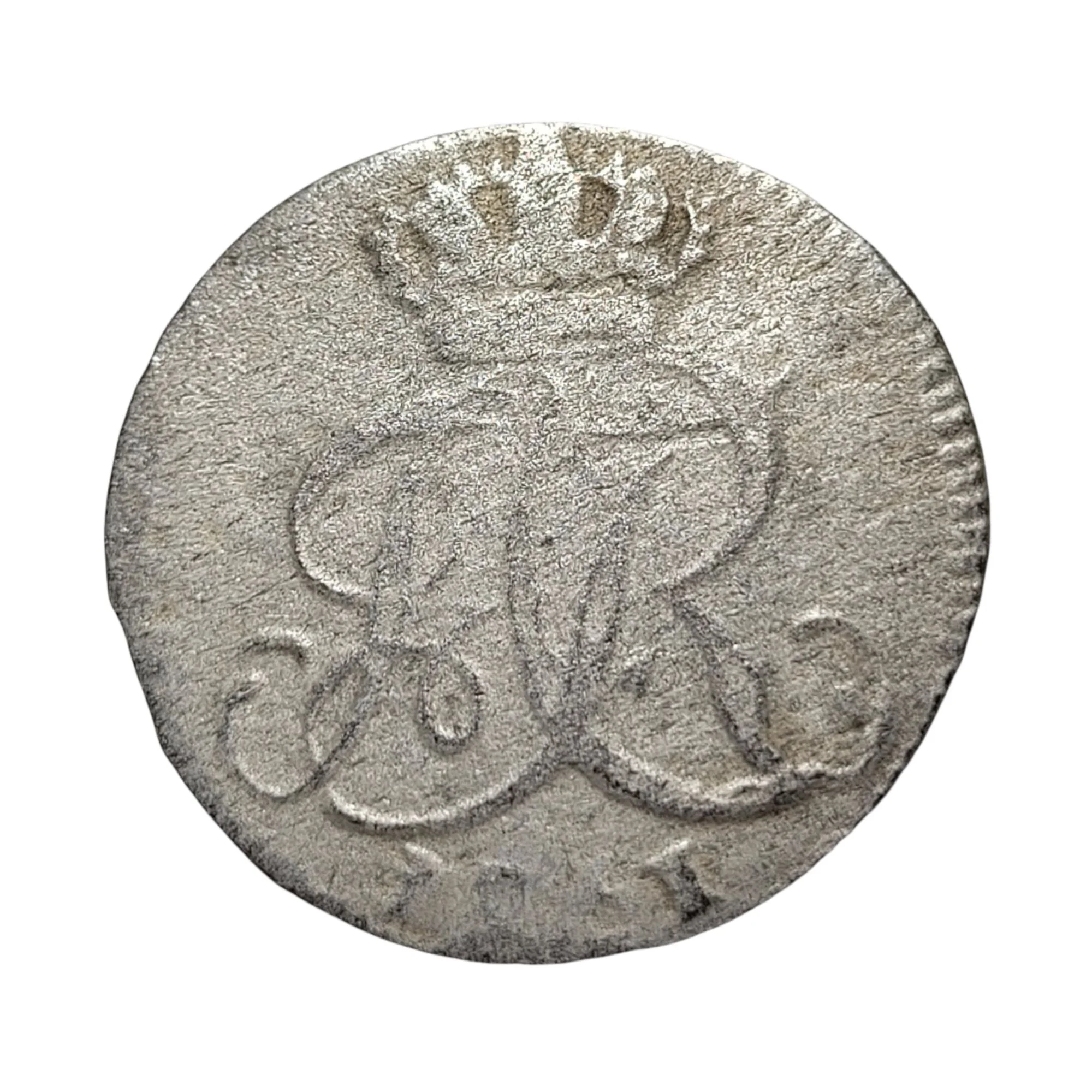
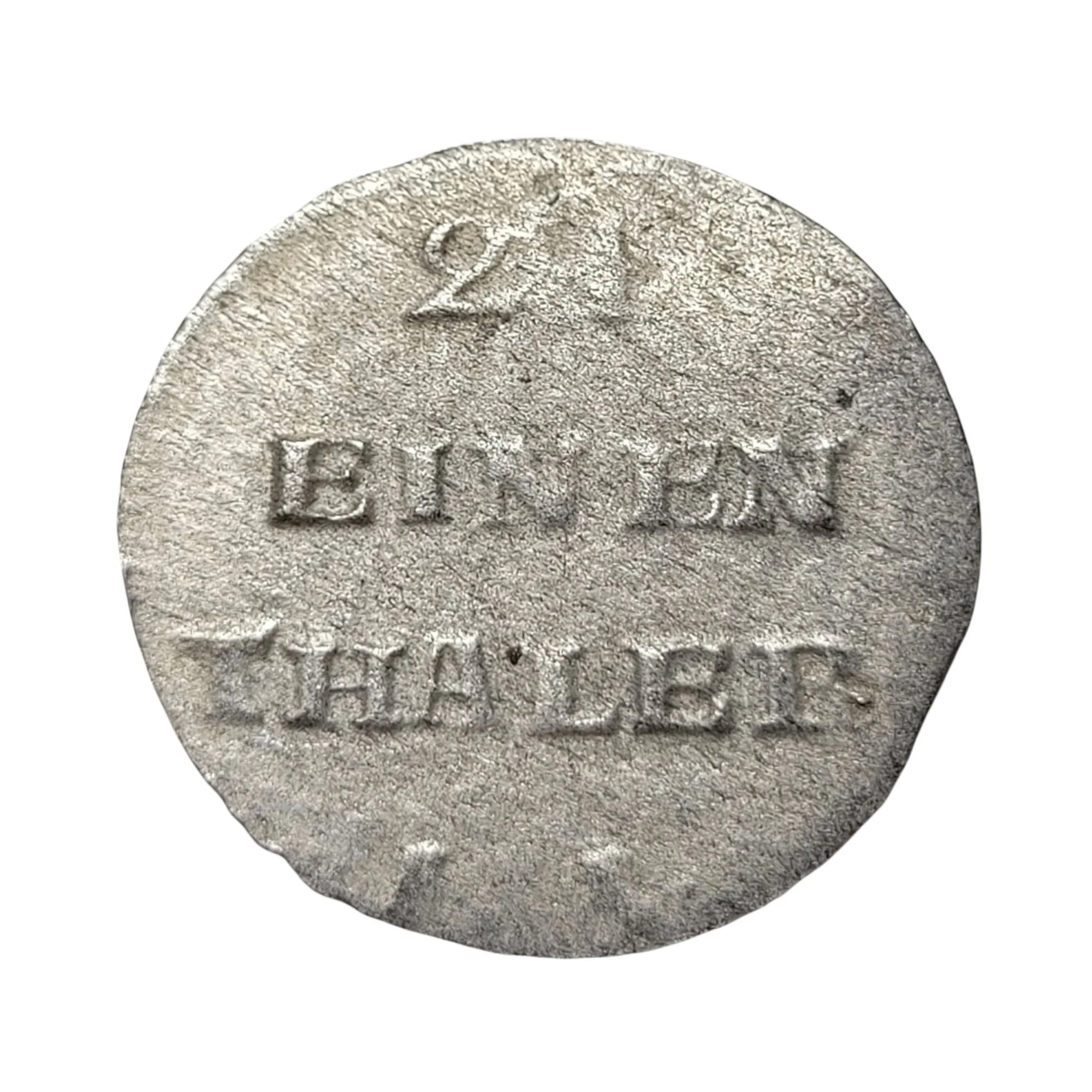
1⁄24 Thaler – Swedish dominion of Pomerania
Sweden
Context
Years: 1759–1761
Country: Sweden 
Issuer: Swedish dominion of Pomerania
Ruler: Adolphus Frederick
Currency:
(1630—1815)
Demonetized: Yes
References
KM: #Click to copy to clipboard400
Numista: #86711
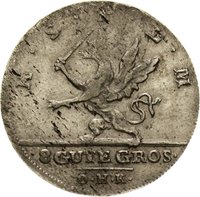
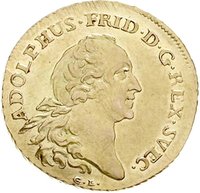
Obverse
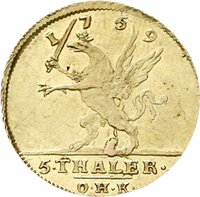
Reverse
Edge
Plain
Mints
| Name | Mark |
|---|---|
| Stralsund | — |
Mintings
| Year | Mint Mark | Mintage | Quality | Collection |
|---|---|---|---|---|
| 1759 | — | — | ||
| 1760 | — | — | ||
| 1761 | — | — | ||
| 1761 | ICS | — | ||
| 1761 | LFK | — |
Historical background
In 1759, Swedish Pomerania was a small, war-ravaged dominion caught in the maelstrom of the Seven Years' War. Since 1757, the region had been under effective Prussian occupation and administration, severing it from direct control from Stockholm. This occupation was financially exploitative, with the Prussians imposing heavy contributions and taxes, draining the local economy to fund Frederick the Great's war effort. Consequently, the monetary system in Pomerania was not autonomous but was heavily influenced and manipulated by the occupying Prussian authorities to serve their military needs.
The currency situation was complex and unstable, characterized by the forced circulation of debased Prussian coinage. To extract maximum value, the Prussians introduced overvalued Kurantgeld (specie-backed money) and particularly Kriegsgeld (war money), which was essentially a form of fiat currency with no intrinsic value and no guarantee of redemption. The Prussian authorities mandated the acceptance of these coins at inflated rates, effectively imposing a hidden tax through currency depreciation. This practice drove older, full-value Swedish and other specie coins out of circulation (Gresham's Law) and caused significant inflation, harming local trade and the populace.
Despite the occupation, some residual structures of Swedish monetary authority nominally existed, but they held no practical power. The Swedish Riksbank had no ability to regulate the currency in its occupied province. The primary economic reality for Pomeranians in 1759 was one of a dual burden: physical devastation from the war's passage and financial strain from a coercive and degraded monetary system imposed by Prussia. This situation would persist until the war's end and the return of Swedish administration, which then faced the arduous task of untangling the monetary chaos left behind.
The currency situation was complex and unstable, characterized by the forced circulation of debased Prussian coinage. To extract maximum value, the Prussians introduced overvalued Kurantgeld (specie-backed money) and particularly Kriegsgeld (war money), which was essentially a form of fiat currency with no intrinsic value and no guarantee of redemption. The Prussian authorities mandated the acceptance of these coins at inflated rates, effectively imposing a hidden tax through currency depreciation. This practice drove older, full-value Swedish and other specie coins out of circulation (Gresham's Law) and caused significant inflation, harming local trade and the populace.
Despite the occupation, some residual structures of Swedish monetary authority nominally existed, but they held no practical power. The Swedish Riksbank had no ability to regulate the currency in its occupied province. The primary economic reality for Pomeranians in 1759 was one of a dual burden: physical devastation from the war's passage and financial strain from a coercive and degraded monetary system imposed by Prussia. This situation would persist until the war's end and the return of Swedish administration, which then faced the arduous task of untangling the monetary chaos left behind.
💎 Extremely Rare