

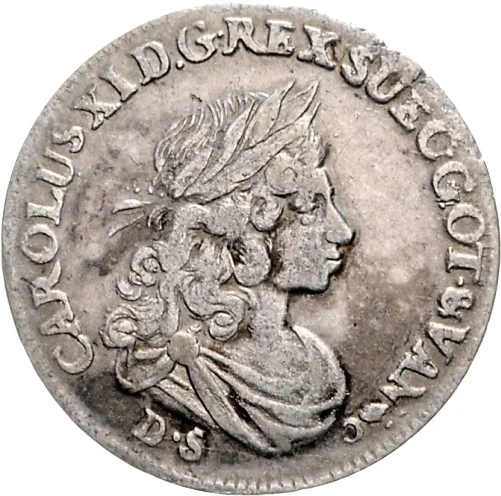
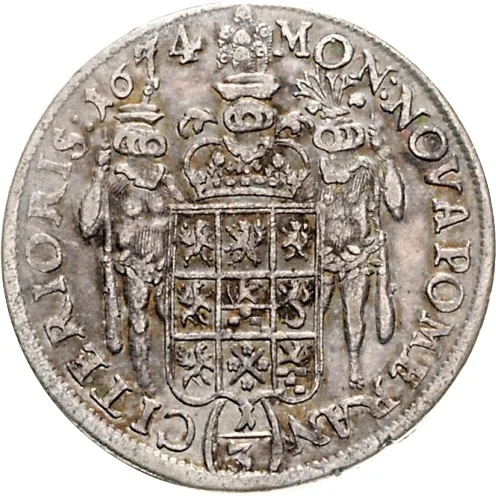
⅓ Thaler – Swedish dominion of Pomerania
Sweden
Context
Years: 1674–1675
Country: Sweden 
Issuer: Swedish dominion of Pomerania
Ruler: Charles XI
Currency:
(1630—1815)
Demonetized: Yes
Material
References
KM: #Click to copy to clipboard263
Numista: #136488
Value
Bullion value: $26.59
Obverse
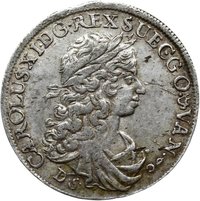
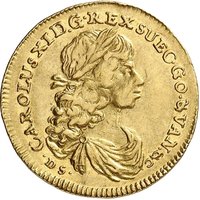
Description:
Laureate armored bust with initials below.
Script: Latin
Reverse
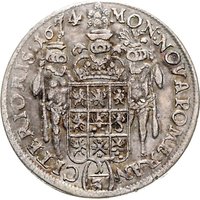
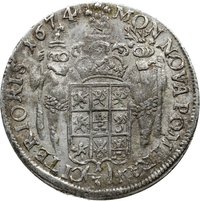
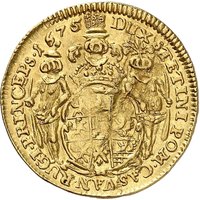
Description:
Arms with helmet, crown, and supporters.
Script: Latin
Edge
Mintings
| Year | Mint Mark | Mintage | Quality | Collection |
|---|---|---|---|---|
| 1674 | DS | — | ||
| 1675 | DS | — |
Historical background
In 1674, the currency situation in Swedish Pomerania was complex and strained, reflecting both local economic pressures and the broader monetary policies of the Swedish Empire. The province operated within a dual system: the Swedish state demanded taxes and conducted its official accounting in Swedish riksdaler, a stable silver-based currency. However, the local economy of Pomerania predominantly used a debased subsidiary coinage, the Pomeranian schilling, which was part of the fragmented Holy Roman Empire's monetary landscape. This created constant exchange difficulties and placed a burden on the local population, who had to convert their weaker local currency into stronger riksdaler for state obligations.
The situation was exacerbated by Sweden's own financial demands due to its deepening involvement in the Scanian War (1675–1679) against Brandenburg and Denmark. In preparation for and during the initial stages of this conflict, Stockholm increasingly viewed its German possessions as vital sources of revenue and supplies. This led to heightened fiscal pressure on Pomerania, including attempts to extract more silver-based currency from a region whose circulating coinage was often of lower intrinsic value. Furthermore, the proximity to Brandenburg and other German states meant that various coinages circulated, leading to confusion, arbitrage, and a tendency for good silver coins to be hoarded or exported, leaving poorer coins in local circulation.
Consequently, by 1674, Swedish Pomerania faced a liquidity crisis and inflationary pressures. The scarcity of high-value riksdaler, combined with an influx of inferior copper and billon coins to finance military needs, degraded the money in everyday use. This monetary instability weakened local commerce and increased discontent among the Pomeranian estates and populace, who were caught between the demands of a distant imperial power and the realities of a deteriorating regional currency. This financial strain would soon be overshadowed by the full outbreak of war, leading to Brandenburg's invasion in late 1674 and the subsequent Swedish military occupation, which further disrupted all economic and monetary order.
The situation was exacerbated by Sweden's own financial demands due to its deepening involvement in the Scanian War (1675–1679) against Brandenburg and Denmark. In preparation for and during the initial stages of this conflict, Stockholm increasingly viewed its German possessions as vital sources of revenue and supplies. This led to heightened fiscal pressure on Pomerania, including attempts to extract more silver-based currency from a region whose circulating coinage was often of lower intrinsic value. Furthermore, the proximity to Brandenburg and other German states meant that various coinages circulated, leading to confusion, arbitrage, and a tendency for good silver coins to be hoarded or exported, leaving poorer coins in local circulation.
Consequently, by 1674, Swedish Pomerania faced a liquidity crisis and inflationary pressures. The scarcity of high-value riksdaler, combined with an influx of inferior copper and billon coins to finance military needs, degraded the money in everyday use. This monetary instability weakened local commerce and increased discontent among the Pomeranian estates and populace, who were caught between the demands of a distant imperial power and the realities of a deteriorating regional currency. This financial strain would soon be overshadowed by the full outbreak of war, leading to Brandenburg's invasion in late 1674 and the subsequent Swedish military occupation, which further disrupted all economic and monetary order.
✨ Legendary