

1 Sechsling – Swedish dominion of Pomerania
Sweden
Context
Years: 1673–1674
Country: Sweden 
Issuer: Swedish dominion of Pomerania
Ruler: Charles XI
Currency:
(1630—1815)
Subdivision: 1 Sechsling = 1⁄96 Thaler
Demonetized: Yes
References
KM: #Click to copy to clipboard259
Numista: #136479
Obverse
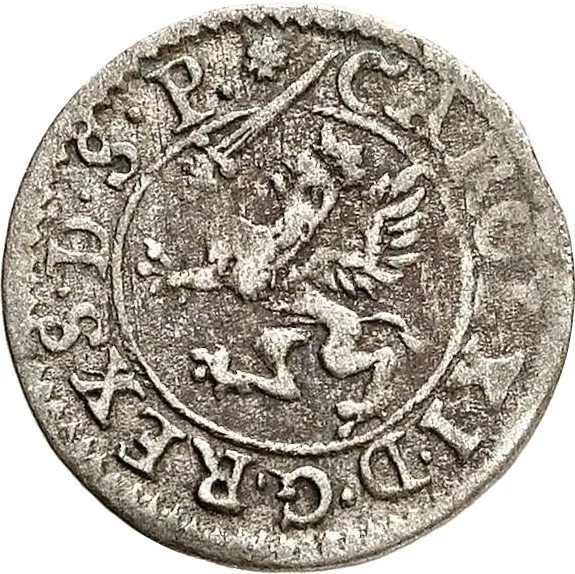
Description:
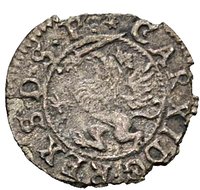
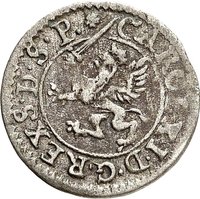
Crowned griffin left, holding sword.
Script: Latin
Reverse
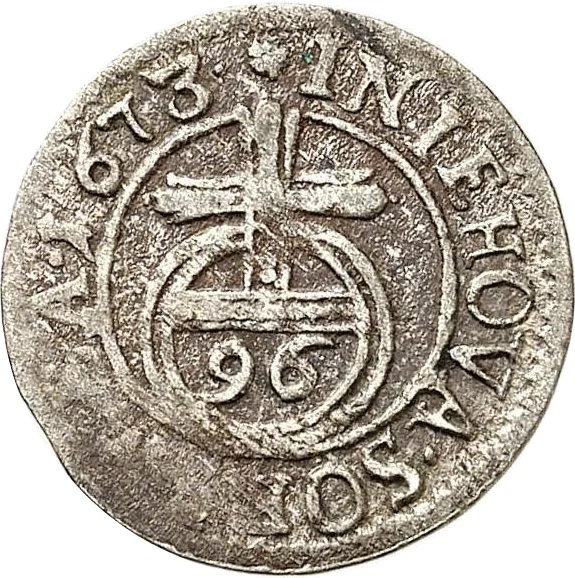
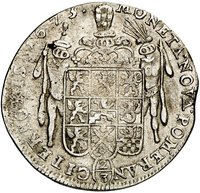
Description:
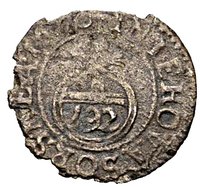
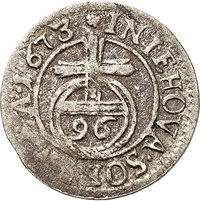
Imperial orb with value.
Script: Latin
Edge
Mintings
| Year | Mint Mark | Mintage | Quality | Collection |
|---|---|---|---|---|
| 1673 | — | — | ||
| 1674 | — | — |
Historical background
In 1673, the currency situation in Swedish Pomerania was complex and strained, reflecting both local economic pressures and the broader monetary chaos of the Holy Roman Empire. The province operated within the Reichsthaler system, but its circulation was dominated by a plethora of physical coins from neighbouring German states, the Netherlands, and Sweden itself. This created a confusing multi-currency environment where coins of varying silver content and value circulated simultaneously, leading to constant difficulties in trade and valuation.
The primary challenge was severe debasement and inflation, exacerbated by the ongoing Franco-Dutch War (1672–1678), in which Sweden was a participant. To finance military expenses, Swedish authorities, like many German princes, engaged in Kipper- und Wipperzeit practices, reducing the precious metal content in minted coins while mandating their face value remain the same. This led to a flight of good, full-weight coins (Gresham's Law), leaving the local economy flooded with inferior currency, which eroded public trust and disrupted commerce in key Pomeranian towns like Stralsund and Stettin.
Swedish attempts at regulation, including periodic minting ordinances and currency mandates from Stockholm, proved largely ineffective on the ground. The provincial government in Stettin struggled to enforce standards against the tide of debased coins and the economic realities of war. Consequently, by 1673, the monetary system was characterised by uncertainty, frequent exchange rate fluctuations, and a significant gap between official policy and the chaotic everyday reality of transactions, hindering economic stability in this strategically important Baltic dominion.
The primary challenge was severe debasement and inflation, exacerbated by the ongoing Franco-Dutch War (1672–1678), in which Sweden was a participant. To finance military expenses, Swedish authorities, like many German princes, engaged in Kipper- und Wipperzeit practices, reducing the precious metal content in minted coins while mandating their face value remain the same. This led to a flight of good, full-weight coins (Gresham's Law), leaving the local economy flooded with inferior currency, which eroded public trust and disrupted commerce in key Pomeranian towns like Stralsund and Stettin.
Swedish attempts at regulation, including periodic minting ordinances and currency mandates from Stockholm, proved largely ineffective on the ground. The provincial government in Stettin struggled to enforce standards against the tide of debased coins and the economic realities of war. Consequently, by 1673, the monetary system was characterised by uncertainty, frequent exchange rate fluctuations, and a significant gap between official policy and the chaotic everyday reality of transactions, hindering economic stability in this strategically important Baltic dominion.
✨ Legendary