

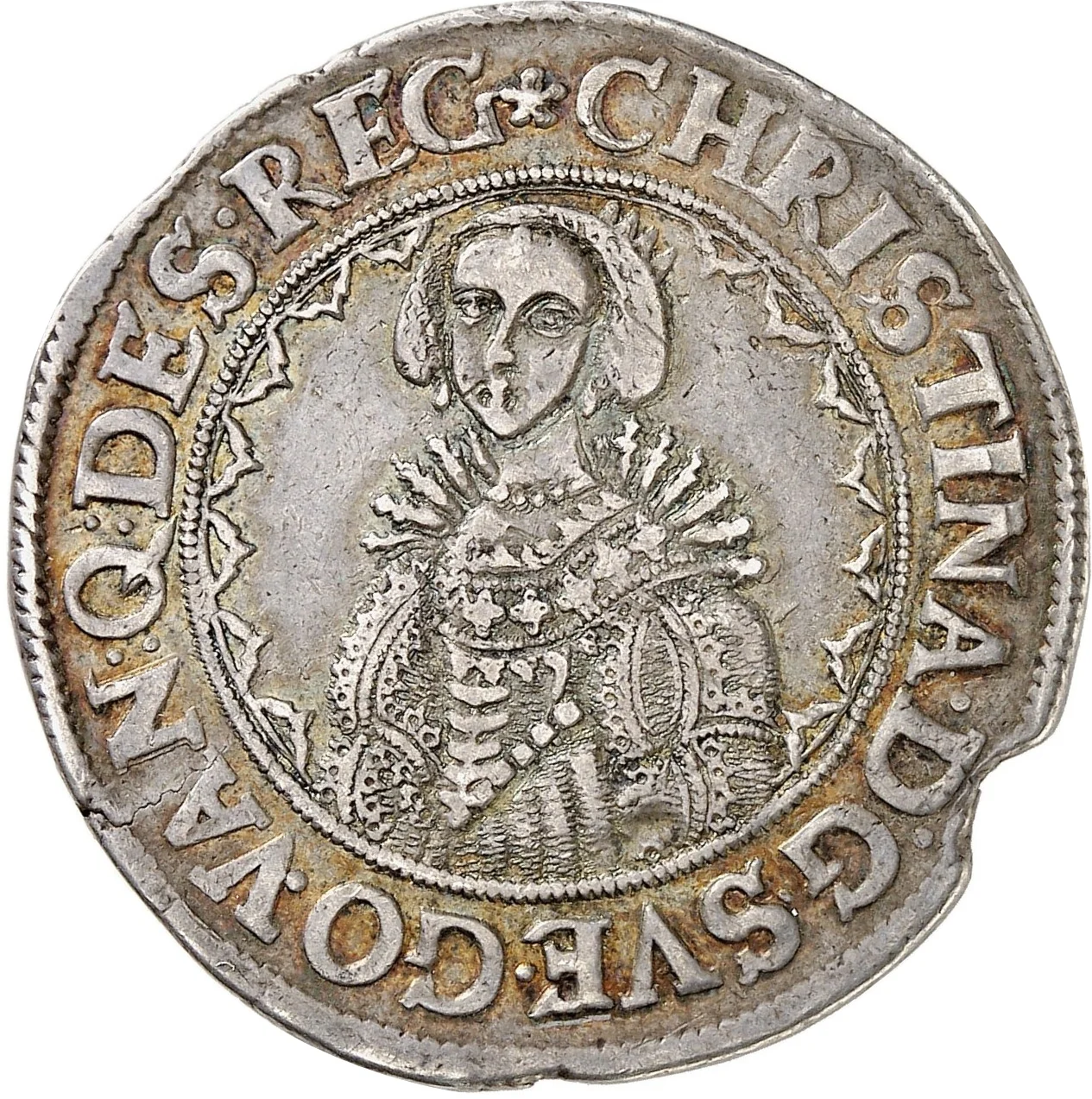
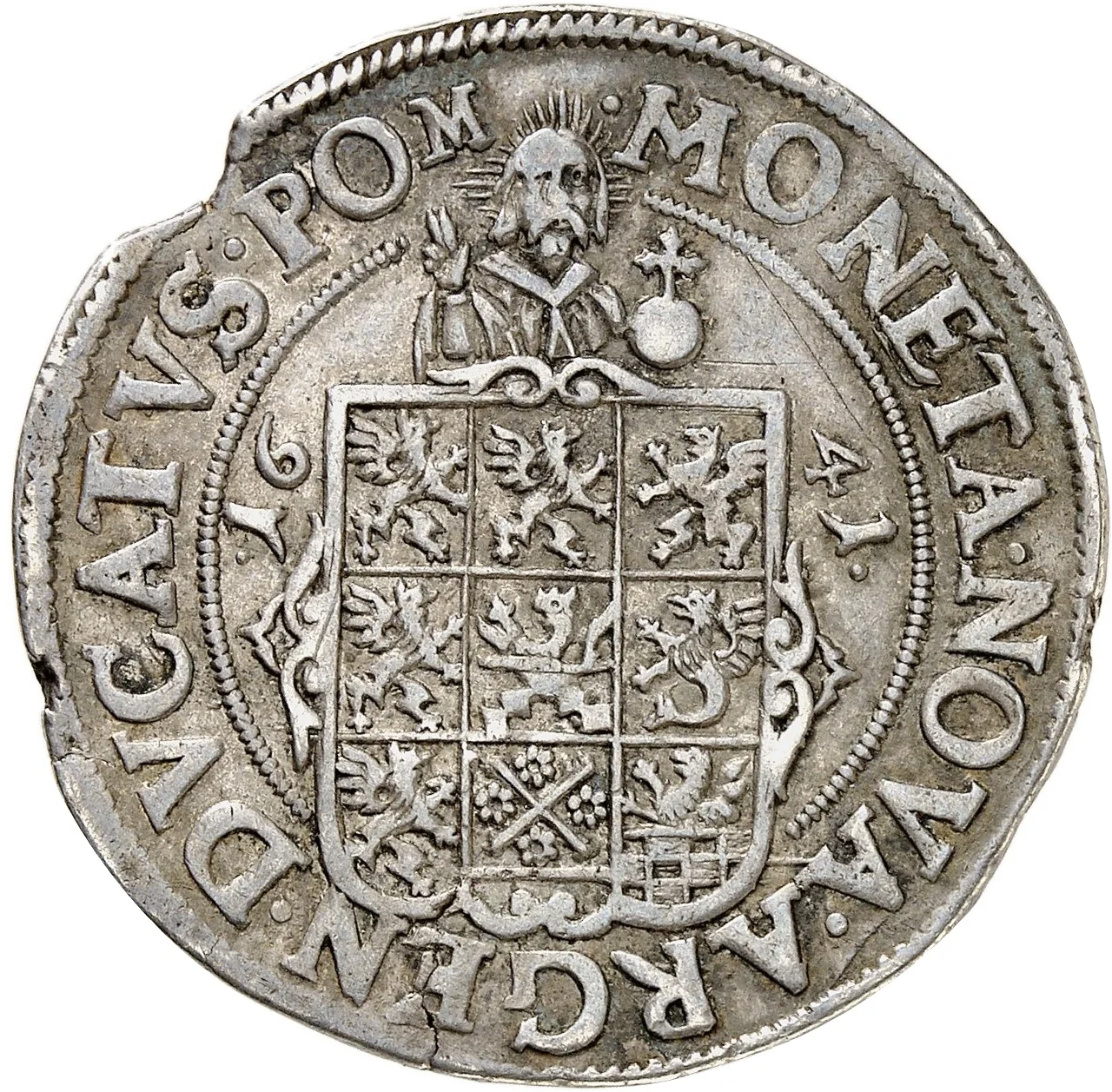
½ Thaler – Swedish dominion of Pomerania
Sweden
Context
Year: 1641
Country: Sweden 
Issuer: Swedish dominion of Pomerania
Ruler: Christina
Currency:
(1630—1815)
Demonetized: Yes
References
KM: #Click to copy to clipboard189
Numista: #136452
Value
Bullion value: $40.84
Obverse
Description:
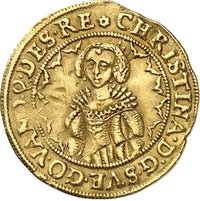
Half-length portrait in a circular frame, encircled by a legend.
Script: Latin
Reverse
Description:
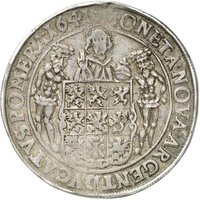
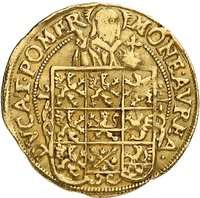
Saint with orb above shield-flanked date, encircled by legend.
Script: Latin
Edge
Mintings
| Year | Mint Mark | Mintage | Quality | Collection |
|---|---|---|---|---|
| 1641 | — | — |
Historical background
In 1641, the currency situation in Swedish Pomerania was one of profound instability and complexity, a direct consequence of its position in the Thirty Years' War. The territory, a strategic Swedish bridgehead in the Holy Roman Empire, was a crucible of competing monetary systems. The Swedish administration, needing to fund its costly military operations, circulated its own Swedish copper daler and silver riksdaler alongside the myriad of coins already present: local Pomeranian issues, Imperial Reichsthaler, and coins from neighbouring states like Brandenburg and Mecklenburg. This created a chaotic multi-currency environment where exchange rates fluctuated wildly.
The primary economic driver was the war itself. To sustain the army, Sweden frequently resorted to debasement (reducing the precious metal content in coins) and the forceful extraction of contributions (war taxes) from the local population, often paid in kind or in whatever coin was available. The massive influx of low-value copper coinage, particularly from Sweden, fueled severe inflation, eroding purchasing power and disrupting local trade and agriculture. The monetary chaos was exacerbated by the circulation of clipped, counterfeit, and worn coins, making every transaction a matter of suspicion and negotiation.
Furthermore, Swedish Pomerania was not a closed system but part of the wider Imperial monetary circulation. Efforts to impose order, such as issuing minting ordinances or setting valuation lists (Kurantzettel), were largely ineffective against the overwhelming pressures of wartime finance. Thus, in 1641, the currency situation was less a managed system and more a state of fragmented monetary crisis, reflecting the broader devastation and administrative challenges of a region caught between Swedish military ambition and the brutal realities of a decades-long conflict.
The primary economic driver was the war itself. To sustain the army, Sweden frequently resorted to debasement (reducing the precious metal content in coins) and the forceful extraction of contributions (war taxes) from the local population, often paid in kind or in whatever coin was available. The massive influx of low-value copper coinage, particularly from Sweden, fueled severe inflation, eroding purchasing power and disrupting local trade and agriculture. The monetary chaos was exacerbated by the circulation of clipped, counterfeit, and worn coins, making every transaction a matter of suspicion and negotiation.
Furthermore, Swedish Pomerania was not a closed system but part of the wider Imperial monetary circulation. Efforts to impose order, such as issuing minting ordinances or setting valuation lists (Kurantzettel), were largely ineffective against the overwhelming pressures of wartime finance. Thus, in 1641, the currency situation was less a managed system and more a state of fragmented monetary crisis, reflecting the broader devastation and administrative challenges of a region caught between Swedish military ambition and the brutal realities of a decades-long conflict.
✨ Legendary