

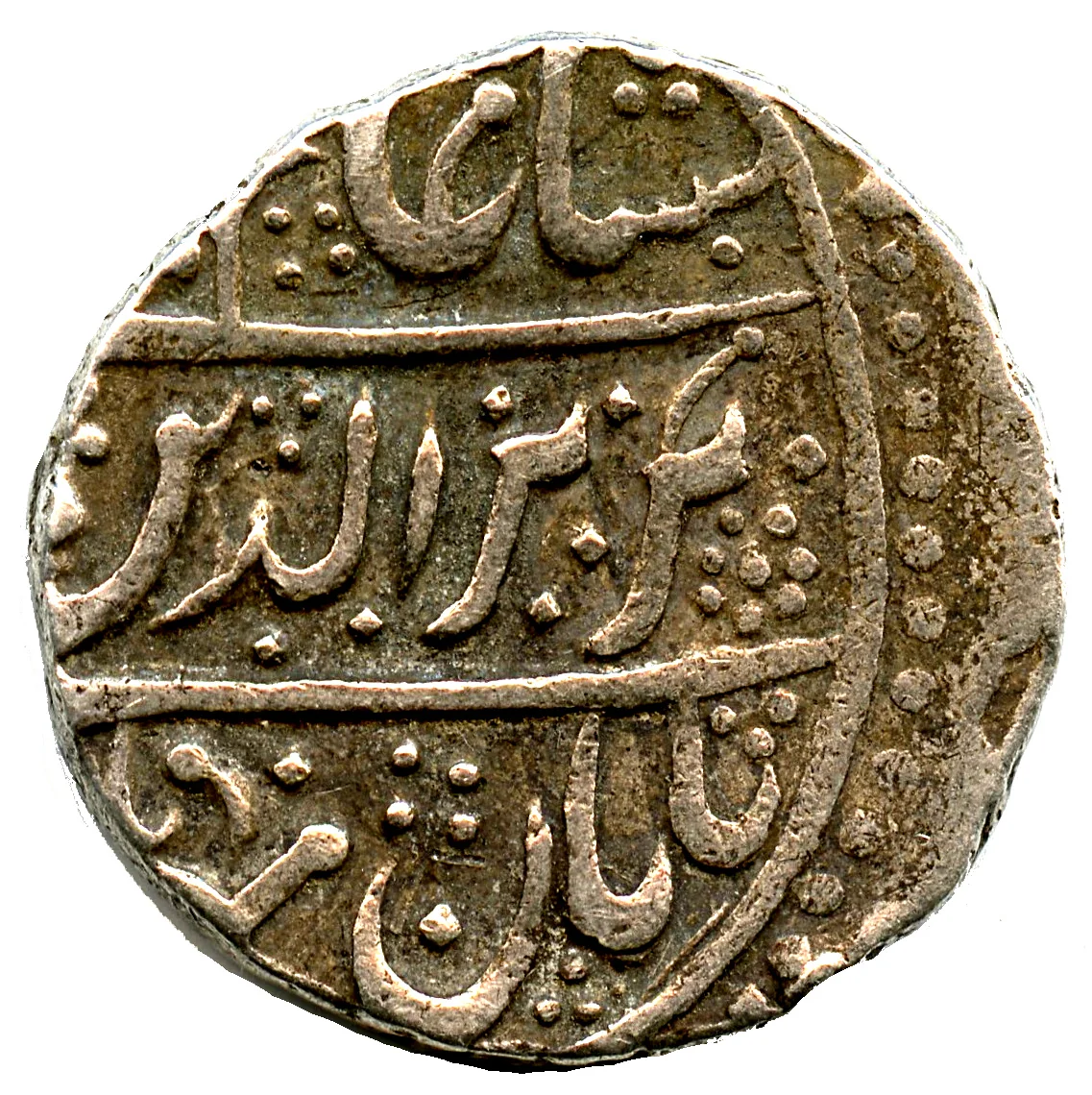
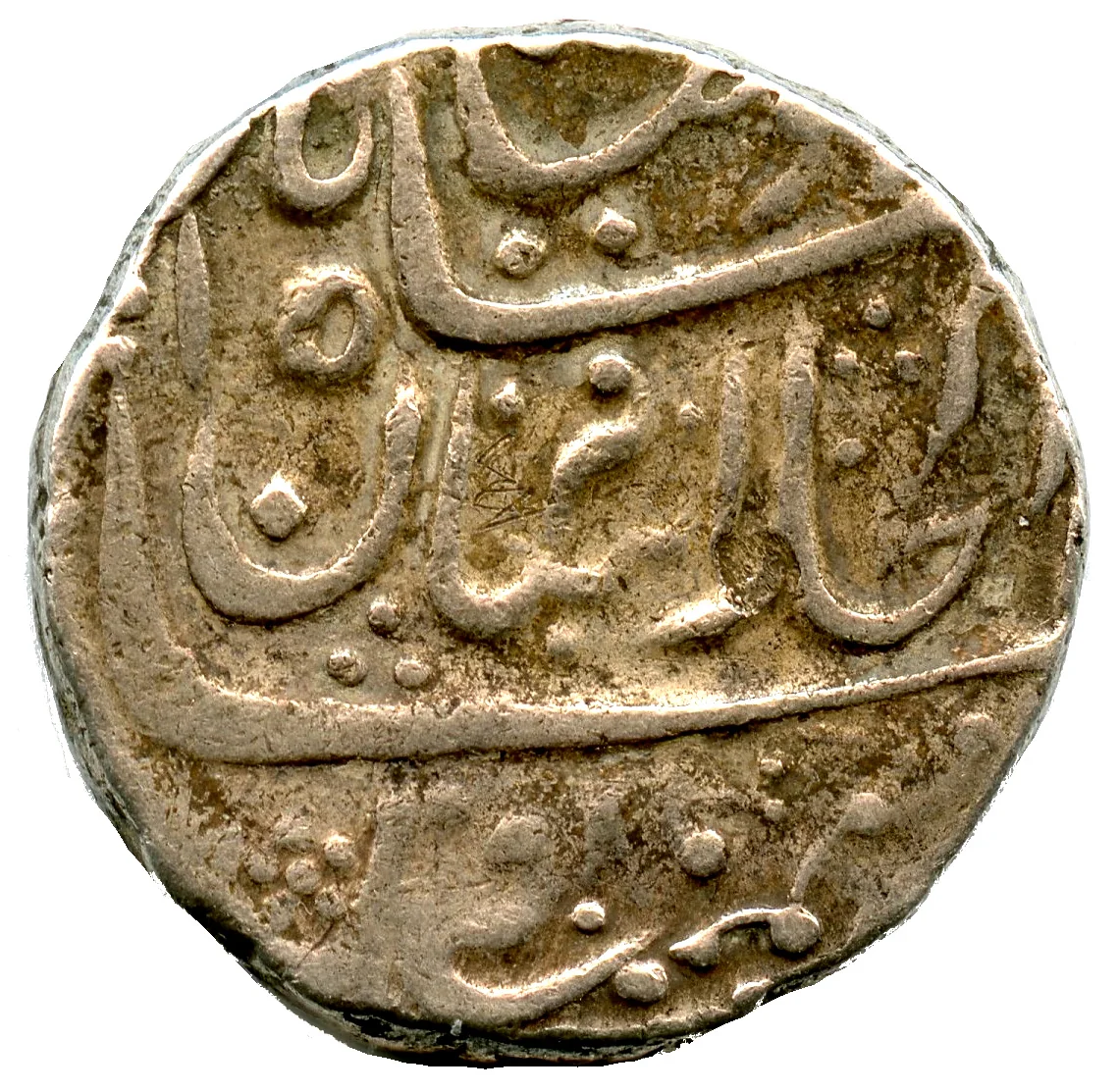
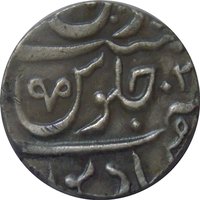
1 Rupee – Maratha Empire
India
Context
Material
Diameter: 22.5 mm
Weight: 11.07 g
Silver weight: 11.07 g
Thickness: 2.9 mm
Shape: Irregular round
Composition: Silver
Magnetic: No
Technique: Hammered
References
KM: #Click to copy to clipboard228
Numista: #136359
Value
Bullion value: $32.16
Obverse
Inscription:
Long tailed Persian Wa
Reverse
Edge
Rough
Mintings
| Year | Mint Mark | Mintage | Quality | Collection |
|---|---|---|---|---|
| — | — | — |
Historical background
The year 1167 in the traditional Shalivahana Shaka calendar corresponds to 1245 CE, a period predating the establishment of the Maratha Empire by over four centuries. During this time, the Deccan region, which would later become the Maratha homeland, was under the control of other dynasties, most notably the Seuna (Yadava) Dynasty of Devagiri. Therefore, there was no distinct "Maratha" currency situation in 1167. The monetary system would have been that of the prevailing regional powers.
The Yadavas, along with other contemporary Deccan kingdoms like the Hoysalas and Kakatiyas, operated within a sophisticated pan-Indian monetary framework. The primary circulating currency was the tanka, a silver coin introduced by the Delhi Sultanate, which had begun to influence the south. Alongside this, older traditions persisted, including the use of gold pagodas/hon and various copper coins for local and regional trade. The hyperdrachm, a silver coin of the Yadavas themselves, was also a significant feature, often imitating the designs of earlier Western Chalukyan and other coinage.
The economy was not fully monetized, with a significant portion of transactions, especially in rural areas, conducted through barter or payments in kind. The coinage in circulation was a mix of locally minted issues and a wide variety of older, clipped, and foreign coins, leading to a complex system where coins were often valued by weight and intrinsic metal content rather than a simple face value. Thus, the "currency situation" in the Deccan in 1167/1245 CE was one of transition and plurality, reflecting the layered political and economic history of the region long before the rise of Maratha power.
The Yadavas, along with other contemporary Deccan kingdoms like the Hoysalas and Kakatiyas, operated within a sophisticated pan-Indian monetary framework. The primary circulating currency was the tanka, a silver coin introduced by the Delhi Sultanate, which had begun to influence the south. Alongside this, older traditions persisted, including the use of gold pagodas/hon and various copper coins for local and regional trade. The hyperdrachm, a silver coin of the Yadavas themselves, was also a significant feature, often imitating the designs of earlier Western Chalukyan and other coinage.
The economy was not fully monetized, with a significant portion of transactions, especially in rural areas, conducted through barter or payments in kind. The coinage in circulation was a mix of locally minted issues and a wide variety of older, clipped, and foreign coins, leading to a complex system where coins were often valued by weight and intrinsic metal content rather than a simple face value. Thus, the "currency situation" in the Deccan in 1167/1245 CE was one of transition and plurality, reflecting the layered political and economic history of the region long before the rise of Maratha power.
✨ Legendary