

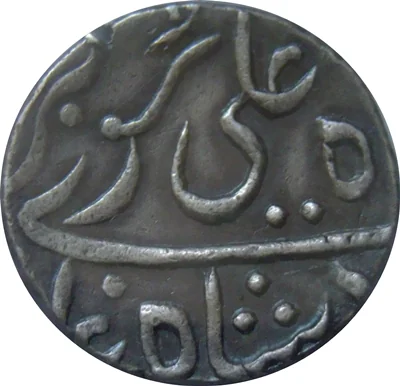
Obverse
Description:
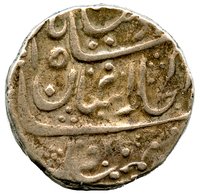
Prince Ali Gauhar, later Shah Alam II.
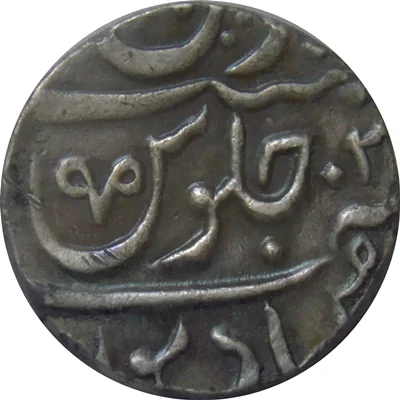
Reverse
Description:
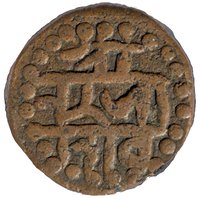
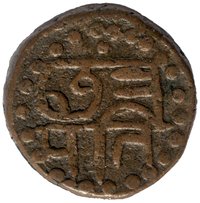
Like KM#217, with mint mark #3 and Arabic numeral Samvat dates.
Edge
Mints
| Name | Mark |
|---|---|
| Poona | — |
Mintings
| Year | Mint Mark | Mintage | Quality | Collection |
|---|---|---|---|---|
| — | — | — | ||
| 1180 | — | — | ||
| 1182 | — | — | ||
| 1183 | — | — | ||
| 1778 | — | — | ||
| 1784 | — | — |
Historical background
The year 1180 CE falls within the late 12th century, a period predating the establishment of the Maratha Empire by over 400 years. The Maratha Empire, as a distinct political and military power, emerged in the mid-17th century under Chhatrapati Shivaji Maharaj. Therefore, there was no "Maratha Empire currency situation" in 1180. The Deccan region, which would later become the Maratha homeland, was under the control of other dynasties at this time.
During this era, the area was likely under the influence of the Seuna (Yadava) Dynasty of Devagiri, which ruled from the late 12th to early 14th centuries. Their currency would have been the dominant medium of exchange. Coinage in the Deccan at this time was part of a broader Indian monetary system heavily influenced by the delhi sultanate to the north and various regional Hindu kingdoms. Coins were typically struck in gold, silver, and copper, with inscriptions in Devanagari or local scripts, and often featured symbolic imagery like seated goddesses, lions, or chariots.
The monetary economy was not uniform; alongside these formal royal issues, older coins from previous dynasties like the Chalukyas or even Kushan-era coins might still have circulated in trade. Barter and commodity money (like grains or cattle) also remained significant, especially in rural and local transactions. Thus, the "currency situation" in the Maratha region in 1180 was characterized by a mix of regional royal coinage, historical currencies, and non-monetary exchange, all under the political authority of the Yadava kingdom, not a Maratha polity.
During this era, the area was likely under the influence of the Seuna (Yadava) Dynasty of Devagiri, which ruled from the late 12th to early 14th centuries. Their currency would have been the dominant medium of exchange. Coinage in the Deccan at this time was part of a broader Indian monetary system heavily influenced by the delhi sultanate to the north and various regional Hindu kingdoms. Coins were typically struck in gold, silver, and copper, with inscriptions in Devanagari or local scripts, and often featured symbolic imagery like seated goddesses, lions, or chariots.
The monetary economy was not uniform; alongside these formal royal issues, older coins from previous dynasties like the Chalukyas or even Kushan-era coins might still have circulated in trade. Barter and commodity money (like grains or cattle) also remained significant, especially in rural and local transactions. Thus, the "currency situation" in the Maratha region in 1180 was characterized by a mix of regional royal coinage, historical currencies, and non-monetary exchange, all under the political authority of the Yadava kingdom, not a Maratha polity.
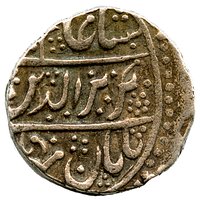
💎 Extremely Rare