

4 maravedis – Spain
Add to wishlist
Spain
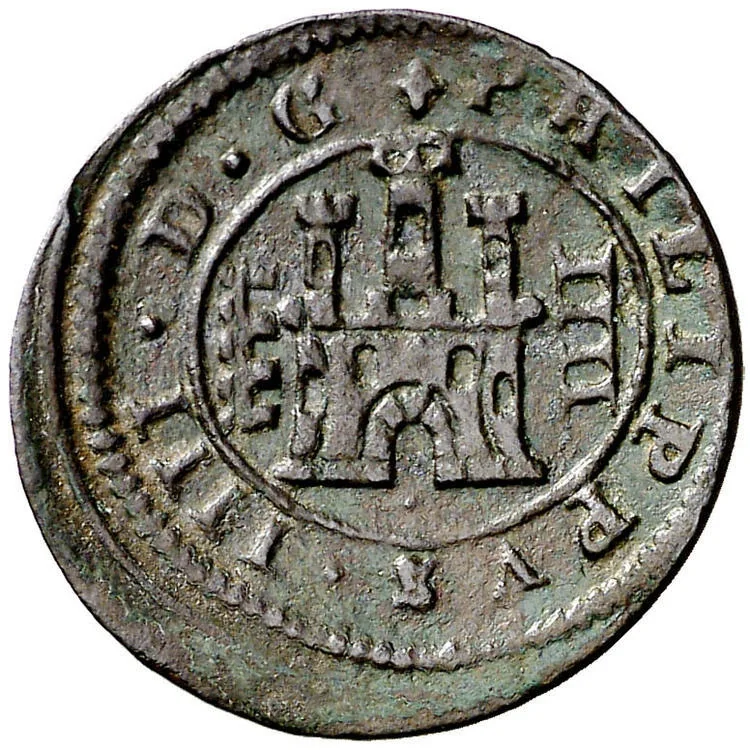
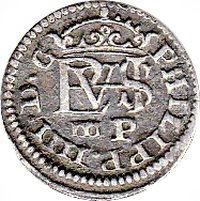
Obverse
Description:
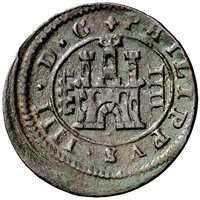
Castle left, value right. Legend encircling.
Inscription:
PHILIPPVS IIII D G
IIII
IIII
Script: Latin
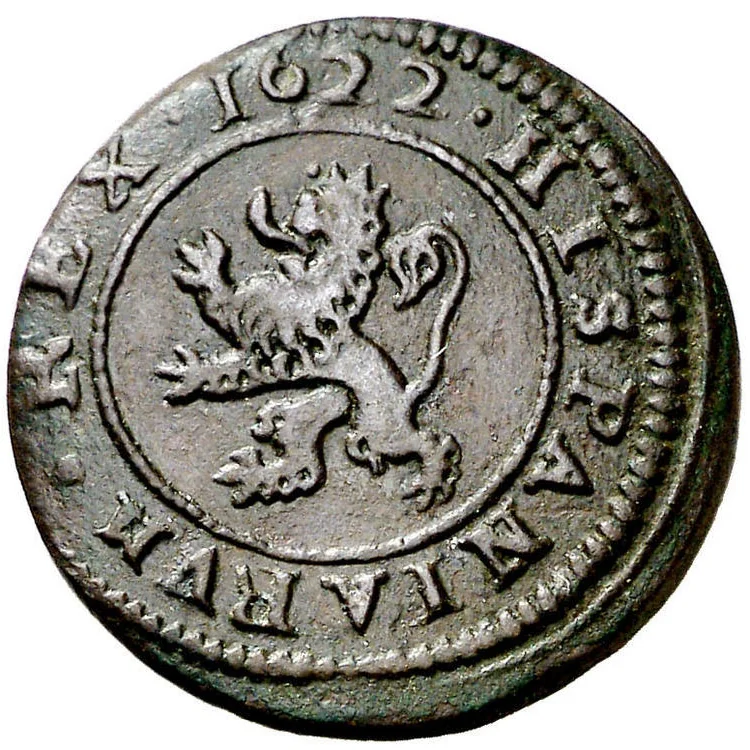
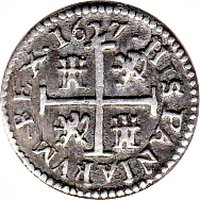
Reverse
Edge
Categories
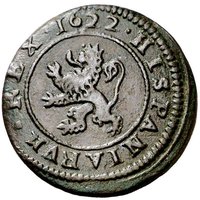
| Animal> Feline |
| Building> Castle or fortification |
Mints
| Name | Mark |
|---|---|
| Royal Mint of Segovia | — |
Mintings
| Year | Mint Mark | Mintage | Quality | Collection |
|---|---|---|---|---|
| 1622 | — | — | ||
| 1625 | — | — | ||
| 1626 | — | — |
Historical background
In 1622, Spain’s currency system was in a state of profound crisis, a direct consequence of the Crown’s relentless spending on its vast military commitments across Europe and the Atlantic. To finance continuous wars, the Habsburg monarchy had resorted to massive borrowing and, most destructively, the repeated debasement of its primary silver coin, the real. By clipping coins, reducing their silver content, and issuing vast quantities of copper vellón currency, the government created a chaotic monetary environment where the intrinsic metal value of a coin was often less than its face value. This practice, while providing short-term liquidity, was eroding the very foundation of Spain’s economic power.
The situation was characterized by a severe inflationary spiral, particularly driven by the flood of pure copper vellón coins. As the public lost confidence, they hoarded older, higher-quality silver coins, leading to Gresham’s Law in action: "bad money drives out good." Prices in the inflated vellón currency skyrocketed, causing social distress and market distortions. Attempts to fix the problem, like the 1621 decree to call in and restamp all copper currency, proved ineffective and were often followed by even more reckless emissions, creating a vicious cycle of devaluation and price instability.
This monetary chaos occurred against the backdrop of a broader economic decline. While silver imports from the Americas were still substantial, they were increasingly shipped directly to foreign bankers to service the Crown's staggering debts, rather than stimulating the domestic economy. The currency instability of 1622 thus symbolized a critical juncture: Spain’s global hegemony was being undermined from within by financial mismanagement, as the tools used to sustain its empire were simultaneously destroying its economic integrity and burdening its people with inflation and uncertainty.
The situation was characterized by a severe inflationary spiral, particularly driven by the flood of pure copper vellón coins. As the public lost confidence, they hoarded older, higher-quality silver coins, leading to Gresham’s Law in action: "bad money drives out good." Prices in the inflated vellón currency skyrocketed, causing social distress and market distortions. Attempts to fix the problem, like the 1621 decree to call in and restamp all copper currency, proved ineffective and were often followed by even more reckless emissions, creating a vicious cycle of devaluation and price instability.
This monetary chaos occurred against the backdrop of a broader economic decline. While silver imports from the Americas were still substantial, they were increasingly shipped directly to foreign bankers to service the Crown's staggering debts, rather than stimulating the domestic economy. The currency instability of 1622 thus symbolized a critical juncture: Spain’s global hegemony was being undermined from within by financial mismanagement, as the tools used to sustain its empire were simultaneously destroying its economic integrity and burdening its people with inflation and uncertainty.
Series: 1622 Spain circulation coins
💎 Extremely Rare