

Obverse
Description:
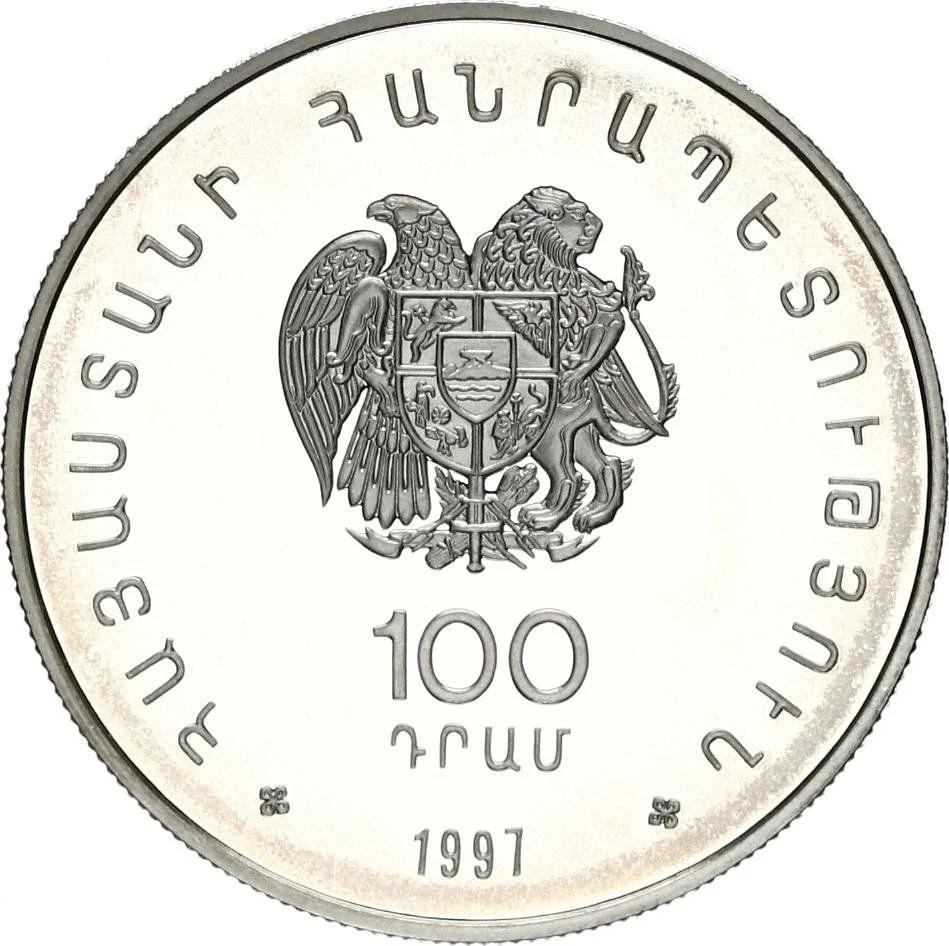
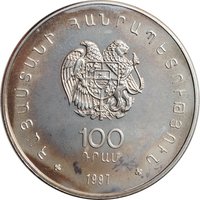
National Coat of Arms, denomination, date.
Inscription:
• ՀԱՅԱՍՏԱՆԻ ՀԱՆՐԱՊԵՏՈՒԹՅՈՒՆ •
100
ԴՐԱՄ
1997
100
ԴՐԱՄ
1997
Translation:
REPUBLIC OF ARMENIA
100
DRAM
1997
100
DRAM
1997
Script: Armenian
Language: Armenian
Engraver: Ruben Arutchyan
Reverse
Description:
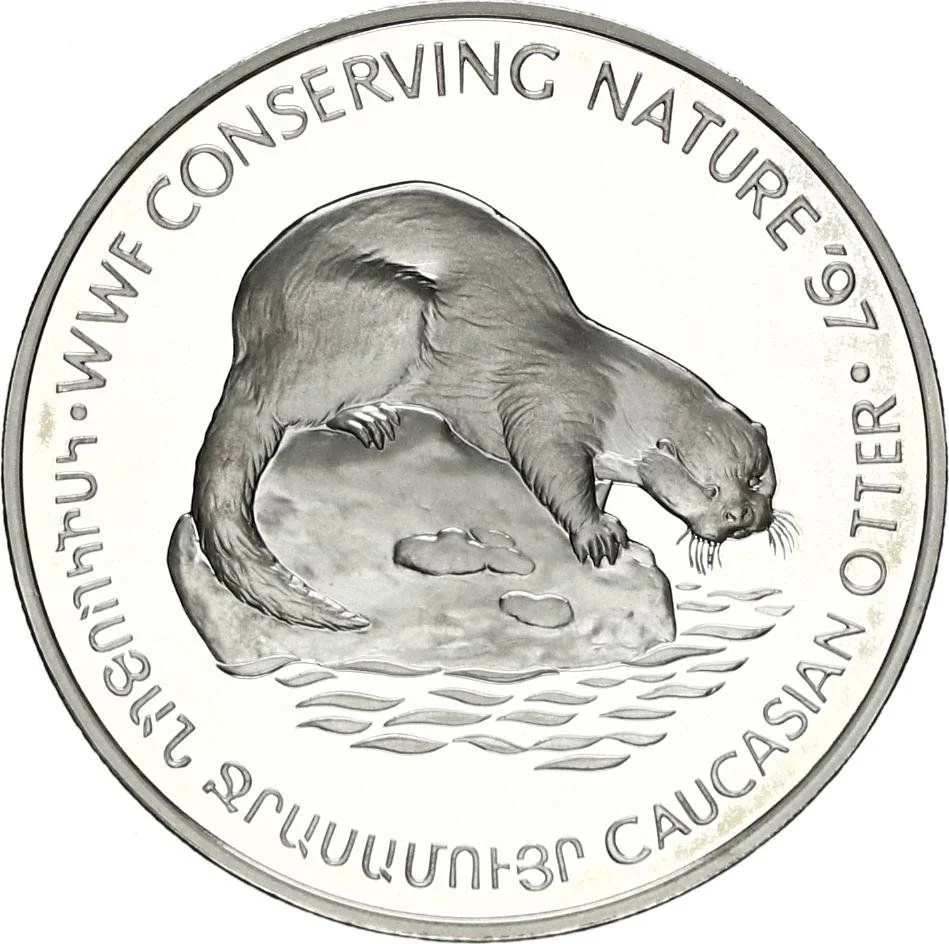
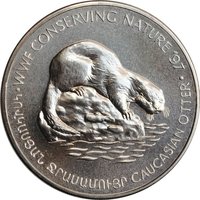
Caucasian otter, right-facing.
Inscription:
• WWF CONSERVING NATURE '97 •
ԿՈՎԿԱՍՅԱՆ ՋՐԱՍԱՄՈՒՅՐ CAUCASIAN OTTER
ԿՈՎԿԱՍՅԱՆ ՋՐԱՍԱՄՈՒՅՐ CAUCASIAN OTTER
Translation:
CONSERVING NATURE '97
CAUCASIAN OTTER
CAUCASIAN OTTER
Engraver: Ruben Arutchyan
Edge
Reeded
Categories
| Organization> WWF |
| Symbols> Coat of Arms |
| Animal |
Mints
| Name | Mark |
|---|---|
| Royal Mint | — |
Mintings
| Year | Mint Mark | Mintage | Quality | Collection |
|---|---|---|---|---|
| 1997 | — | 15,000 | Proof |
Historical background
In 1997, Armenia was in the early stages of stabilizing its economy following the severe contraction and hyperinflation that accompanied the dissolution of the Soviet Union and the Nagorno-Karabakh conflict. The national currency, the Armenian dram (AMD), introduced in November 1993, had initially experienced extreme volatility and depreciation. However, by 1997, under a strict macroeconomic stabilization program guided by the International Monetary Fund (IMF) and World Bank, the country was achieving significant progress. Inflation, which had been over 5,000% in 1994, was brought down to a single-digit annual rate, marking a crucial turning point in restoring public confidence in the dram.
The currency regime was a managed float, with the Central Bank of Armenia (CBA) actively intervening in the foreign exchange market to smooth out excessive fluctuations and build international reserves. The dram demonstrated notable stability against the US dollar throughout the year, a stark contrast to the previous years of turmoil. This stability was underpinned by increased discipline in monetary policy, a steady flow of diaspora remittances, and the beginnings of foreign direct investment, particularly in sectors like telecommunications.
Nevertheless, Armenia's economy in 1997 remained fragile and dollarized, with many large transactions and savings still conducted in foreign currency due to lingering public memory of hyperinflation. The economy was also heavily dependent on external financing from international institutions and the diaspora. While the currency situation had visibly improved, the underlying challenges of widespread poverty, industrial collapse, and a narrow economic base meant that the stability of the dram was not yet fully entrenched and remained vulnerable to external shocks and fiscal imbalances.
The currency regime was a managed float, with the Central Bank of Armenia (CBA) actively intervening in the foreign exchange market to smooth out excessive fluctuations and build international reserves. The dram demonstrated notable stability against the US dollar throughout the year, a stark contrast to the previous years of turmoil. This stability was underpinned by increased discipline in monetary policy, a steady flow of diaspora remittances, and the beginnings of foreign direct investment, particularly in sectors like telecommunications.
Nevertheless, Armenia's economy in 1997 remained fragile and dollarized, with many large transactions and savings still conducted in foreign currency due to lingering public memory of hyperinflation. The economy was also heavily dependent on external financing from international institutions and the diaspora. While the currency situation had visibly improved, the underlying challenges of widespread poverty, industrial collapse, and a narrow economic base meant that the stability of the dram was not yet fully entrenched and remained vulnerable to external shocks and fiscal imbalances.
Series: WWF Conserving Nature
✨ Legendary