Logo Title
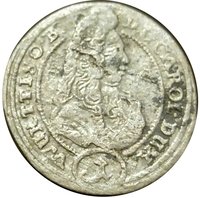
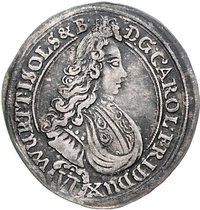
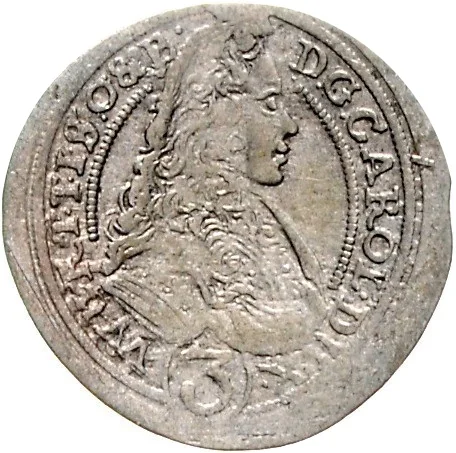
obverse
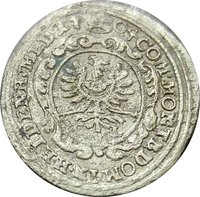
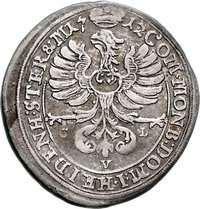
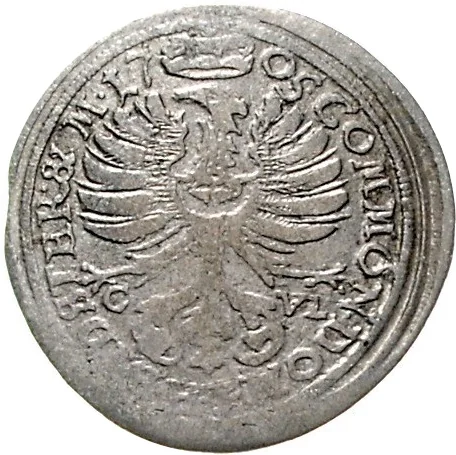
reverse
Emporium Hamburg

3 Kreuzer – Duchy of Württemberg-Oels

Context
Years: 1705–1708
Country: Bohemia
Currency:
Demonetized: Yes
Material
Diameter: 21 mm
Weight: 1.54 g
Silver weight: 1.54 g
Shape: Round
Composition: Silver
Magnetic: No
References
KM: #Click to copy to clipboard76
Numista: #135962
Value
Bullion value: $4.29

Obverse

Description:
Right-facing bust, "3" below.
Inscription:
D. G. CAR(O)L. DUX. — W(URT). T. I. S. O. (&) B.
Script: Latin

Reverse

Description:
Silesian eagle in circle, princely hat above date in top margin.
Inscription:
COM. MON(T). DOM. I. HEID. STER. (&) M(ED).
Script: Latin

Edge

Mintings

YearMint MarkMintageQualityCollection
1705CVL
1708CVL

Historical background

In 1705, the currency situation in the Duchy of Württemberg-Oels was complex and challenging, typical of the fragmented Holy Roman Empire. The duchy, a small Silesian territory ruled by a branch of the Württemberg dynasty, did not possess a strong, independent minting authority. Instead, its monetary system was heavily influenced by and integrated into the broader Silesian and imperial currency circuits, which were dominated by larger regional powers. Consequently, a variety of coins circulated, including those minted by neighbouring states like Austria and Brandenburg, as well as imperial Reichsthaler, leading to a lack of uniform standard.

This period was marked by the economic strain of the Great Northern War (1700-1721), which spilled into the region. The war caused widespread fiscal pressure, leading many states, including those in Silesia, to engage in currency debasement—reducing the precious metal content in coins to fund military expenditures. While specific minting records for Oels in 1705 are sparse, the duchy would have been acutely affected by this inflationary environment. The influx of underweight and inferior coins from neighbouring mints degraded the money in circulation, causing uncertainty in trade, price instability, and a loss of public trust in the coinage.

Therefore, the background for Württemberg-Oels in 1705 is one of monetary dependency and crisis. The duchy’s currency was not autonomous but was subject to the destabilizing regional practices of debasement and competitive minting. This created a difficult economic climate for the local population and administration, as they navigated a confusing mix of coins of fluctuating value, all within the shadow of a major European conflict that placed severe pressure on public finances and the integrity of the monetary system.
Legendary