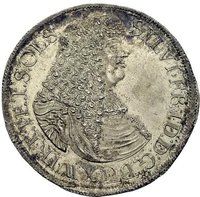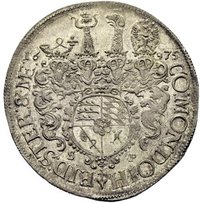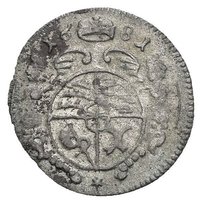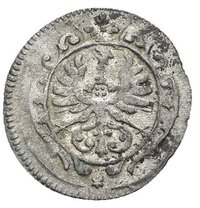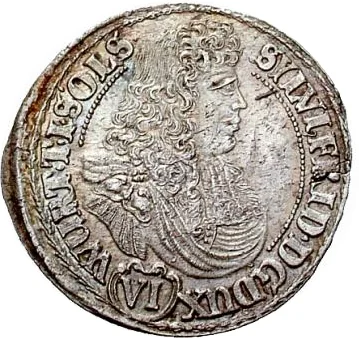
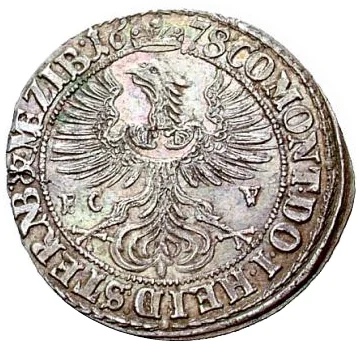
In 1678, the currency situation in the Duchy of Württemberg-Oels was characterized by the severe economic and monetary turmoil common across the Holy Roman Empire in the aftermath of the Thirty Years' War. The duchy, a small Silesian territory ruled by a branch of the Württemberg dynasty, did not possess its own independent minting authority. Instead, it relied on the circulation of coins issued by neighboring states, imperial mints, and a flood of debased foreign coins, leading to a chaotic and unreliable monetary environment. This period was part of the broader
Kipper- und Wipperzeit, an era of rampant currency manipulation where coins were clipped, debased, and exchanged at unstable rates, causing rampant inflation and crippling trust in the coinage.
The local economy was further strained by the political and military context. In 1678, the duchy was caught in the crosscurrents of the Franco-Dutch War (1672–1678), with the region facing the threat of Swedish and French incursions. This military pressure necessitated extraordinary expenditures for defense and troop levies, which were often financed through forced loans and the acceptance of even more debased currency for payments. The lack of a stable, high-quality circulating medium hindered commerce and tax collection, exacerbating the fiscal difficulties of Duke Silvius II Frederick and his administration.
Consequently, the monetary policy of Württemberg-Oels in this year was likely reactive and defensive, focused on managing rather than solving the crisis. The ducal government would have been engaged in the perpetual struggle to regulate the accepted value of various coins within its borders through repeated minting ordinances (
Münzedikte), attempting to stem the inflow of the worst debased coins and define exchange rates for the multitude of currencies in circulation. The fundamental problem, however, remained the duchy's dependency on the unstable imperial monetary system and the economic fragility of a small territory recovering from decades of war.