

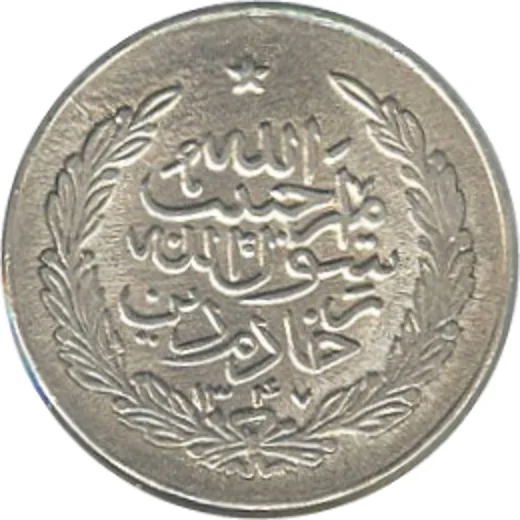
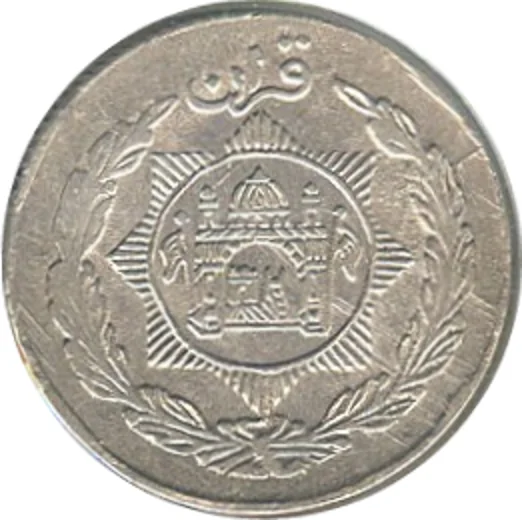
1 Kran – Saqqawist Emirate
Afghanistan
Context
Year: 1929
Islamic (Hijri) Year: 1347
Country: Afghanistan 
Issuer: Saqqawist Emirate
Ruler: Habibullah Kalakani
Currency:
(1891—1923)
Demonetized: Yes
Material
References
KM: #Click to copy to clipboard896
Numista: #12101
Value
Bullion value: $6.66
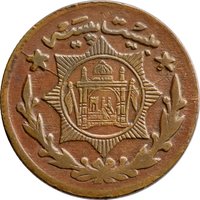
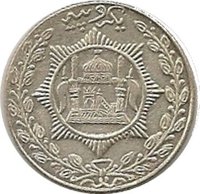
Obverse
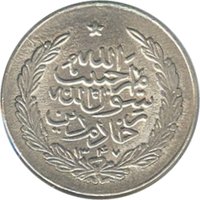
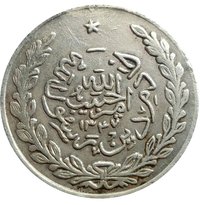
Reverse
Edge
Reeded
Categories
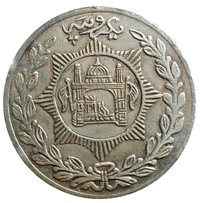
| Building> Religious building |
Mintings
| Year | Mint Mark | Mintage | Quality | Collection |
|---|---|---|---|---|
| 1929 | — | — |
Historical background
The currency situation in the Saqqawist Emirate of 1929, a short-lived state established by Habibullah Kalakani after his capture of Kabul, was defined by profound instability and a crisis of legitimacy. Kalakani’s regime, which overthrew King Amanullah Khan, inherited an economy severely weakened by civil war and the previous king’s reform costs. Crucially, the Saqqawists lacked control of the Da Afghanistan Bank and the state’s gold reserves, which remained in the hands of Amanullah’s loyalists in the south. This meant the emirate had no institutional authority or precious metal backing to issue credible new currency.
Consequently, the primary circulating medium became a chaotic mix of existing Afghan rupee notes from Amanullah’s reign. However, their value plummeted due to hyperinflation driven by extreme scarcity of goods, broken trade networks, and widespread counterfeiting. The Saqqawist administration attempted to assert monetary control by overstamping existing banknotes with phrases like “Saqqawist Emirate” and new denominations, but this did nothing to address the fundamental lack of economic productivity or confidence. The overstamping was largely seen as a political gesture rather than a sound financial policy.
Ultimately, the currency collapse was a direct reflection of the emirate’s fragile and contested rule. As rival factions, particularly forces loyal to Nadir Khan, gained strength, the economic situation deteriorated further. The complete loss of faith in the stamped rupees mirrored the loss of faith in Kalakani’s government, and the monetary system dissolved entirely following the Saqqawists' military defeat and the fall of Kabul in October 1929. Nadir Khan’s subsequent accession marked the end of this chaotic period and the beginning of efforts to restore a unified national currency.
Consequently, the primary circulating medium became a chaotic mix of existing Afghan rupee notes from Amanullah’s reign. However, their value plummeted due to hyperinflation driven by extreme scarcity of goods, broken trade networks, and widespread counterfeiting. The Saqqawist administration attempted to assert monetary control by overstamping existing banknotes with phrases like “Saqqawist Emirate” and new denominations, but this did nothing to address the fundamental lack of economic productivity or confidence. The overstamping was largely seen as a political gesture rather than a sound financial policy.
Ultimately, the currency collapse was a direct reflection of the emirate’s fragile and contested rule. As rival factions, particularly forces loyal to Nadir Khan, gained strength, the economic situation deteriorated further. The complete loss of faith in the stamped rupees mirrored the loss of faith in Kalakani’s government, and the monetary system dissolved entirely following the Saqqawists' military defeat and the fall of Kabul in October 1929. Nadir Khan’s subsequent accession marked the end of this chaotic period and the beginning of efforts to restore a unified national currency.
⭐ Somewhat Rare