

4 Escudos – Spain
Spain
Context
Material
Diameter: 29 mm
Weight: 13 g
Gold weight: 13.00 g
Thickness: 1 mm
Shape: Irregular round
Composition: Gold
Magnetic: No
Technique: Hammered
References
KM: #Click to copy to clipboard57
Numista: #134461
Value
Bullion value: $2167.54
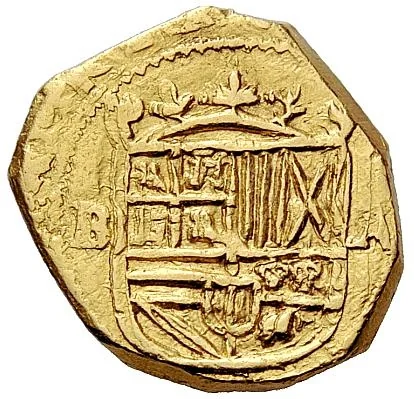
Obverse
Description:
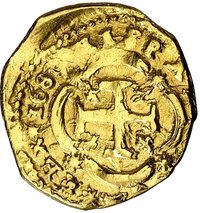
Shield with crown. Circular inscription.
Inscription:
CAROLVS · II · D · G
B A
B A
Script: Latin
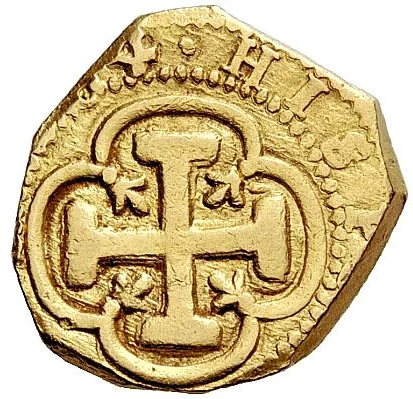
Reverse
Edge
Mints
| Name | Mark |
|---|---|
| Barcelona Mint / La Seca | — |
Mintings
| Year | Mint Mark | Mintage | Quality | Collection |
|---|---|---|---|---|
| 1676 | BA | — | ||
| 1679 | BA | — | ||
| 1684 | BA | — | ||
| 1697 | BA | — | ||
| 1699 | BA | — |
Historical background
In 1676, Spain’s currency system was in a state of profound crisis, a direct consequence of decades of economic mismanagement and the immense fiscal pressures of sustaining its vast empire. The crown, under the rule of the physically and politically enfeebled Charles II, was trapped in a cycle of perpetual debt from endless European wars. To meet its obligations, the government repeatedly resorted to debasing the primary silver coin, the real, by reducing its precious metal content while maintaining its face value. This practice, alongside the issuance of vast quantities of low-value vellón (copper) coinage, flooded the economy with unstable money and fueled rampant inflation, a phenomenon Spaniards termed the "price revolution."
The monetary chaos was exacerbated by a severe shortage of silver, the traditional backbone of Spanish wealth. Shipments from the American colonies had entered a steep decline due to depleted mines, inefficiency, and increased foreign smuggling. This scarcity of "good" silver coinage stood in stark contrast to the overabundance of nearly worthless copper vellón, creating a dysfunctional two-tier system. Prices were often quoted in silver reales, but daily transactions were conducted in bulky bags of copper, leading to confusion, loss of public confidence, and widespread hoarding of any remaining high-quality coins.
Consequently, the Spanish economy suffered from severe internal dislocation. The repeated attempts at monetary reforms, such as the drastic devaluations of the vellón ordered in the 1680s, only created further social unrest and market paralysis as people lost faith in the crown's ability to manage its finances. By 1676, the currency situation was not merely a financial issue but a symptom of the broader decline of Habsburg Spain, undermining domestic commerce, straining the social fabric, and weakening the state’s capacity to project power abroad.
The monetary chaos was exacerbated by a severe shortage of silver, the traditional backbone of Spanish wealth. Shipments from the American colonies had entered a steep decline due to depleted mines, inefficiency, and increased foreign smuggling. This scarcity of "good" silver coinage stood in stark contrast to the overabundance of nearly worthless copper vellón, creating a dysfunctional two-tier system. Prices were often quoted in silver reales, but daily transactions were conducted in bulky bags of copper, leading to confusion, loss of public confidence, and widespread hoarding of any remaining high-quality coins.
Consequently, the Spanish economy suffered from severe internal dislocation. The repeated attempts at monetary reforms, such as the drastic devaluations of the vellón ordered in the 1680s, only created further social unrest and market paralysis as people lost faith in the crown's ability to manage its finances. By 1676, the currency situation was not merely a financial issue but a symptom of the broader decline of Habsburg Spain, undermining domestic commerce, straining the social fabric, and weakening the state’s capacity to project power abroad.
✨ Legendary