

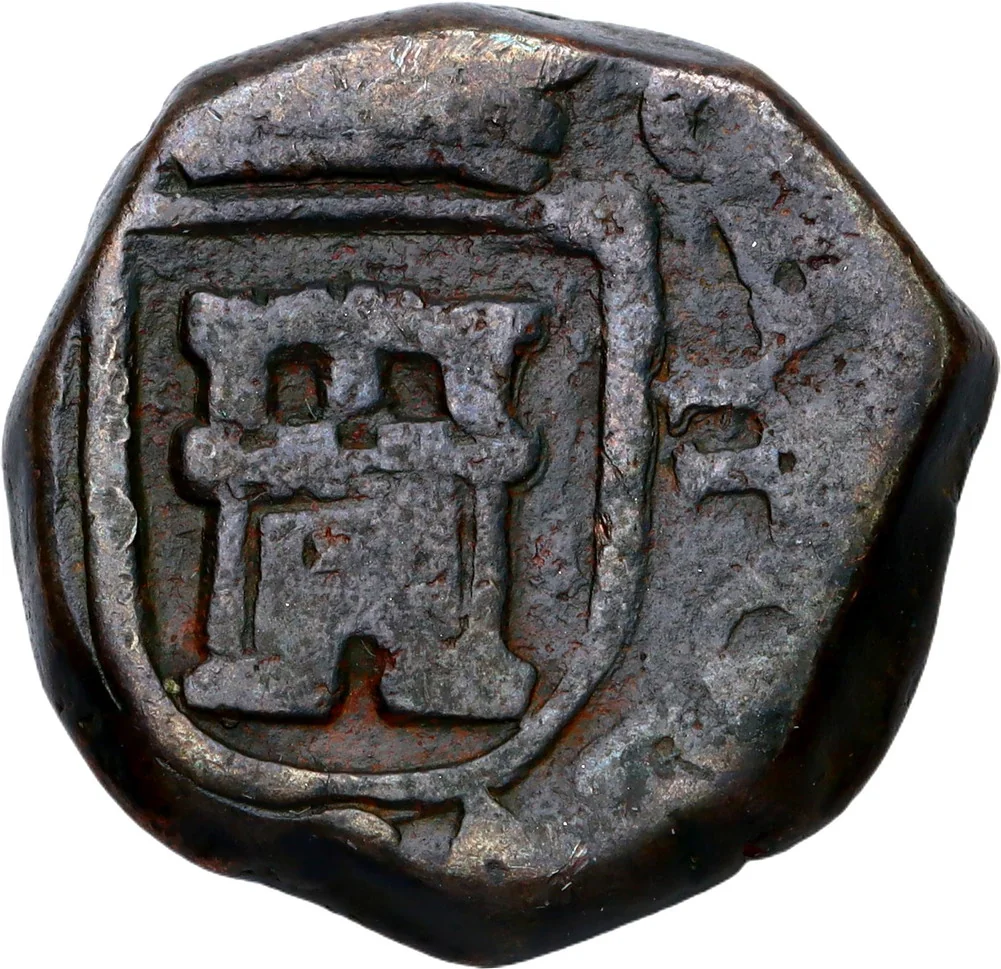
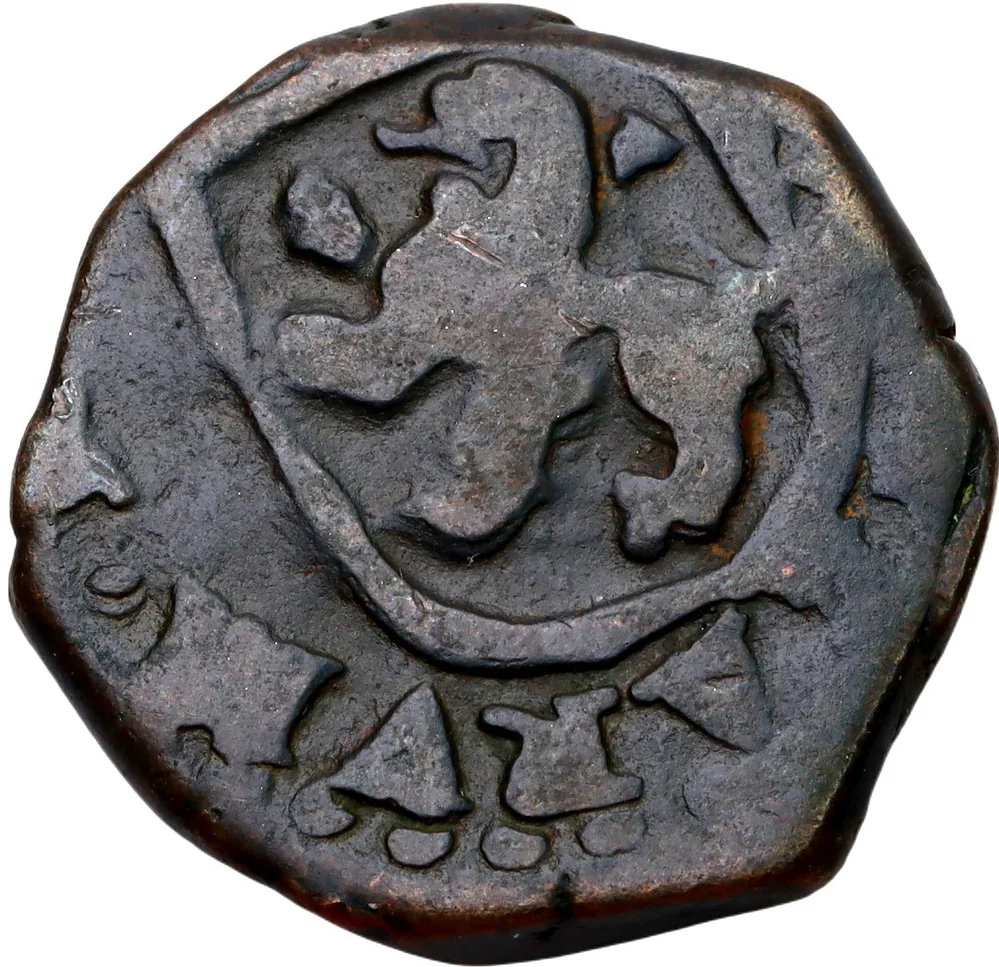
2 maravedis – Spain
Add to wishlist
Spain
Context
Material
Diameter: 25 mm
Weight: 6.2 g
Thickness: 1 mm
Shape: Irregular round
Composition: Copper
Magnetic: No
Technique: Hammered
Alignment: Coin alignment
flip
References
KM: #
Numista: #38557
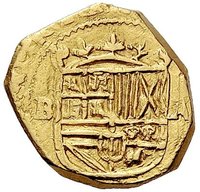
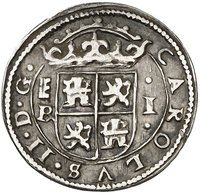
Obverse
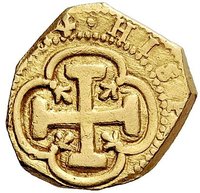
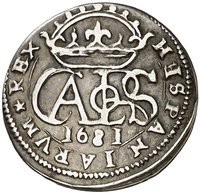
Reverse
Edge
Categories
| Animal> Feline |
| Building> Castle or fortification |
Mints
| Name | Mark |
|---|---|
| Casa vieja de Segovia | — |
| Royal Mint of La Coruña | — |
| Royal Mint of Burgos | B |
| Cuenca | (C) |
| Royal Mint of Granada | (G) |
| Royal Mint of Madrid | (MD) |
| Royal Mint of Seville | S |
| Linares | SL |
| Toledo | (T) |
| Trujillo | (TR) |
| Valladolid | (VD) |
Mintings
| Year | Mint Mark | Mintage | Quality | Collection |
|---|---|---|---|---|
| 1680 | — | — | ||
| 1680 | B | — | BU | |
| 1680 | C | — | ||
| 1680 | G | — | ||
| 1680 | MD | — | ||
| 1680 | S | — | ||
| 1680 | T | — | ||
| 1680 | TR | — | ||
| 1680 | VD | — | ||
| 1680 | VLL | — | ||
| 1681 | B | — | BU | |
| 1681 | G | — | ||
| 1681 | MD | — | ||
| 1681 | S | — | ||
| 1681 | T | — | ||
| 1681 | TR | — | ||
| 1681 | VD | — | ||
| 1681 | — | — | ||
| 1682 | — | — | BU | |
| 1682 | — | — | ||
| 1682 | G | — | ||
| 1682 | MD | — | ||
| 1683 | VLL | — | ||
| 1683 | MD | — | ||
| 1683 | T | — | ||
| 1683 | TR | — | ||
| 1683 | C | — | ||
| 1684 | — | — | ||
| 1684 | B | — | BU | |
| 1684 | G | — | ||
| 1684 | MD | — | ||
| 1684 | SS | — | ||
| 1684 | T | — | ||
| 1684 | VLL | — | ||
| 1685 | — | — | ||
| 1685 | B | — | BU | |
| 1685 | C | — | ||
| 1685 | G | — | ||
| 1685 | MD | — | ||
| 1685 | S | — | ||
| 1685 | VLL | — | ||
| 1686 | — | — | ||
| 1686 | G | — | ||
| 1686 | MD | — | ||
| 1686 | TR | — | ||
| 1686 | VLL | — | ||
| 1687 | — | — | ||
| 1687 | G | — | ||
| 1691 | S | — | ||
| 1692 | SL | — | ||
| 1693 | SL | — | ||
| 1694 | SL | — | ||
| 1695 | SL | — | ||
| 1695 | — | — | ||
| 1696 | — | — | ||
| 1696 | SL | — | ||
| 1697 | SL | — | ||
| 1699 | SL | — | ||
| 1700 | SL | — | ||
| 1701 | SL | — |
Historical background
In 1680, the Spanish monetary system was a complex and troubled reflection of the broader Habsburg economic decline. The primary unit was the silver real, with eight reales equaling one peso or "piece of eight," a coin famous throughout global trade. However, the century had been marked by severe currency debasement. To finance continuous wars and cover state deficits, the crown had repeatedly reduced the silver content in its coinage, most drastically under Philip IV in the 1630s with the issuance of pure copper vellón currency. This led to a disastrous cycle of inflation, hoarding of good silver, and a crippling loss of public confidence in the government's money.
The situation was further complicated by a bewildering coexistence of different currencies. Alongside the debased domestic coins, high-quality silver and gold from the Americas (escudos and pesos) circulated, but were often exported to pay foreign debts. Furthermore, various regions, particularly the Crown of Aragon, maintained their own distinct monetary systems. This fragmentation hindered internal trade and efficient taxation. The government's attempts to fix exchange rates between the different coins and vellón often failed, creating a thriving black market for currency exchange and widespread economic distortion.
By 1680, during the reign of the physically and politically infirm Charles II, the monarchy lacked the strength for a major monetary reform. The economy operated under a persistent "price revolution," and the state's finances were paralyzed by debt. The flood of American silver, which had once powered Spanish hegemony, now largely bypassed the domestic economy to service foreign bankers. Consequently, the currency situation was one of entrenched instability, acting as both a symptom and a cause of Spain's diminished power, awaiting the more decisive reforms that would come with the new Bourbon dynasty in the following century.
The situation was further complicated by a bewildering coexistence of different currencies. Alongside the debased domestic coins, high-quality silver and gold from the Americas (escudos and pesos) circulated, but were often exported to pay foreign debts. Furthermore, various regions, particularly the Crown of Aragon, maintained their own distinct monetary systems. This fragmentation hindered internal trade and efficient taxation. The government's attempts to fix exchange rates between the different coins and vellón often failed, creating a thriving black market for currency exchange and widespread economic distortion.
By 1680, during the reign of the physically and politically infirm Charles II, the monarchy lacked the strength for a major monetary reform. The economy operated under a persistent "price revolution," and the state's finances were paralyzed by debt. The flood of American silver, which had once powered Spanish hegemony, now largely bypassed the domestic economy to service foreign bankers. Consequently, the currency situation was one of entrenched instability, acting as both a symptom and a cause of Spain's diminished power, awaiting the more decisive reforms that would come with the new Bourbon dynasty in the following century.
🌟 Uncommon