

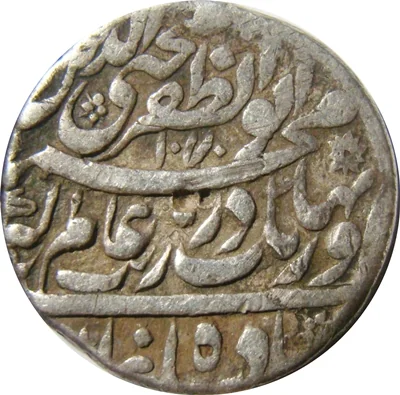
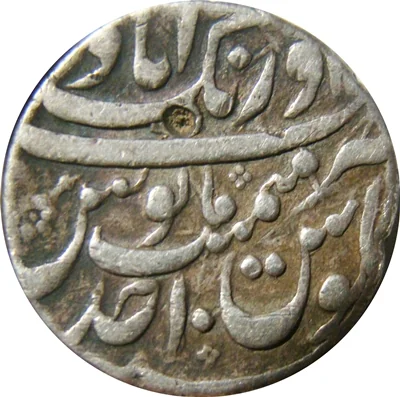
1 Rupee – Mughal Empire
India
Context
Years: 1660–1661
Country: India 
Issuer: Mughal Empire
Ruler: Aurangzeb
Currency:
(1540—1842)
Demonetized: Yes
Material
References
KM: #Click to copy to clipboard297.2
Numista: #133234
Value
Bullion value: $32.60
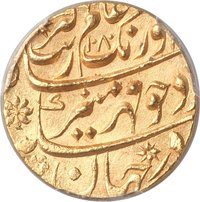
Obverse
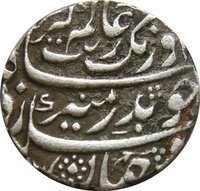
Description:
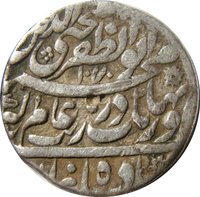
[Name], [Titles], [AH date]
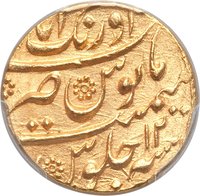
Reverse
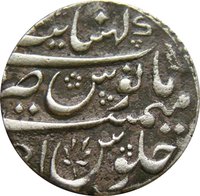
Description:
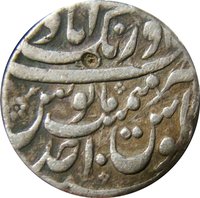
Mint, regnal year
Edge
Mintings
| Year | Mint Mark | Mintage | Quality | Collection |
|---|---|---|---|---|
| 1660 | — | — | ||
| 1661 | — | — |
Historical background
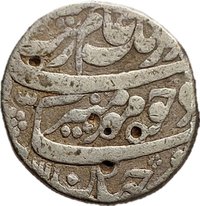
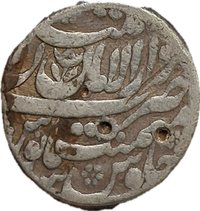
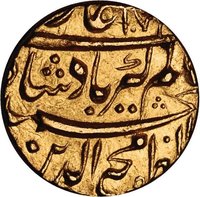
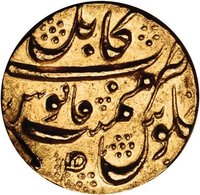
By 1660, the Mughal Empire's currency system under Emperor Aurangzeb was a highly sophisticated and standardized bimetallic structure, central to the administration of one of the world's largest and wealthiest economies. The system was built upon the rupee (rupya), a high-purity silver coin, and the mohur, a gold coin used primarily for hoarding, large transactions, and ceremonial purposes. Copper dams served as the fractional currency for daily local trade. The imperial mints (sikkas) across the empire, operating under strict regulations, ensured remarkable consistency in weight and purity, with coins bearing the emperor's name, the mint location, and the regnal year, making them trusted instruments of commerce from Bengal to Kabul.
This monetary stability was a direct legacy of administrative reforms, particularly those of Akbar (r. 1556–1605), who had established a uniform weight standard and centralized mint control. By 1660, the system facilitated immense revenue collection (jama) assessed in dams but often collected in rupees, and funded the empire's vast military and architectural projects. The influx of American silver into the global economy, entering India through trade with European companies for textiles and spices, provided the crucial bullion that minted into rupees, lubricating the entire Mughal fiscal machine and deepening commercial agriculture and pan-Indian trade networks.
However, the period also presented underlying challenges. Aurangzeb's relentless military campaigns in the Deccan, which intensified after 1660, began to place enormous strain on the treasury. While not yet critical in 1660, the cost of perpetual warfare would eventually lead to increased taxation, territorial over-extension, and a gradual dilution of mint standards later in his reign. Furthermore, the growing presence of European trading companies introduced foreign gold coins, like the Spanish real, which circulated in port cities, hinting at the future gradual integration of the Mughal economy into emerging global monetary flows, even as the imperial rupee remained the undisputed pillar of domestic prosperity.
This monetary stability was a direct legacy of administrative reforms, particularly those of Akbar (r. 1556–1605), who had established a uniform weight standard and centralized mint control. By 1660, the system facilitated immense revenue collection (jama) assessed in dams but often collected in rupees, and funded the empire's vast military and architectural projects. The influx of American silver into the global economy, entering India through trade with European companies for textiles and spices, provided the crucial bullion that minted into rupees, lubricating the entire Mughal fiscal machine and deepening commercial agriculture and pan-Indian trade networks.
However, the period also presented underlying challenges. Aurangzeb's relentless military campaigns in the Deccan, which intensified after 1660, began to place enormous strain on the treasury. While not yet critical in 1660, the cost of perpetual warfare would eventually lead to increased taxation, territorial over-extension, and a gradual dilution of mint standards later in his reign. Furthermore, the growing presence of European trading companies introduced foreign gold coins, like the Spanish real, which circulated in port cities, hinting at the future gradual integration of the Mughal economy into emerging global monetary flows, even as the imperial rupee remained the undisputed pillar of domestic prosperity.
✨ Legendary