

12 mark – Denmark
Add to wishlist
Denmark
Context
Material
Diameter: 20.86 mm
Weight: 3.1 g
Gold Weight:: 2.71 g
Shape: Round
Composition: 87.5% Gold
Standard: Gold tenth ounce
Magnetic: No
Technique: Milled
References
KM: #
Numista: #131778
Value
Bullion value: $415.82
Obverse
Description:
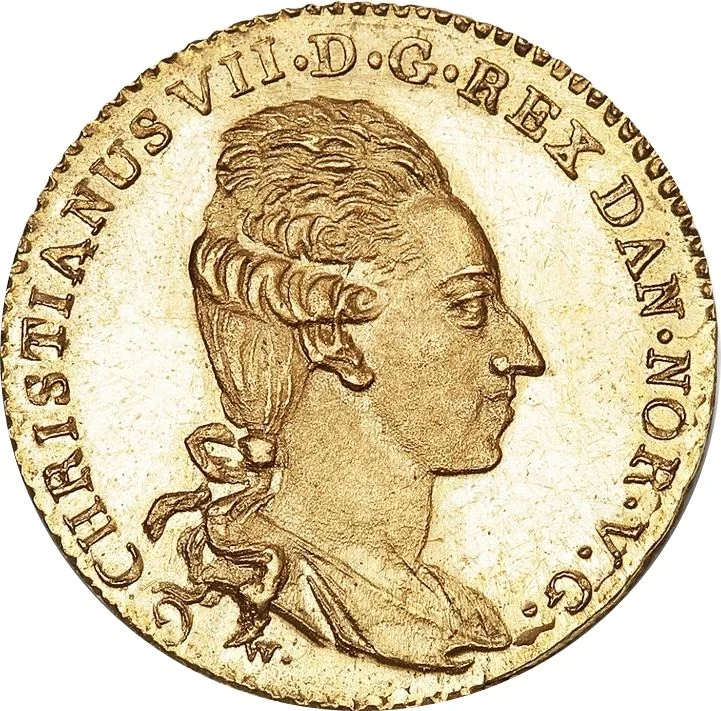
Bust of Christian VII facing right. Engraver's initial below.
Inscription:
CHRISTIANUS VII • D • G • REX • DAN • NOR • V • G •
W
W
Script: Latin
Reverse
Description:
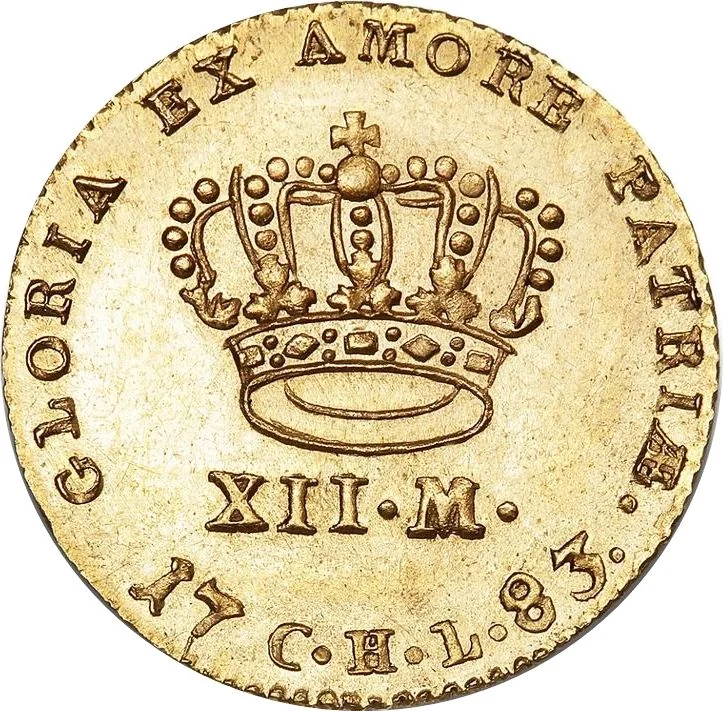
Crown above value (Roman numerals). Motto along rim. Date below, flanking Mint Master initials.
Inscription:
GLORIA EX AMORE PATRIÆ.
XII • M •
17 C.H.L 83.
XII • M •
17 C.H.L 83.
Script: Latin
Edge
Mints
| Name | Mark |
|---|---|
| Royal Danish Mint | — |
| Altona, Schleswig-Holstein | CHL |
| Altona, Schleswig-Holstein | DCL |
Historical background
In 1781, Denmark operated under a complex and strained monetary system, a legacy of the absolutist monarchy's frequent wars and economic policies. The official currency was the rigsdaler, divided into 96 skilling, but the reality was a chaotic mix of circulating mediums. Alongside full-weight silver rigsdaler coins, there were heavily debased subsidiary coins, overissued paper notes from the state-backed Kurantbanken (established 1736), and even foreign currencies like the German Reichsthaler. This created a system where the value of money was not fixed; the paper kurantdaler traded at a significant and fluctuating discount against the silver rigsdaler specie, causing confusion and hampering trade.
The root of this instability lay in the state's finances. To fund involvement in conflicts like the Great Northern War and the state's expansive mercantilist ambitions, the crown had consistently debased the coinage and printed excessive amounts of paper money without sufficient silver backing. By 1781, the public's trust in this paper currency was low, and the discount between silver and paper was a persistent economic problem. This environment of monetary uncertainty discouraged long-term investment and complicated both domestic commerce and international transactions for Denmark's important merchant class.
Consequently, the year fell within a prolonged period of monetary experimentation and gradual reform efforts under the administration of Chief Minister Andreas Peter Bernstorff. While a major monetary reform would not be enacted until 1813 (with the creation of the rigsbankdaler), the 1780s were a time of growing recognition that the system was unsustainable. The situation underscored the broader challenges facing the Danish absolute monarchy: managing a costly empire, maintaining credit, and transitioning toward a more stable and modern fiscal framework in an age of emerging capitalist finance.
The root of this instability lay in the state's finances. To fund involvement in conflicts like the Great Northern War and the state's expansive mercantilist ambitions, the crown had consistently debased the coinage and printed excessive amounts of paper money without sufficient silver backing. By 1781, the public's trust in this paper currency was low, and the discount between silver and paper was a persistent economic problem. This environment of monetary uncertainty discouraged long-term investment and complicated both domestic commerce and international transactions for Denmark's important merchant class.
Consequently, the year fell within a prolonged period of monetary experimentation and gradual reform efforts under the administration of Chief Minister Andreas Peter Bernstorff. While a major monetary reform would not be enacted until 1813 (with the creation of the rigsbankdaler), the 1780s were a time of growing recognition that the system was unsustainable. The situation underscored the broader challenges facing the Danish absolute monarchy: managing a costly empire, maintaining credit, and transitioning toward a more stable and modern fiscal framework in an age of emerging capitalist finance.

✨ Legendary