

⅓ guinea – United Kingdom
Add to wishlist
United Kingdom
Context
Material
References
KM: #
Numista: #13159
Value
Bullion value: $394.06
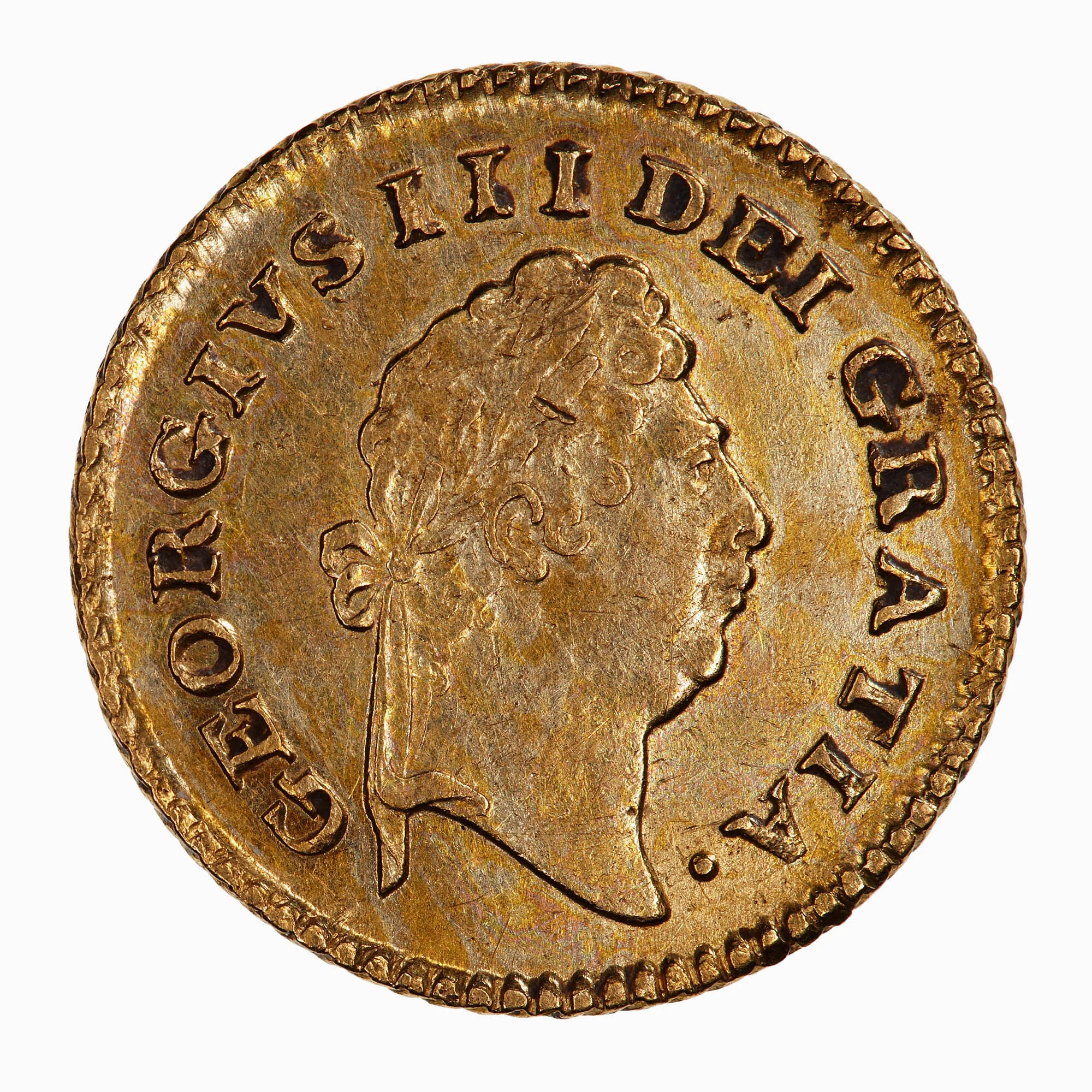
Obverse
Description:
King George III facing right, surrounded by legend.
Inscription:
GEORGIVS III DEI GRATIA.
Script: Latin
Engraver: Lewis Pingo
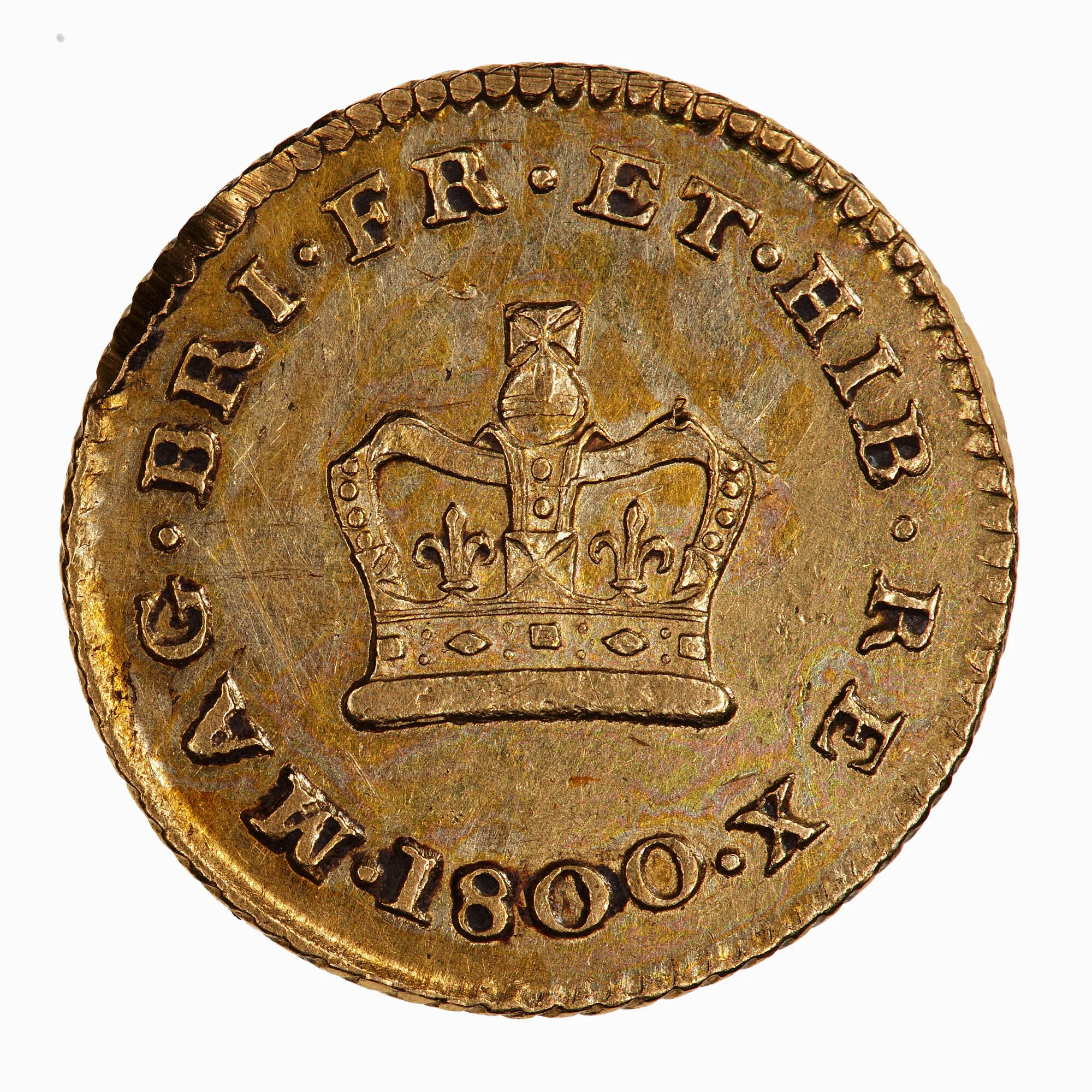
Reverse
Description:
Crown centered, legend encircling, date below within legend line.
Inscription:
MAG·BRI·FR·ET·HIB·REX
·1799·
·1799·
Script: Latin
Engraver: Lewis Pingo
Edge
Mintings
| Year | Mint Mark | Mintage | Quality | Collection |
|---|---|---|---|---|
| 1797 | — | — | ||
| 1798 | — | — | ||
| 1799 | — | — | ||
| 1800 | — | — |
Historical background
In 1797, the United Kingdom faced a severe currency crisis, primarily triggered by the pressures of the French Revolutionary Wars. Fears of a French invasion led to a bank run, as depositors rushed to convert their Bank of England notes into gold. The strain on the Bank's bullion reserves became critical, forcing the government to intervene. On 26 February 1797, the Privy Council issued an Order in Council, swiftly followed by an Act of Parliament, which released the Bank from its obligation to convert its notes into gold. This momentous event, known as the "Restriction Period," suspended the gold standard and marked the beginning of the era of inconvertible paper money.
The immediate consequence was the proliferation of low-denomination private banknotes and token coinage, as the shortage of gold coin and official small change crippled everyday commerce. While the Bank of England issued its own small notes, the system was fragmented and often unreliable. This period also saw the first widespread issuance of British military currency, with "Army Bills" being used to pay troops abroad. The situation created a complex and sometimes chaotic monetary environment, where the value of paper currency became divorced from its promise of redemption in precious metal, relying instead on public trust and government fiat.
The Restriction Period, which lasted until 1821, sparked intense economic and political debate. Figures like David Ricardo argued that the over-issue of banknotes was causing inflation and a depreciation of the pound's value. This controversy ultimately led to the landmark "Bullion Report" of 1810, which recommended a return to gold convertibility. Thus, the crisis of 1797 was not merely a temporary wartime measure but a pivotal episode that forced a fundamental re-examination of monetary theory, the role of central banking, and the management of the national currency, setting the stage for the formal gold standard of the 19th century.
The immediate consequence was the proliferation of low-denomination private banknotes and token coinage, as the shortage of gold coin and official small change crippled everyday commerce. While the Bank of England issued its own small notes, the system was fragmented and often unreliable. This period also saw the first widespread issuance of British military currency, with "Army Bills" being used to pay troops abroad. The situation created a complex and sometimes chaotic monetary environment, where the value of paper currency became divorced from its promise of redemption in precious metal, relying instead on public trust and government fiat.
The Restriction Period, which lasted until 1821, sparked intense economic and political debate. Figures like David Ricardo argued that the over-issue of banknotes was causing inflation and a depreciation of the pound's value. This controversy ultimately led to the landmark "Bullion Report" of 1810, which recommended a return to gold convertibility. Thus, the crisis of 1797 was not merely a temporary wartime measure but a pivotal episode that forced a fundamental re-examination of monetary theory, the role of central banking, and the management of the national currency, setting the stage for the formal gold standard of the 19th century.
💎 Extremely Rare