

1 Guinea – ERR United KingdomandAustralia
Context
Years: 1787–1799
Issuer: ERR United KingdomandAustralia
Ruler: George III
Currency:
(1158—1970)
Demonetized: Yes
Material
References
KM: #Click to copy to clipboard609
Numista: #13158
Value
Bullion value: $1278.57
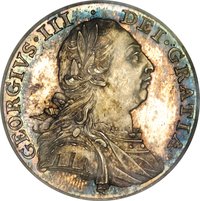
Obverse
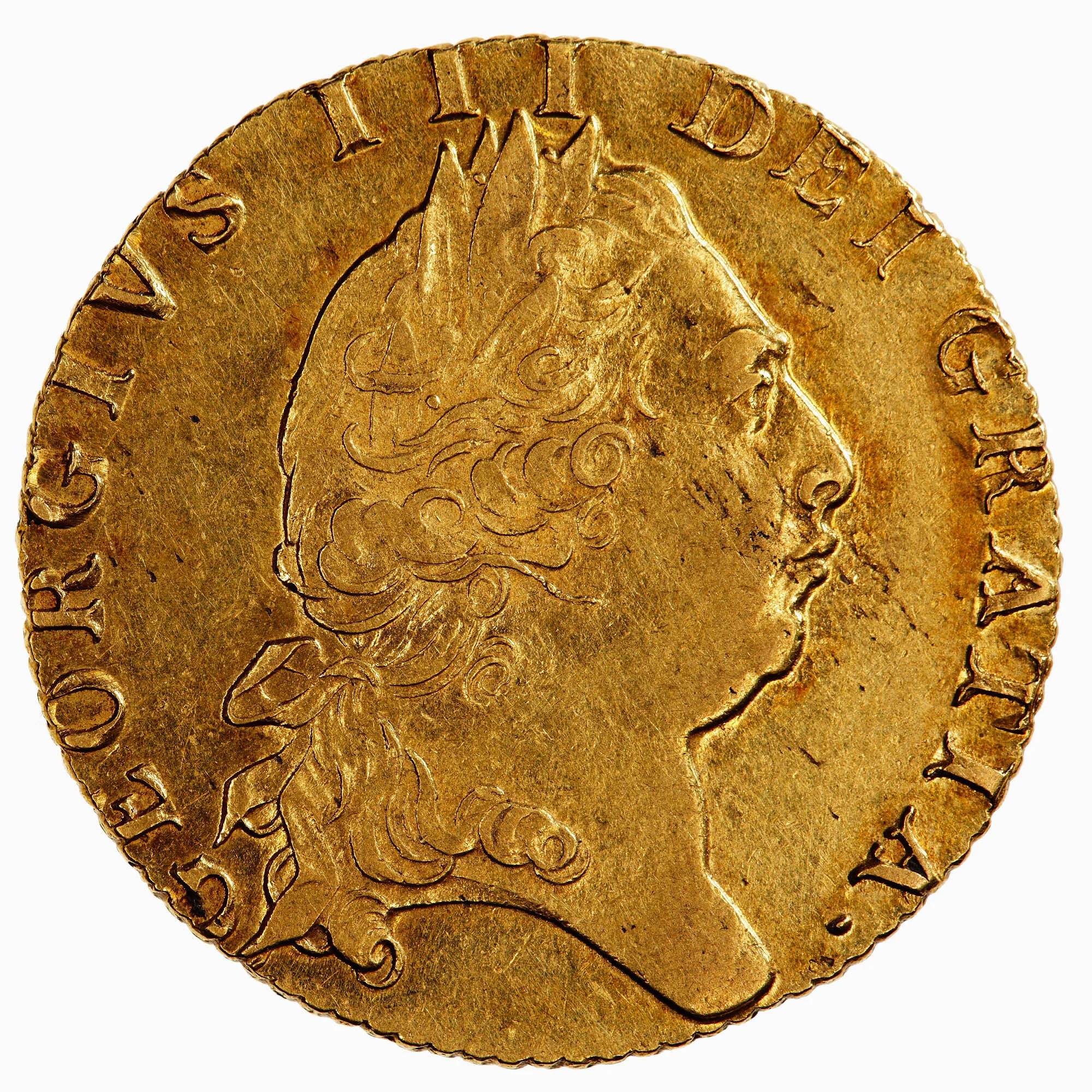
Description:
King George III facing right, legend encircling.
Inscription:
GEORGIVS III DEI GRATIA·
Script: Latin
Engraver: Lewis Pingo
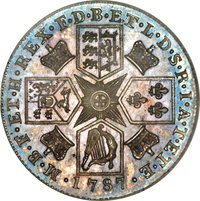
Reverse
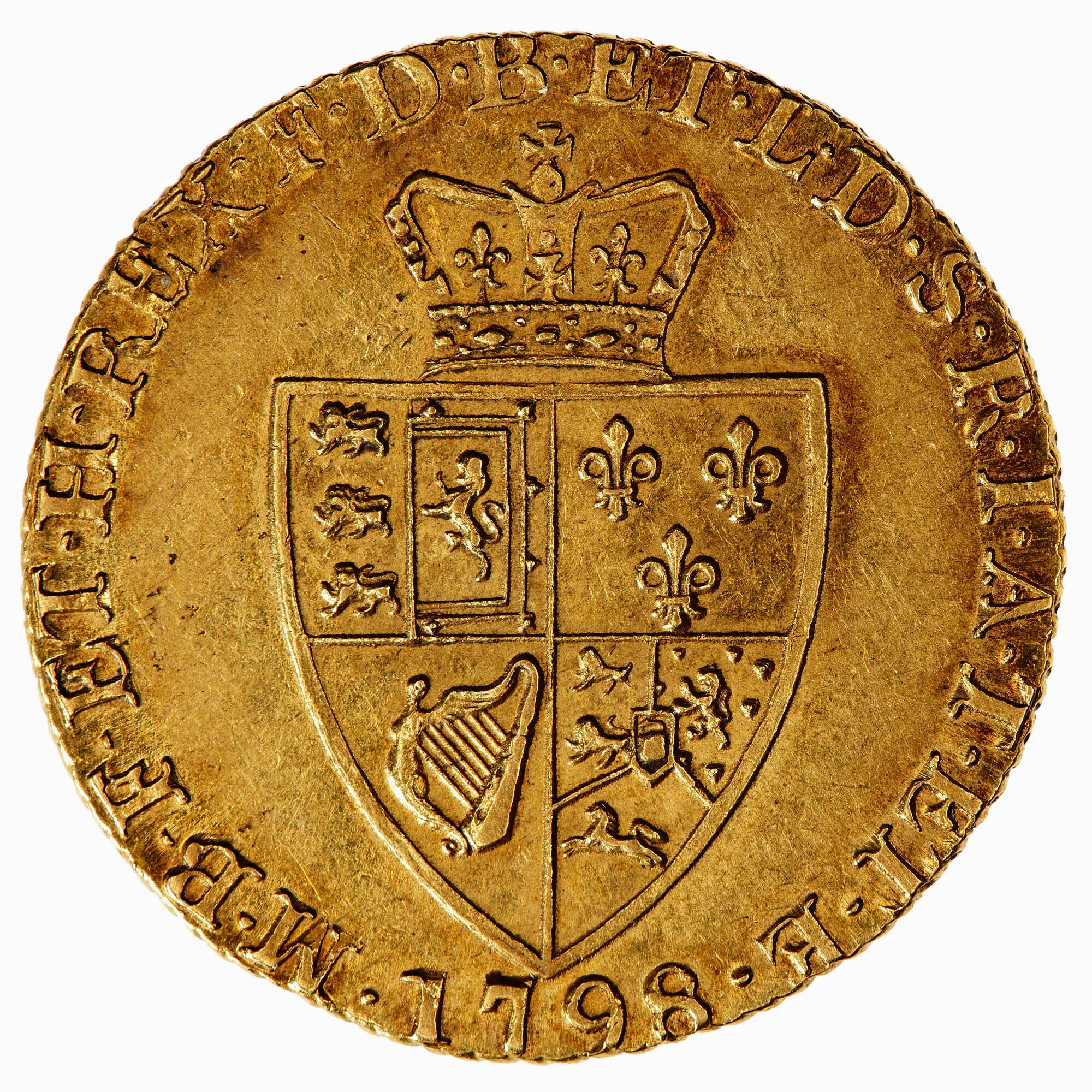
Description:
Quartered shield in spade shape, legend around, date below.
Inscription:
·M·B·F·ET·H·REX·F·D·B·ET·L·D·S·R·I·A·T·ET·E·
1793
1793
Script: Latin
Engraver: Lewis Pingo
Edge
Reeded
Mintings
| Year | Mint Mark | Mintage | Quality | Collection |
|---|---|---|---|---|
| 1787 | — | — | ||
| 1787 | — | — | Proof | |
| 1788 | — | — | ||
| 1789 | — | — | ||
| 1790 | — | — | ||
| 1791 | — | — | ||
| 1792 | — | — | ||
| 1793 | — | — | ||
| 1794 | — | — | ||
| 1795 | — | — | ||
| 1796 | — | — | ||
| 1797 | — | — | ||
| 1798 | — | — | ||
| 1799 | — | — |
Historical background
In 1787, the currency situation in both Great Britain and its distant colony of New South Wales (Australia) was fundamentally challenging but for starkly different reasons. In Britain, the system was formally based on the gold standard, with the pound sterling (£) as the central unit. However, the economy suffered from a chronic shortage of small-denomination coinage for everyday transactions. This led to widespread use of private tokens issued by merchants and industrialists, as well as frequent counterfeiting of the existing copper coinage. While the Bank of England issued paper notes, these were for large sums and not accessible to the general populace, creating a fragmented and often unreliable monetary environment for common trade.
In contrast, the fledgling penal colony of New South Wales, established in 1788 but planned throughout 1787, faced a near-total absence of official currency. The British government did not supply coinage for the convicts, guards, and administrators sailing with the First Fleet, as the colony was envisioned primarily as a penal settlement, not a commercial enterprise. The economy was expected to operate on a system of government stores and barter, with rum often emerging as an unofficial, though problematic, medium of exchange. Any sterling coins that did exist were scarce, hoarded, or quickly remitted back to Britain for the purchase of essential supplies.
This divergence created a profound monetary disconnect. While Britain grappled with modernising a complex but established financial system, its new colony was thrust into a pre-monetary state. The solution in New South Wales would become one of necessity and improvisation. Within a few years, the colony would be forced to use foreign coins, such as Spanish dollars, and eventually resort to the infamous "Rum Currency" and promissory notes, laying an unstable foundation for an economy physically detached from the sterling system that nominally governed it.
In contrast, the fledgling penal colony of New South Wales, established in 1788 but planned throughout 1787, faced a near-total absence of official currency. The British government did not supply coinage for the convicts, guards, and administrators sailing with the First Fleet, as the colony was envisioned primarily as a penal settlement, not a commercial enterprise. The economy was expected to operate on a system of government stores and barter, with rum often emerging as an unofficial, though problematic, medium of exchange. Any sterling coins that did exist were scarce, hoarded, or quickly remitted back to Britain for the purchase of essential supplies.
This divergence created a profound monetary disconnect. While Britain grappled with modernising a complex but established financial system, its new colony was thrust into a pre-monetary state. The solution in New South Wales would become one of necessity and improvisation. Within a few years, the colony would be forced to use foreign coins, such as Spanish dollars, and eventually resort to the infamous "Rum Currency" and promissory notes, laying an unstable foundation for an economy physically detached from the sterling system that nominally governed it.
🌟 Limited