

1 Penny – ERR United KingdomandAustralia
Context
Year: 1797
Issuer: ERR United KingdomandAustralia
Ruler: George III
Currency:
(1158—1970)
Demonetization: 31 August 1971
Total mintage: 8,601,600
Material
References
KM: #Click to copy to clipboard618
Numista: #947
Obverse
Description:
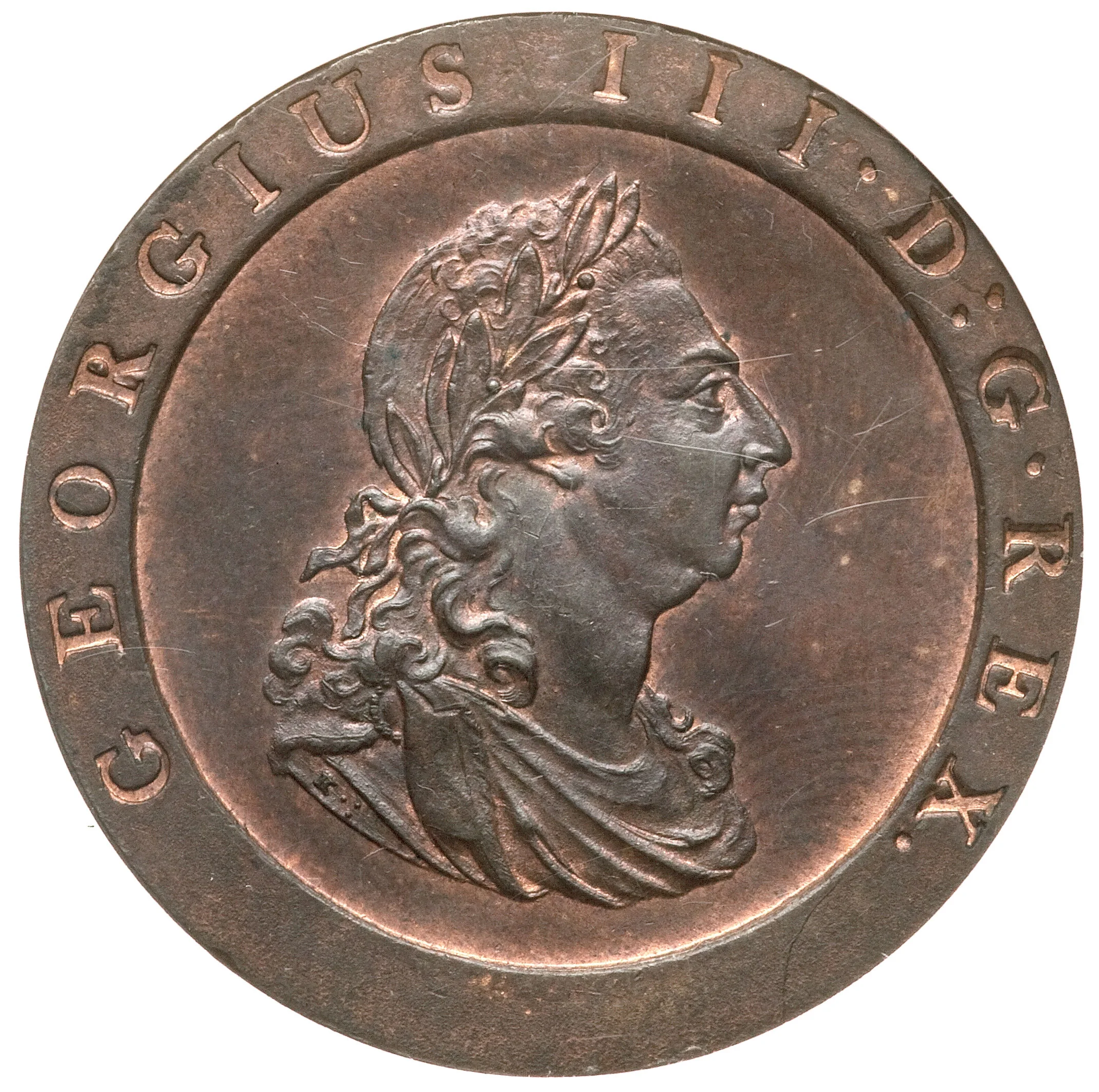
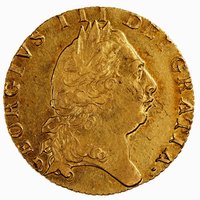
Laureate bust of George III right, legend encircling.
Inscription:
GEORGIUS III·D:G·REX.
K
K
Script: Latin
Engraver: Conrad Heinrich Küchler
Reverse
Description:
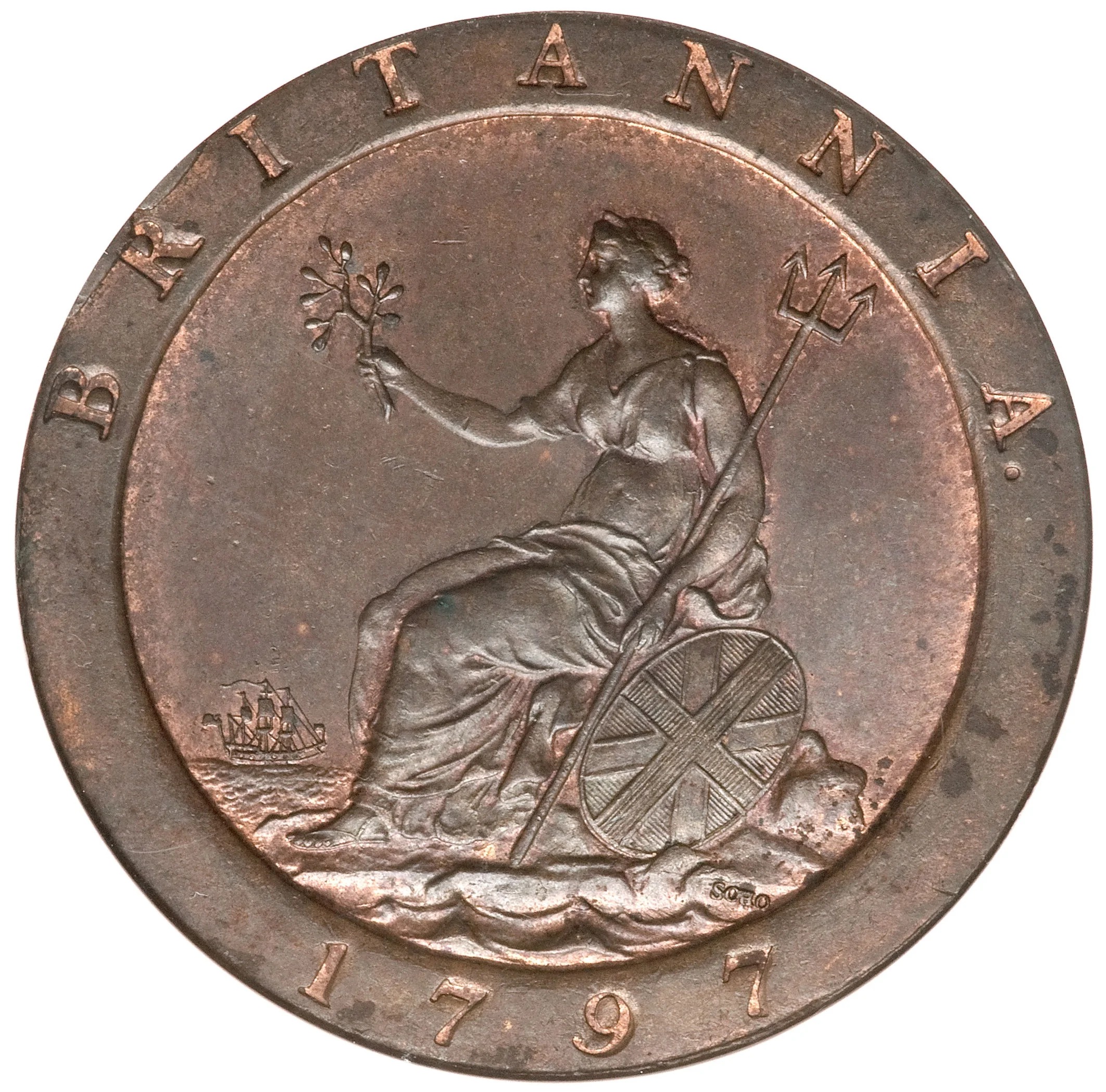
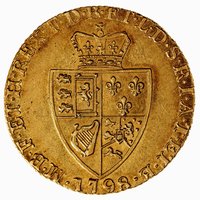
Britannia seated left, holding trident and Union flag shield, raising an olive branch. Sea with ship behind, legend above, date and mint below.
Inscription:
BRITANNIA
SOHO
1797
SOHO
1797
Script: Latin
Engraver: Conrad Heinrich Küchler
Edge
Plain
Categories
| Object> Armour |
| Geography> Sea |
| Transportation> Watercraft |
| Symbol> Allegory |
Mints
| Name | Mark |
|---|---|
| Soho Mint | SOHO |
Mintings
| Year | Mint Mark | Mintage | Quality | Collection |
|---|---|---|---|---|
| 1797 | — | 8,601,600 | ||
| 1797 | — | — | Proof |
Historical background
In 1797, both Britain and Australia faced significant currency crises, though their causes and manifestations differed sharply due to their positions within the Empire. In Britain, the crisis was triggered by the pressures of the French Revolutionary Wars. Fears of a French invasion led to a run on the banks, draining gold reserves. To prevent the collapse of the banking system, the British government issued the Bank Restriction Act of 1797, which suspended the convertibility of Bank of England notes into gold. This moved Britain off the gold standard for the first time, making its paper currency (the pound sterling) an inconvertible fiat money. The period, known as the "Restriction," lasted until 1821 and led to inflation and widespread debate about the nature of money.
In the fledgling penal colony of New South Wales, Australia, the currency situation was one of extreme scarcity rather than convertibility crisis. The colony had almost no official coinage, as what little arrived was quickly used to pay for imports from visiting ships. This chronic shortage led to a dysfunctional barter economy and the widespread use of unconventional and often inconvenient forms of money. The most famous of these was rum, which became a de-facto currency, leading to the period's nickname, the "Rum Corps." Other commodities like wheat, meat, and even promissory notes (IOUs) circulated, but the lack of a stable, standardized medium of exchange severely hampered trade and economic development.
While Britain's crisis was one of confidence in a sophisticated financial system, Australia's was one of absence. The British government's response to the colony's plight was the 1797 "Cartwheel" Penny – a heavy, copper coin specifically minted for New South Wales. However, these coins did not arrive until 1800 and, once there, were still hoarded or exported. Thus, in 1797, both regions operated on emergency monetary systems: Britain on enforced paper and Australia on a chaotic system of barter and commodity money, each reflecting the distinct economic stresses of the core and the periphery of the British Empire at war.
In the fledgling penal colony of New South Wales, Australia, the currency situation was one of extreme scarcity rather than convertibility crisis. The colony had almost no official coinage, as what little arrived was quickly used to pay for imports from visiting ships. This chronic shortage led to a dysfunctional barter economy and the widespread use of unconventional and often inconvenient forms of money. The most famous of these was rum, which became a de-facto currency, leading to the period's nickname, the "Rum Corps." Other commodities like wheat, meat, and even promissory notes (IOUs) circulated, but the lack of a stable, standardized medium of exchange severely hampered trade and economic development.
While Britain's crisis was one of confidence in a sophisticated financial system, Australia's was one of absence. The British government's response to the colony's plight was the 1797 "Cartwheel" Penny – a heavy, copper coin specifically minted for New South Wales. However, these coins did not arrive until 1800 and, once there, were still hoarded or exported. Thus, in 1797, both regions operated on emergency monetary systems: Britain on enforced paper and Australia on a chaotic system of barter and commodity money, each reflecting the distinct economic stresses of the core and the periphery of the British Empire at war.
🌱 Very Common