

1 ducat – Denmark
Add to wishlist
Denmark
Context
Material
References
KM: #
Numista: #131417
Value
Bullion value: $531.99
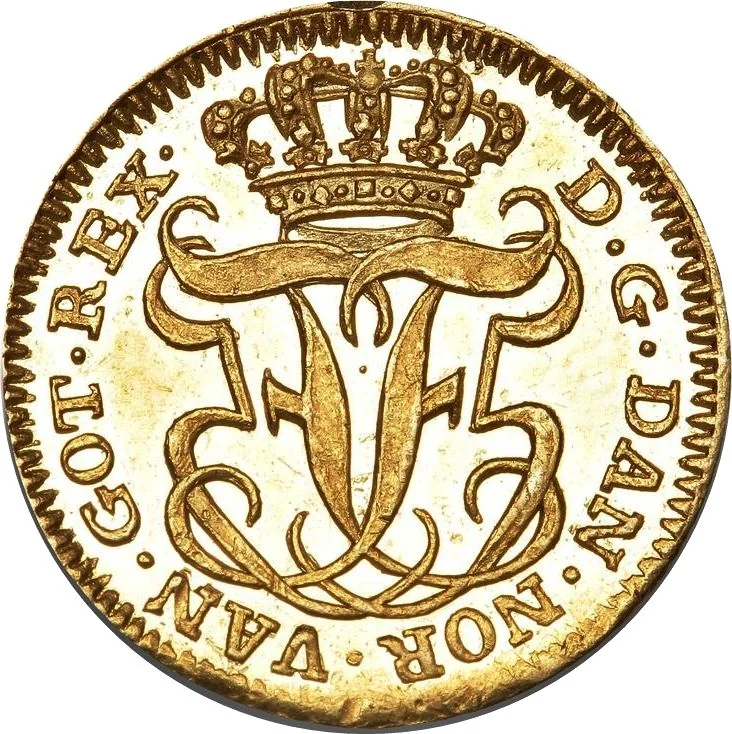
Obverse
Description:
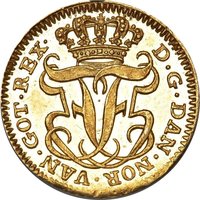
Crowned mirrored monogram of Frederik V with surrounding legend.
Inscription:
D·G·DAN·NOR·VAN·GOT·REX·
Script: Latin
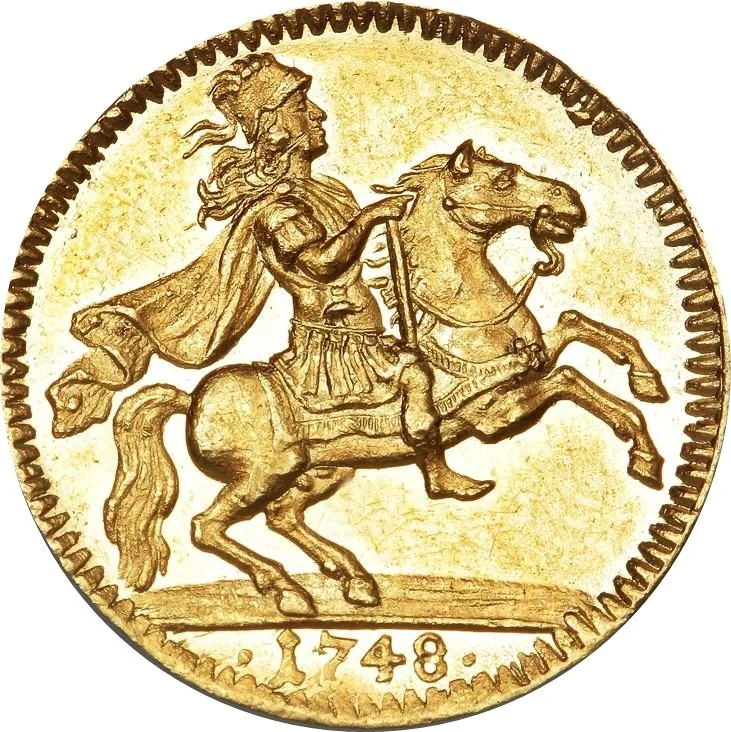
Reverse
Description:
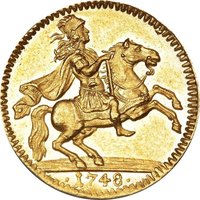
Armored King on prancing horse, wearing hat and mantle. Date in exergue.
Inscription:
.1748.
Script: Latin
Edge
Mints
| Name | Mark |
|---|---|
| Royal Danish Mint | — |
Mintings
| Year | Mint Mark | Mintage | Quality | Collection |
|---|---|---|---|---|
| 1748 | — | — |
Historical background
In 1748, Denmark operated under a silver-based monetary system, yet the reality was one of significant complexity and disorder. The primary unit was the rigsdaler, subdivided into 96 skilling. However, the circulation was a chaotic mix of domestic and foreign coins, including older Danish issues, German thalers, Dutch ducats, and Swedish coins, all with varying silver content and exchange rates. This proliferation of different coins, many clipped or worn, made everyday commerce difficult and fostered widespread distrust.
The root of this instability lay in decades of deliberate currency debasement by the crown. To finance state expenses, notably the costly wars of the early 18th century, the government had repeatedly reduced the silver content in newly minted coins while demanding taxes in older, full-weight specie. This created a destructive cycle where "good" money was hoarded or melted down for its bullion value, while "bad" money flooded the market, causing inflation and economic uncertainty for the common populace.
By 1748, the situation had reached a critical point, creating intense pressure for comprehensive reform. The year itself was a pivotal moment of anticipation, as the Danish state, under the administration of Count Johan Ludvig Holstein, was actively preparing a sweeping monetary overhaul. This reform, which would be enacted the following year in 1749, aimed to standardize the coinage, restore its silver value, and simplify the national currency system, finally addressing the chronic instability that had plagued Danish trade and finance for generations.
The root of this instability lay in decades of deliberate currency debasement by the crown. To finance state expenses, notably the costly wars of the early 18th century, the government had repeatedly reduced the silver content in newly minted coins while demanding taxes in older, full-weight specie. This created a destructive cycle where "good" money was hoarded or melted down for its bullion value, while "bad" money flooded the market, causing inflation and economic uncertainty for the common populace.
By 1748, the situation had reached a critical point, creating intense pressure for comprehensive reform. The year itself was a pivotal moment of anticipation, as the Danish state, under the administration of Count Johan Ludvig Holstein, was actively preparing a sweeping monetary overhaul. This reform, which would be enacted the following year in 1749, aimed to standardize the coinage, restore its silver value, and simplify the national currency system, finally addressing the chronic instability that had plagued Danish trade and finance for generations.
✨ Legendary