

¼ Guinea – United Kingdom
United Kingdom
Context

Material
References
KM: #Click to copy to clipboard592
Numista: #13141
Value
Bullion value: $320.48
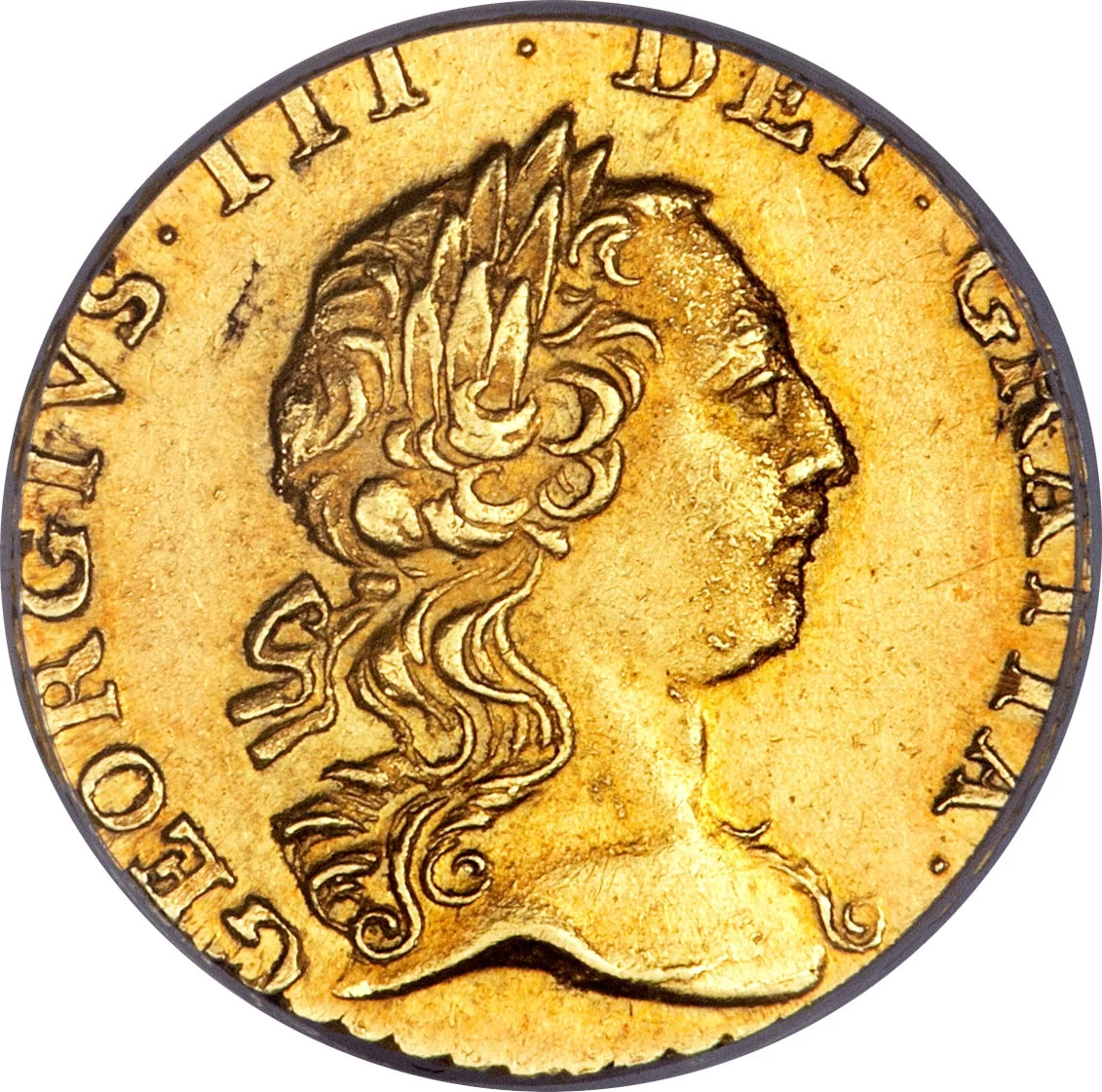
Obverse
Description:
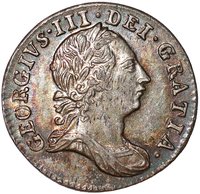
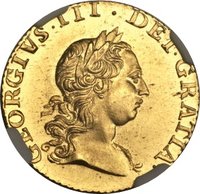
King George III facing right, surrounded by legend.
Inscription:
GEORGIVS·III·DEI·GRATIA·
Script: Latin
Engraver: Richard Yeo
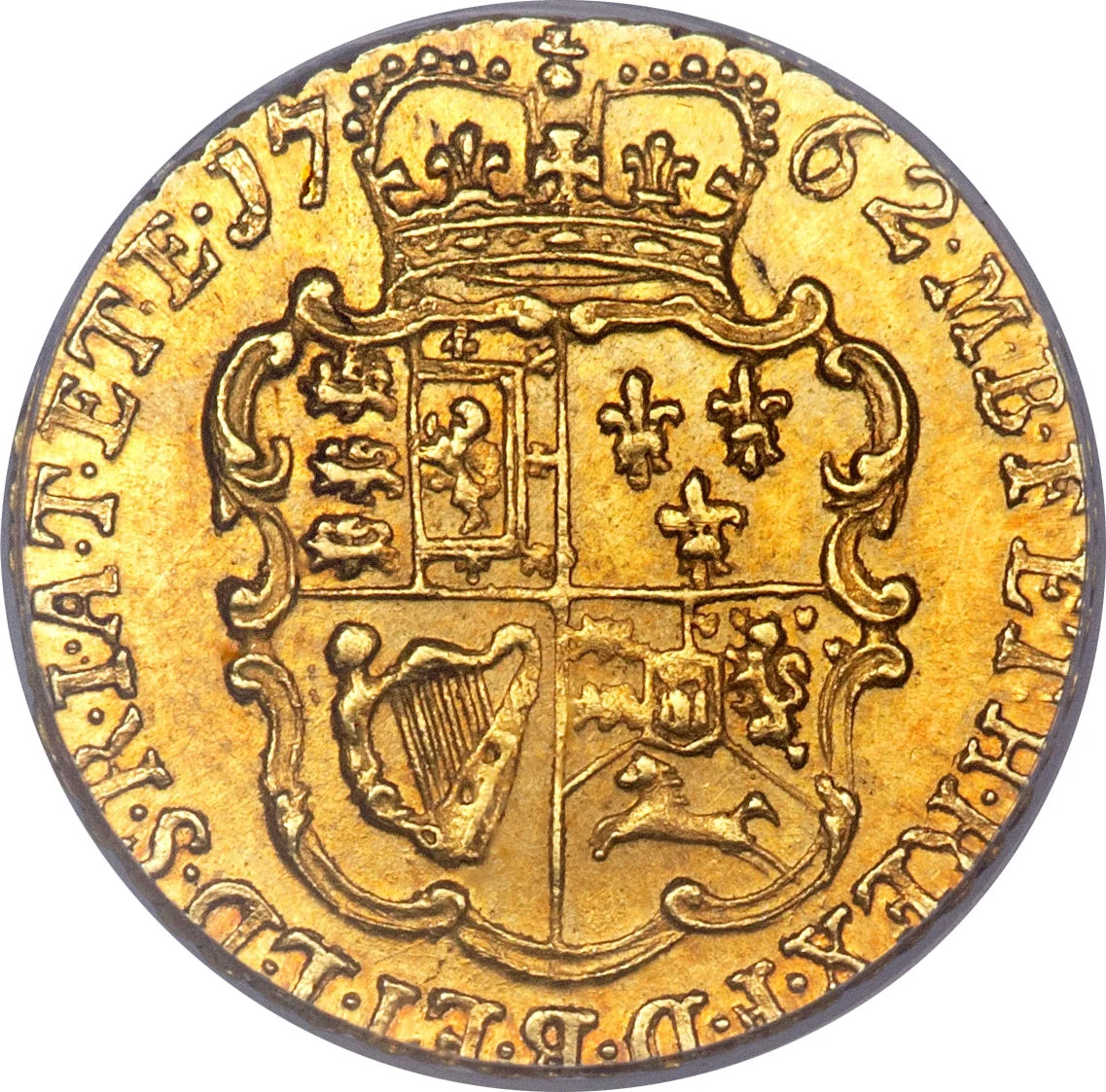
Reverse
Description:
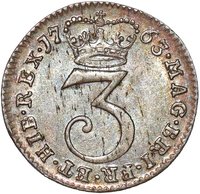
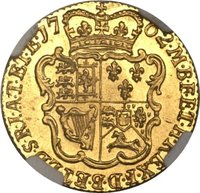
Crowned quartered shield, date above, legend around.
Inscription:
M·B·F·ET·H·REX·F·D·ET·L·D·S·R·I·A·T·ET·E·1762·
Script: Latin
Engraver: John Tanner
Edge
Mintings
| Year | Mint Mark | Mintage | Quality | Collection |
|---|---|---|---|---|
| 1762 | — | — |
Historical background
In 1762, the currency situation in the United Kingdom was defined by a metallic standard, primarily reliant on silver and gold. The system was theoretically bimetallic, but in practice, the gold guinea had become the dominant coin for large transactions, following Sir Isaac Newton’s earlier adjustments to the mint ratio which had inadvertently undervalued silver. This led to a chronic shortage of silver coinage in circulation, as full-weight silver coins were often exported or melted down for their bullion value. Consequently, everyday commerce was hampered by a lack of small change, forcing reliance on worn, clipped, and often counterfeit silver coins, as well as a patchwork of private tokens issued by merchants and industrialists.
The period was also one of significant state expenditure due to the ongoing global conflict of the Seven Years' War (1756-1763). To finance the war, the government under Prime Minister the Earl of Bute was borrowing heavily, increasing the national debt and putting strain on the financial system. While the Bank of England, founded in 1694, provided stability through its notes, these were largely confined to London and used for high-value transactions. For the general populace, the physical scarcity of trustworthy specie remained a pressing daily inconvenience, creating a disjointed monetary environment where the official mint output failed to meet the needs of a growing economy.
Looking forward, the currency issues of 1762 were a prelude to major reforms. The war's end in 1763 would soon bring a focus on fiscal consolidation, but the fundamental problems with the coinage would persist for decades. It would not be until the great recoinage of 1774 under Lord North that a serious attempt was made to reform the silver currency, and the ultimate shift to a formal gold standard with the full demonetisation of silver was still years in the future. Thus, 1762 represents a point of monetary tension, caught between the demands of global warfare and the inadequacies of an outdated metallic system.
The period was also one of significant state expenditure due to the ongoing global conflict of the Seven Years' War (1756-1763). To finance the war, the government under Prime Minister the Earl of Bute was borrowing heavily, increasing the national debt and putting strain on the financial system. While the Bank of England, founded in 1694, provided stability through its notes, these were largely confined to London and used for high-value transactions. For the general populace, the physical scarcity of trustworthy specie remained a pressing daily inconvenience, creating a disjointed monetary environment where the official mint output failed to meet the needs of a growing economy.
Looking forward, the currency issues of 1762 were a prelude to major reforms. The war's end in 1763 would soon bring a focus on fiscal consolidation, but the fundamental problems with the coinage would persist for decades. It would not be until the great recoinage of 1774 under Lord North that a serious attempt was made to reform the silver currency, and the ultimate shift to a formal gold standard with the full demonetisation of silver was still years in the future. Thus, 1762 represents a point of monetary tension, caught between the demands of global warfare and the inadequacies of an outdated metallic system.
💎 Extremely Rare