

15 Kreuzer – Abbey Saint Blaise
Germany

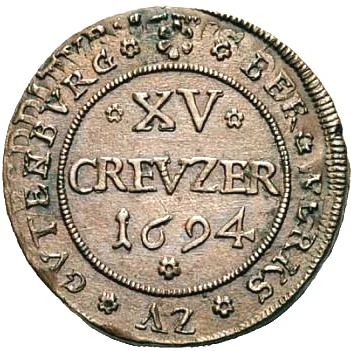
Obverse
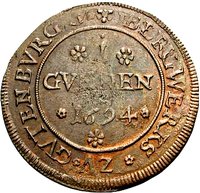
Description:
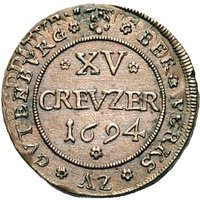
Dated three-line inscription.
Inscription:
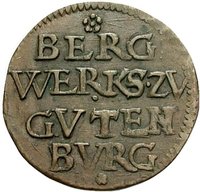
BVRGWERKS. ZV. GVTENBVRG.
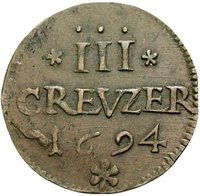
XV / CREVZER / 1694
XV / CREVZER / 1694
Script: Latin
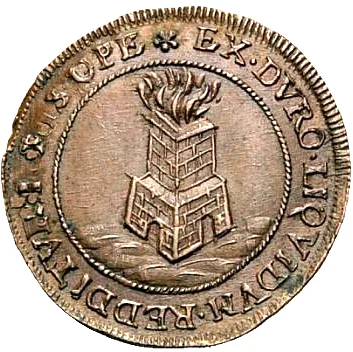
Reverse
Description:
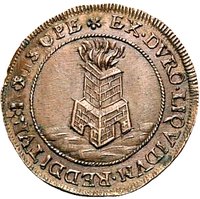
Blazing furnace ringed by fire.
Inscription:
EX. DVRO. LIQVIDVM. REDDITVR. QVIS. RE.
Script: Latin
Edge
Mintings
| Year | Mint Mark | Mintage | Quality | Collection |
|---|---|---|---|---|
| 1694 | — | — |
Historical background
In the autumn of 1694, the Abbey of Saint Blaise, like much of the Kingdom of France, was navigating a severe monetary crisis. King Louis XIV’s near-constant wars, particularly the ongoing Nine Years' War, had drained the royal treasury, leading to repeated debasements of the coinage. The government recalled existing silver livres and écus to be re-minted with a lower precious metal content, a practice that generated short-term profit for the crown but caused rampant inflation and economic instability. For the abbey, a largely self-sufficient feudal estate with extensive lands, this meant the purchasing power of its collected rents and tithes, often paid in coin, was evaporating. The reliable silver currency that once facilitated trade with merchants and paid for necessary goods not produced on its lands was becoming increasingly unstable and untrustworthy.
Within the abbey's own economy, this crisis created a complex duality. Internally, transactions among the monastic community and with local serfs still operated heavily on a system of barter and obligations—so many measures of grain, days of labour, or barrels of wine. However, the abbey was not isolated; it needed specie to pay taxes to the crown, to purchase liturgical items, books, and specialized tools, and to engage with the wider regional market. The scarcity of good coin led to hoarding, and the abbey’s bursar likely struggled with a mix of old, full-weight coins (clipped and hidden away), newer debased issues, and a plethora of foreign currencies from neighbouring states circulating in the region, each with its own fluctuating value.
Consequently, the abbot and monastic officials faced difficult decisions. They had to balance their spiritual duties with the practical need to preserve the abbey’s economic foundation. This might involve insisting on payments in kind rather than unreliable coin, negotiating with creditors and debtors, and possibly melting down some of the abbey’s own silver plate (a sacred reserve) to be converted into current coin for urgent expenses. The currency situation thus represented more than a financial nuisance; it was a direct threat to the material stability of the community, forcing the monastery to adapt its ancient economic practices to the turbulent fiscal policies of the modern state.
Within the abbey's own economy, this crisis created a complex duality. Internally, transactions among the monastic community and with local serfs still operated heavily on a system of barter and obligations—so many measures of grain, days of labour, or barrels of wine. However, the abbey was not isolated; it needed specie to pay taxes to the crown, to purchase liturgical items, books, and specialized tools, and to engage with the wider regional market. The scarcity of good coin led to hoarding, and the abbey’s bursar likely struggled with a mix of old, full-weight coins (clipped and hidden away), newer debased issues, and a plethora of foreign currencies from neighbouring states circulating in the region, each with its own fluctuating value.
Consequently, the abbot and monastic officials faced difficult decisions. They had to balance their spiritual duties with the practical need to preserve the abbey’s economic foundation. This might involve insisting on payments in kind rather than unreliable coin, negotiating with creditors and debtors, and possibly melting down some of the abbey’s own silver plate (a sacred reserve) to be converted into current coin for urgent expenses. The currency situation thus represented more than a financial nuisance; it was a direct threat to the material stability of the community, forcing the monastery to adapt its ancient economic practices to the turbulent fiscal policies of the modern state.

✨ Legendary