

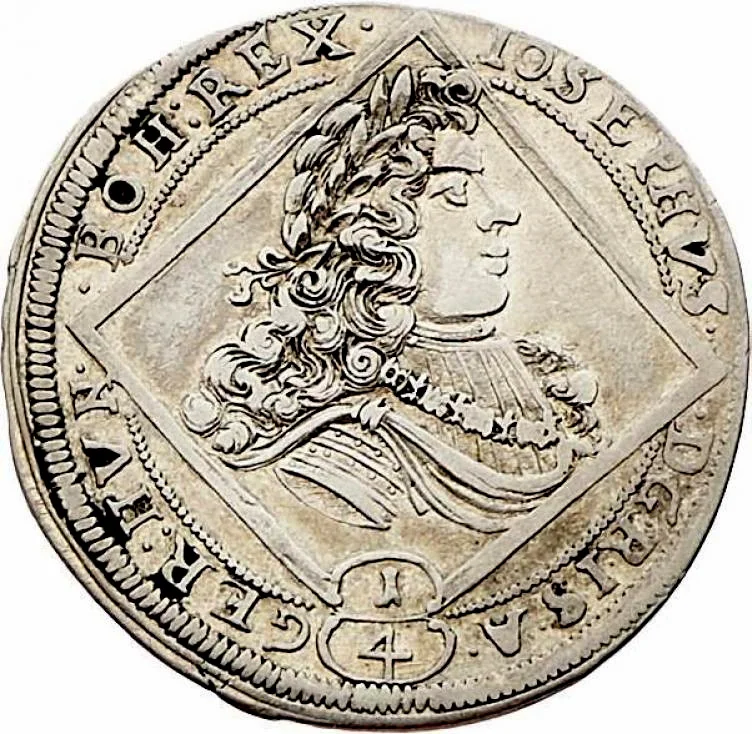
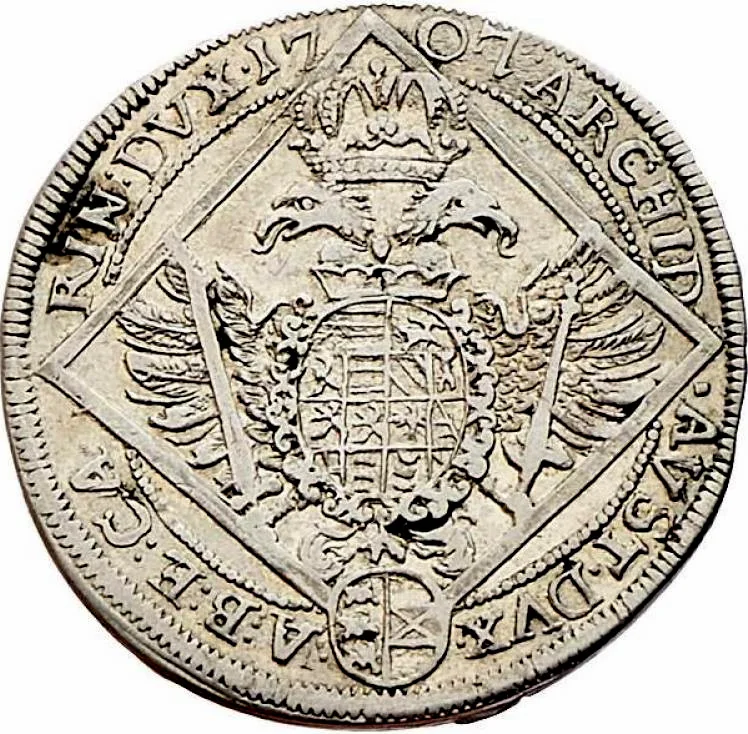
¼ Thaler – Austrian Empire
Austria
Context
Year: 1707
Country: Austria 
Issuer: Austrian Empire
Ruler: Joseph I
Currency:
(1520—1754)
Demonetized: Yes
References
KM: #Click to copy to clipboard1493
Numista: #130887
Value
Bullion value: $19.42
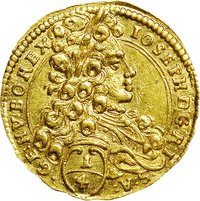
Obverse
Description:
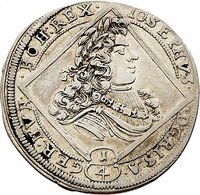
Right portrait in diamond, fractional value below, split legend.
Inscription:
IOSEPHVS // D G R I S A (¼) GER HVN // BOH REX
Script: Latin
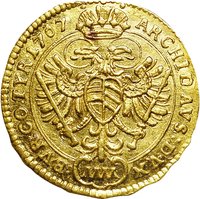
Reverse
Description:
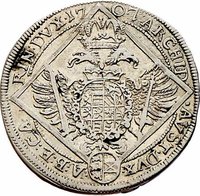
Crowned double-headed eagle with central shield, within a rhombus. Small Carinthian arms below. Split legend and date.
Inscription:
ARCHID // AVST DVX // A B E CA // RIN DVX
Script: Latin
Edge
Mints
| Name | Mark |
|---|---|
| Sankt Veit | — |
Mintings
| Year | Mint Mark | Mintage | Quality | Collection |
|---|---|---|---|---|
| 1707 | — | — |
Historical background
In 1707, the currency situation within the Habsburg-ruled Austrian Empire was characterized by profound complexity and instability, a direct legacy of its fragmented political and economic structure. The empire was not a unified fiscal state but a patchwork of crown lands (like Austria, Bohemia, and Hungary), each with its own historic rights, administrations, and monetary traditions. Consequently, a bewildering variety of coins circulated simultaneously, including Reichsthalers, Gulden (florins), Kreuzers, and Groschen, with their values and silver content often varying significantly from region to region. This monetary fragmentation severely hampered trade and state finance, creating a constant need for exchange and inviting widespread debasement.
The primary challenge stemmed from the Great Turkish War (1683-1699) and the ongoing War of the Spanish Succession (1701-1714), which placed enormous fiscal strain on the Vienna court. To finance these massive military endeavors, the government repeatedly resorted to debasing the coinage, particularly the small-denomination Kreuzer coins used in everyday life. By reducing the silver content in these coins while officially maintaining their face value, the treasury could mint more coins from the same amount of precious metal, creating short-term revenue. This practice, however, led to rapid inflation, a loss of public confidence, and Gresham's Law in action, where "bad" debased coins drove "good" full-weight coins out of circulation.
Efforts at reform were piecemeal and struggled against these entrenched pressures. Emperor Leopold I and his officials recognized the problem, but comprehensive standardization was politically difficult and militarily inopportune. The immediate focus remained on fiscal survival rather than monetary unity. Therefore, the background of 1707 is one of a strained and heterogeneous system, where the demands of war finance actively undermined monetary stability, setting the stage for more concerted, but still challenging, reforms that would be attempted later in the 18th century under Empress Maria Theresa.
The primary challenge stemmed from the Great Turkish War (1683-1699) and the ongoing War of the Spanish Succession (1701-1714), which placed enormous fiscal strain on the Vienna court. To finance these massive military endeavors, the government repeatedly resorted to debasing the coinage, particularly the small-denomination Kreuzer coins used in everyday life. By reducing the silver content in these coins while officially maintaining their face value, the treasury could mint more coins from the same amount of precious metal, creating short-term revenue. This practice, however, led to rapid inflation, a loss of public confidence, and Gresham's Law in action, where "bad" debased coins drove "good" full-weight coins out of circulation.
Efforts at reform were piecemeal and struggled against these entrenched pressures. Emperor Leopold I and his officials recognized the problem, but comprehensive standardization was politically difficult and militarily inopportune. The immediate focus remained on fiscal survival rather than monetary unity. Therefore, the background of 1707 is one of a strained and heterogeneous system, where the demands of war finance actively undermined monetary stability, setting the stage for more concerted, but still challenging, reforms that would be attempted later in the 18th century under Empress Maria Theresa.

✨ Legendary