

1 Guinea – United Kingdom
United Kingdom
Context

Material
References
KM: #Click to copy to clipboard546
Numista: #13079
Value
Bullion value: $1282.41
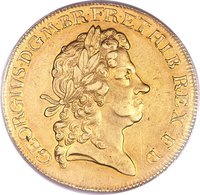
Obverse
Description:
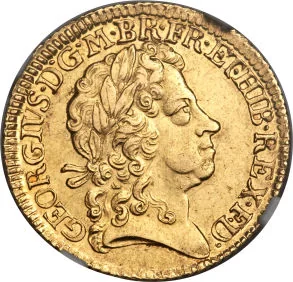
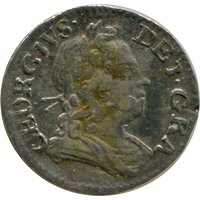
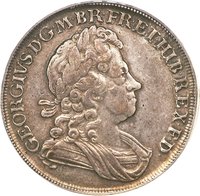
King George I, right profile. Hair tied with loop and single end.
Inscription:
GEORGIVS·D:G·M·BR·FR:E:T:HIB·REX·F·D·
Script: Latin
Engraver: John Croker
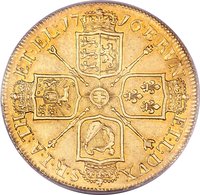
Reverse
Description:
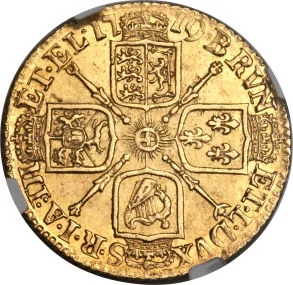
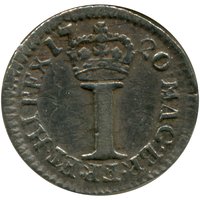
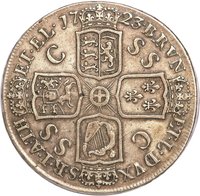
Crowned shields flank a central Garter star; sceptres in angles, date above, legend around.
Inscription:
BRVN ET·L·DVX S·R·I·A·TH ET·EL
·1720·
·1720·
Script: Latin
Engraver: Johann Ochs
Edge
Reeded
Mintings
| Year | Mint Mark | Mintage | Quality | Collection |
|---|---|---|---|---|
| 1716 | — | — | ||
| 1717 | — | — | ||
| 1718 | — | — | ||
| 1719 | — | — | ||
| 1720 | — | — | ||
| 1721 | — | — | ||
| 1722 | — | — | ||
| 1723 | — | — |
Historical background
In 1716, the currency situation in the United Kingdom was one of profound crisis and transition, stemming directly from the financial strains of the War of the Spanish Succession (1701-1714). The government, under the Tory ministry of Robert Harley, had financed the war heavily through the creation of long-term debt and the issuance of Exchequer Bills, but a more acute problem was the severe physical deterioration of the nation's silver coinage. Decades of wear, clipping, and the higher market price of silver bullion compared to its face value meant that full-weight coins were being melted down and exported. What remained in circulation was a degraded and unreliable currency, undermining public trust and commercial transactions.
The core of the crisis was the imbalance between the official mint price of silver and its market value. Sir Isaac Newton, in his role as Master of the Royal Mint, had reported in 1717 that the gold guinea was overvalued in law, which drove the undervalued silver out of the country. While his famous report leading to the de facto gold standard would be published in 1717, the dire state of the coinage was the pressing reality of 1716. The recoinage of 1696 under William III had temporarily solved the problem, but the same economic forces had again eroded the silver currency. Consequently, trade was hampered, and there was a clamour for a lasting solution to stabilise the monetary system.
Against this backdrop, 1716 was a year of political and financial deliberation. The Whig government, newly consolidated under the Hanoverian succession of George I, was grappling with the legacy of debt and a broken currency. Discussions were underway that would lead to the decisive actions of 1717, including Newton's recommendation to lower the guinea's value and the government's move to effectively peg silver to gold, setting Britain on a path toward a gold standard. Thus, 1716 represents the critical juncture between the collapse of the old silver-based system and the legislative measures that would establish a new monetary order to support Britain's emerging commercial and imperial power.
The core of the crisis was the imbalance between the official mint price of silver and its market value. Sir Isaac Newton, in his role as Master of the Royal Mint, had reported in 1717 that the gold guinea was overvalued in law, which drove the undervalued silver out of the country. While his famous report leading to the de facto gold standard would be published in 1717, the dire state of the coinage was the pressing reality of 1716. The recoinage of 1696 under William III had temporarily solved the problem, but the same economic forces had again eroded the silver currency. Consequently, trade was hampered, and there was a clamour for a lasting solution to stabilise the monetary system.
Against this backdrop, 1716 was a year of political and financial deliberation. The Whig government, newly consolidated under the Hanoverian succession of George I, was grappling with the legacy of debt and a broken currency. Discussions were underway that would lead to the decisive actions of 1717, including Newton's recommendation to lower the guinea's value and the government's move to effectively peg silver to gold, setting Britain on a path toward a gold standard. Thus, 1716 represents the critical juncture between the collapse of the old silver-based system and the legislative measures that would establish a new monetary order to support Britain's emerging commercial and imperial power.
✨ Legendary