

1 guinea – United Kingdom
Add to wishlist
United Kingdom
Context
Material
References
KM: #
Numista: #13072
Value
Bullion value: $1198.83
Obverse
Description:
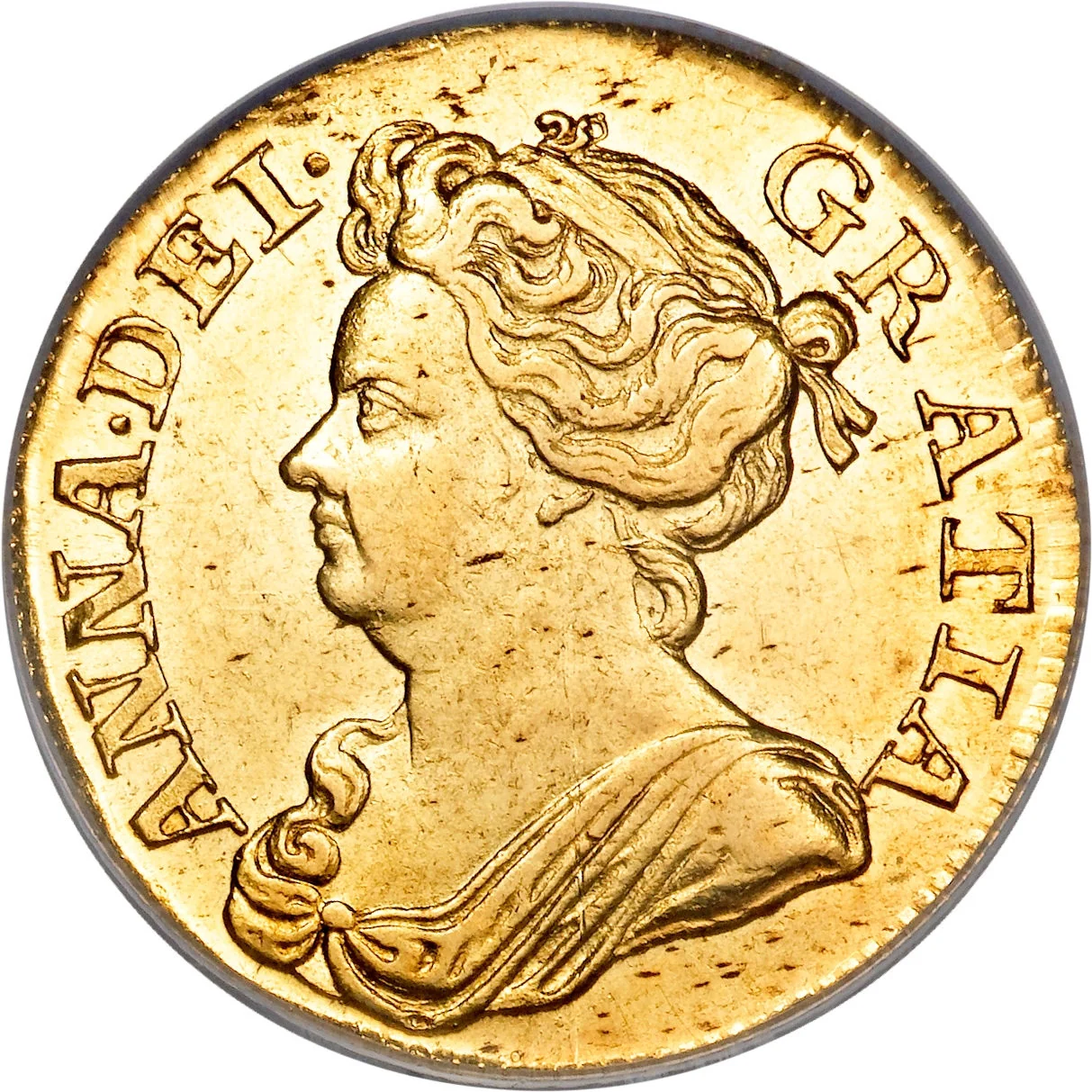
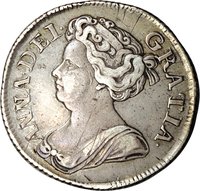
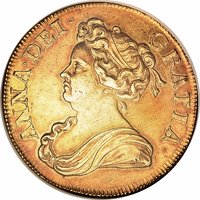
Queen Anne left, draped bust, legend around.
Inscription:
ANNA·DEI· GRATIA·
Script: Latin
Engraver: John Croker
Reverse
Description:
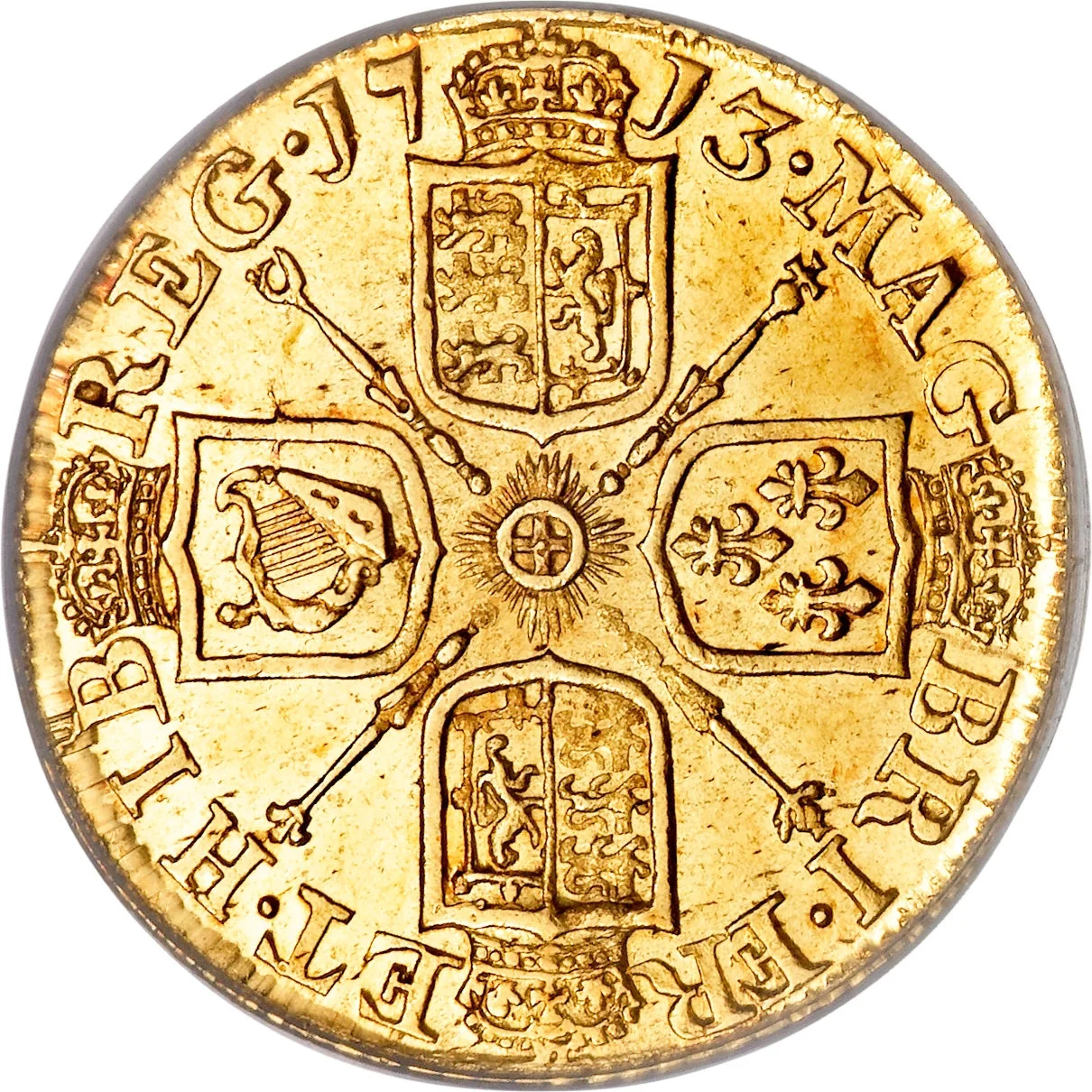
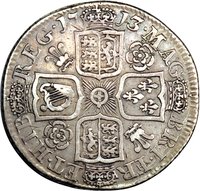
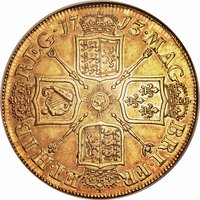
Crowned shields flank a central Garter star; sceptres in angles, date above, legend around.
Inscription:
MAG· BRI·FR· ET·HIB· REG·1713·
Script: Latin
Engraver: Johann Ochs
Edge
Reeded
Mintings
| Year | Mint Mark | Mintage | Quality | Collection |
|---|---|---|---|---|
| 1710 | — | — | ||
| 1711 | — | — | ||
| 1712 | — | — | ||
| 1713 | — | — | ||
| 1714 | — | — |
Historical background
In 1710, the United Kingdom’s currency system was in a state of profound crisis, rooted in the financial pressures of prolonged continental warfare. The Nine Years' War (1688–1697) and the ongoing War of the Spanish Succession (1701–1714) had placed immense strain on the Treasury, leading to a severe shortage of silver coin. The government, under Queen Anne, had resorted to issuing paper Exchequer Bills and borrowing heavily from the newly founded Bank of England (1694) to fund military campaigns. However, the physical currency in circulation was notoriously degraded: clipped, worn, and counterfeit silver coins were rampant, making transactions unreliable and undermining public confidence in the very medium of exchange.
The core of the problem was the disparity between the face value of silver coins and the market value of the silver they contained. Due to wear, clipping, and a rise in the global price of silver, the bullion value of older hammered coins often exceeded their nominal value. Consequently, good, full-weight coins were hoarded or melted down for profit, leaving only the poorest specimens in circulation—a classic example of Gresham’s Law, where "bad money drives out good." This created a dysfunctional economy where trade was hampered, tax revenues were hard to collect in sound coin, and the credibility of the state’s finances was dangerously weakened.
This deteriorating situation set the stage for one of the most significant financial reforms in British history. Although the major recoinage had been executed in 1696 under William III, its effects were still being felt, and the underlying issues persisted into Anne’s reign. The crisis of confidence in 1710 directly influenced political and economic debates, contributing to the rise of the Tory ministry under Robert Harley, who sought alternative funding methods and criticized the Whig-dominated "moneyed interests" of the Bank. The currency instability of this period thus formed a critical backdrop to both the Great Recoinage’s aftermath and the fierce political battles over how to manage the National Debt and secure the nation's financial future.
The core of the problem was the disparity between the face value of silver coins and the market value of the silver they contained. Due to wear, clipping, and a rise in the global price of silver, the bullion value of older hammered coins often exceeded their nominal value. Consequently, good, full-weight coins were hoarded or melted down for profit, leaving only the poorest specimens in circulation—a classic example of Gresham’s Law, where "bad money drives out good." This created a dysfunctional economy where trade was hampered, tax revenues were hard to collect in sound coin, and the credibility of the state’s finances was dangerously weakened.
This deteriorating situation set the stage for one of the most significant financial reforms in British history. Although the major recoinage had been executed in 1696 under William III, its effects were still being felt, and the underlying issues persisted into Anne’s reign. The crisis of confidence in 1710 directly influenced political and economic debates, contributing to the rise of the Tory ministry under Robert Harley, who sought alternative funding methods and criticized the Whig-dominated "moneyed interests" of the Bank. The currency instability of this period thus formed a critical backdrop to both the Great Recoinage’s aftermath and the fierce political battles over how to manage the National Debt and secure the nation's financial future.
💎 Extremely Rare