

2 Guineas – United Kingdom
United Kingdom
Context

Material
References
KM: #Click to copy to clipboard531
Numista: #13070
Value
Bullion value: $2572.94
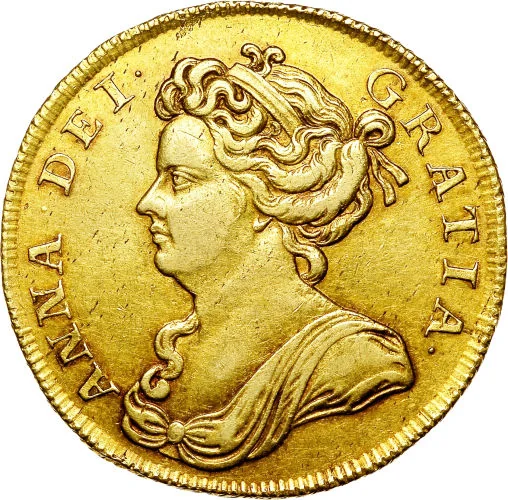
Obverse
Description:
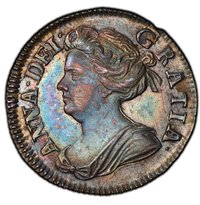
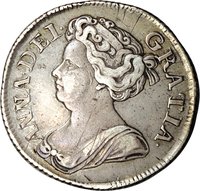
Queen Anne left-facing bust, legend surrounding.
Inscription:
ANNA·DEI· GRATIA·
Script: Latin
Engraver: John Croker
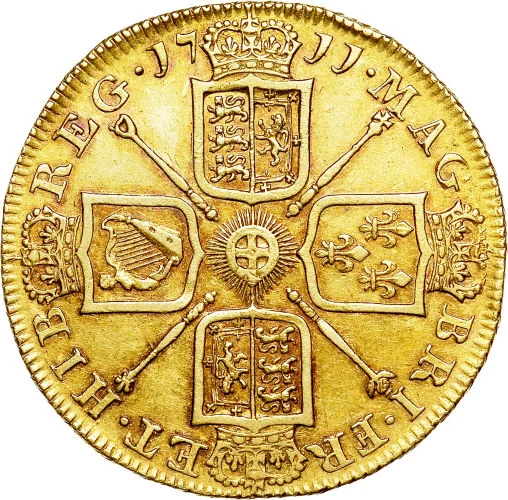
Reverse
Description:
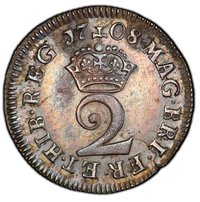
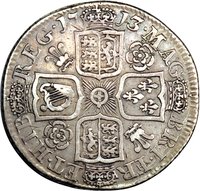
Crowned shields flank a central Garter star; sceptres in angles, date above, legend around.
Inscription:
MAG· BRI·FR· ET·HIB· REG·17 11·
Script: Latin
Engraver: Johann Ochs
Edge
Reeded
Mintings
| Year | Mint Mark | Mintage | Quality | Collection |
|---|---|---|---|---|
| 1709 | — | — | ||
| 1711 | — | — | ||
| 1713 | — | — | ||
| 1714 | — | — |
Historical background
In 1709, the United Kingdom’s currency system was in a state of profound crisis, rooted in the poor physical condition of its silver coinage. Following the Great Recoinage of 1696, which aimed to replace hand-hammered coins with new milled money, the process remained incomplete. In practice, well-worn, clipped, and underweight silver coins from earlier reigns still dominated daily circulation. This was due to Gresham’s Law in action: newer, full-weight coins were either hoarded or melted down for their higher bullion value, often being exported to Europe where silver commanded a higher price. Consequently, the public and commercial sectors struggled with a degraded and unreliable medium of exchange, which hampered trade and fostered uncertainty.
The core of the problem was a misalignment between the official face value of silver coins and the market price of the metal itself. The Royal Mint’s official mint price for silver was too low compared to continental prices, creating a powerful incentive for arbitrage. This systemic flaw meant that supplying silver to the Mint was unprofitable, preventing the adequate production of new coinage to replace the bad money in circulation. The situation was exacerbated by the ongoing War of the Spanish Succession (1701-1714), which placed immense strain on public finances and caused significant gold outflows to pay for military campaigns abroad, further tightening monetary conditions.
This currency instability directly influenced contemporary economic thought and policy. The crisis was a live topic of debate in Parliament and among intellectuals, with figures like Isaac Newton, then Warden (and soon to be Master) of the Royal Mint, deeply involved in seeking solutions. The difficulties of 1709 would ultimately pave the way for a pivotal shift in British monetary policy. Within a few years, Newton’s analysis would lead to a de facto gold standard, as the gold guinea was stabilised and silver was deliberately undervalued at the Mint, cementing gold’s primary role in the British monetary system for the next two centuries.
The core of the problem was a misalignment between the official face value of silver coins and the market price of the metal itself. The Royal Mint’s official mint price for silver was too low compared to continental prices, creating a powerful incentive for arbitrage. This systemic flaw meant that supplying silver to the Mint was unprofitable, preventing the adequate production of new coinage to replace the bad money in circulation. The situation was exacerbated by the ongoing War of the Spanish Succession (1701-1714), which placed immense strain on public finances and caused significant gold outflows to pay for military campaigns abroad, further tightening monetary conditions.
This currency instability directly influenced contemporary economic thought and policy. The crisis was a live topic of debate in Parliament and among intellectuals, with figures like Isaac Newton, then Warden (and soon to be Master) of the Royal Mint, deeply involved in seeking solutions. The difficulties of 1709 would ultimately pave the way for a pivotal shift in British monetary policy. Within a few years, Newton’s analysis would lead to a de facto gold standard, as the gold guinea was stabilised and silver was deliberately undervalued at the Mint, cementing gold’s primary role in the British monetary system for the next two centuries.
✨ Legendary