

2 Pence – United Kingdom
United Kingdom
Context

Material
References
KM: #Click to copy to clipboard513
Numista: #27959
Value
Bullion value: $2.67
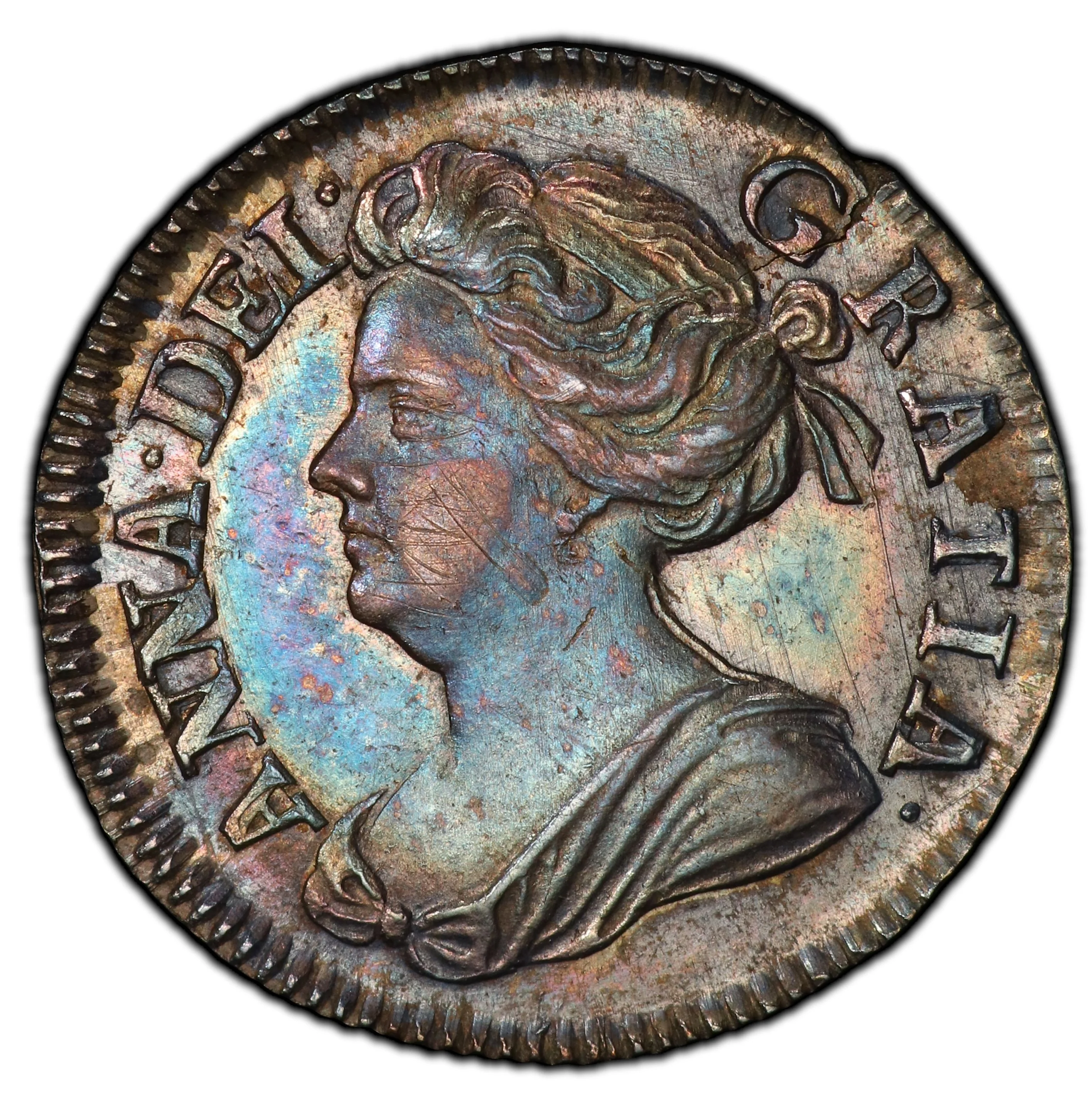
Obverse
Description:
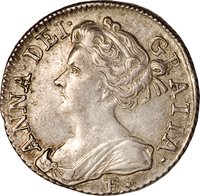
Queen Anne left, draped bust, with surrounding legend.
Inscription:
ANNA·DEI· GRATIA·
Script: Latin
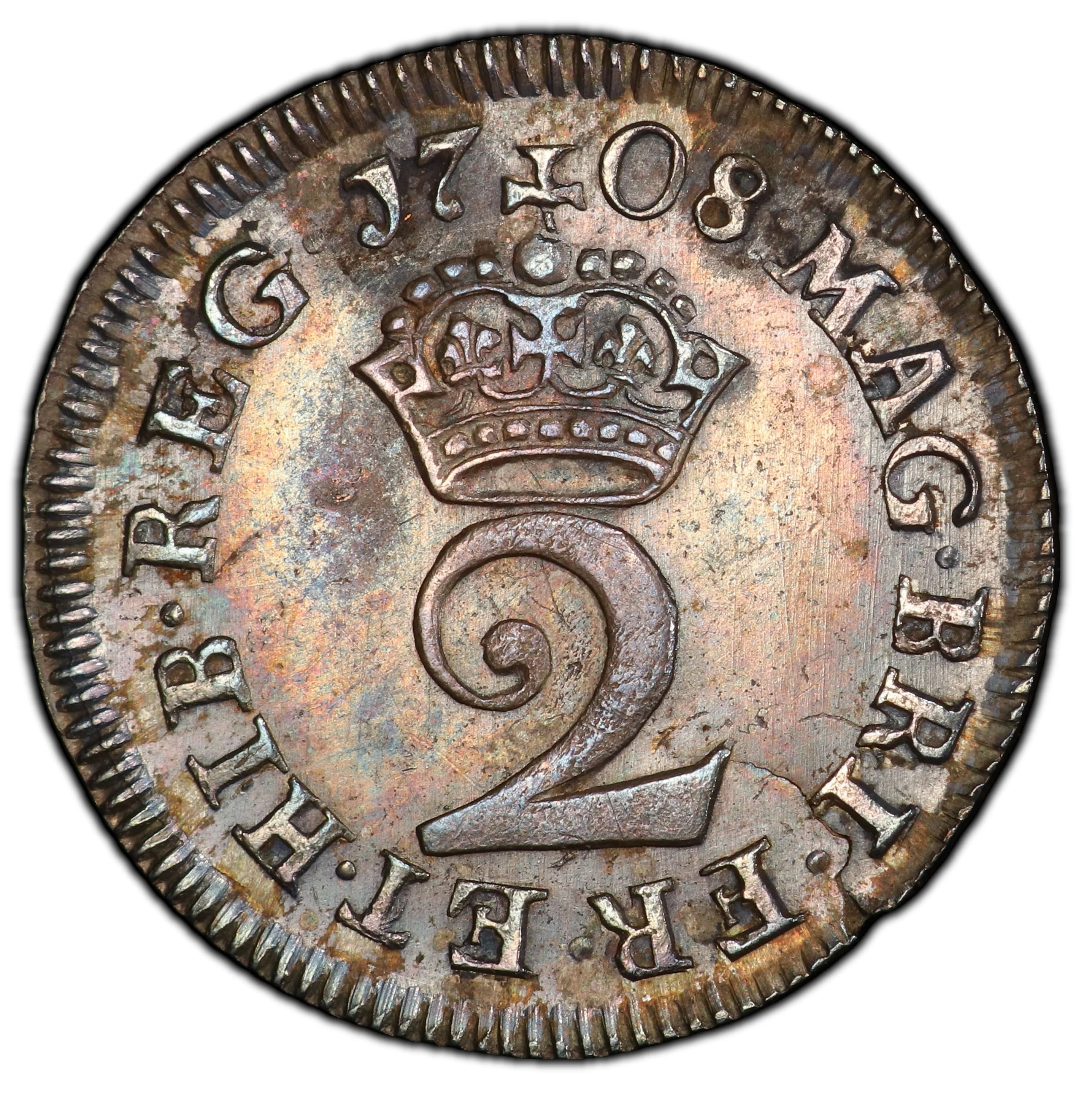
Reverse
Description:
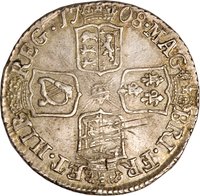
Central denomination under crown, date flanked by legend. Post-Union issue, large '2', crown inside inner circle.
Inscription:
MAG·BRI·FR·ET·HIB·REG·17 08·
2
2
Script: Latin
Edge
Mints
| Name | Mark |
|---|---|
| Royal Mint (Tower of London) | — |
Mintings
| Year | Mint Mark | Mintage | Quality | Collection |
|---|---|---|---|---|
| 1708 | — | — | ||
| 1709 | — | — | ||
| 1710 | — | — | ||
| 1713 | — | — |
Historical background
In 1708, the currency situation in the United Kingdom was one of profound crisis and transition, rooted in the financial strains of ongoing continental war. The nation was engaged in the War of the Spanish Succession, a conflict that placed immense pressure on the Royal Mint to produce silver coinage to pay troops and allies abroad. This led to a severe shortage of good silver coins in domestic circulation, as they were either hoarded or exported for their bullion value, which exceeded their face value. In their place, a degraded mixture of underweight, clipped, and counterfeit coins made everyday commerce difficult, eroding public trust and hindering the economy.
The government, under the guidance of Chancellor of the Exchequer Sidney Godolphin, had already taken a monumental step with the Great Recoinage of 1696, but the underlying problem persisted. Sir Isaac Newton’s appointment as Warden (and later Master) of the Mint in 1696 brought rigorous efforts to suppress counterfeiting and improve efficiency, yet the fundamental issue remained: the official mint price of silver was set too low compared to the market price in Europe. This meant it was more profitable to melt British silver coins into bullion for export than to keep them in circulation, creating a persistent drain.
Consequently, by 1708, England was effectively moving towards a de facto gold standard, though this was not yet official policy. The reliable gold guinea, originally worth 20 shillings, fluctuated widely in value due to the poor state of the silver currency it was measured against. This period of monetary instability underscored the limitations of a bimetallic system and set the stage for the eventual formal shift to the gold standard later in the century. The currency woes of 1708 thus reflected a nation struggling to align its monetary system with the demands of global warfare and emerging financial power.
The government, under the guidance of Chancellor of the Exchequer Sidney Godolphin, had already taken a monumental step with the Great Recoinage of 1696, but the underlying problem persisted. Sir Isaac Newton’s appointment as Warden (and later Master) of the Mint in 1696 brought rigorous efforts to suppress counterfeiting and improve efficiency, yet the fundamental issue remained: the official mint price of silver was set too low compared to the market price in Europe. This meant it was more profitable to melt British silver coins into bullion for export than to keep them in circulation, creating a persistent drain.
Consequently, by 1708, England was effectively moving towards a de facto gold standard, though this was not yet official policy. The reliable gold guinea, originally worth 20 shillings, fluctuated widely in value due to the poor state of the silver currency it was measured against. This period of monetary instability underscored the limitations of a bimetallic system and set the stage for the eventual formal shift to the gold standard later in the century. The currency woes of 1708 thus reflected a nation struggling to align its monetary system with the demands of global warfare and emerging financial power.
💎 Extremely Rare