

1 Piastra – Papal States
Vatican City
Context
Year: 1696
Country: Vatican City 
Issuer: Papal States
Ruler: Innocent XII
Currency:
(1534—1835)
Demonetized: Yes
Material
Diameter: 44 mm
Weight: 31.07 g
Silver weight: 28.49 g
Shape: Round
Composition: 91.7% Silver
Standard: Silver ounce
Magnetic: No
Alignment: Medal alignment
flip
References
KM: #Click to copy to clipboard598
Numista: #130627
Value
Bullion value: $82.14
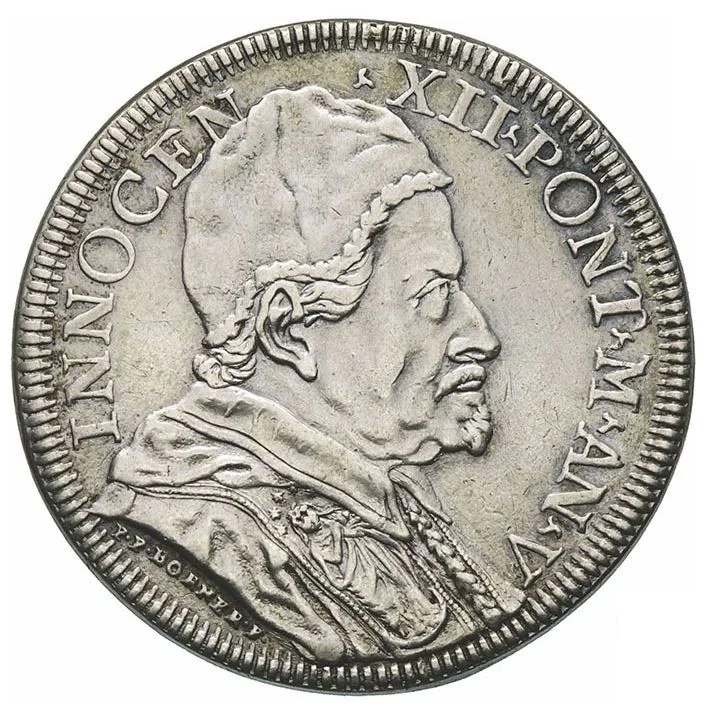
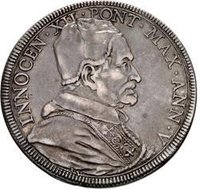
Obverse
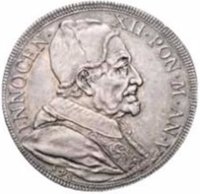
Description:
Bust right, capped.
Inscription:
INNOCEN ·XII·PONT·M·AN·V
Script: Latin
Engraver: Peter Paul Borner
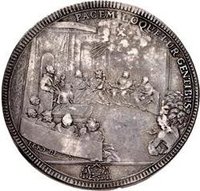
Reverse
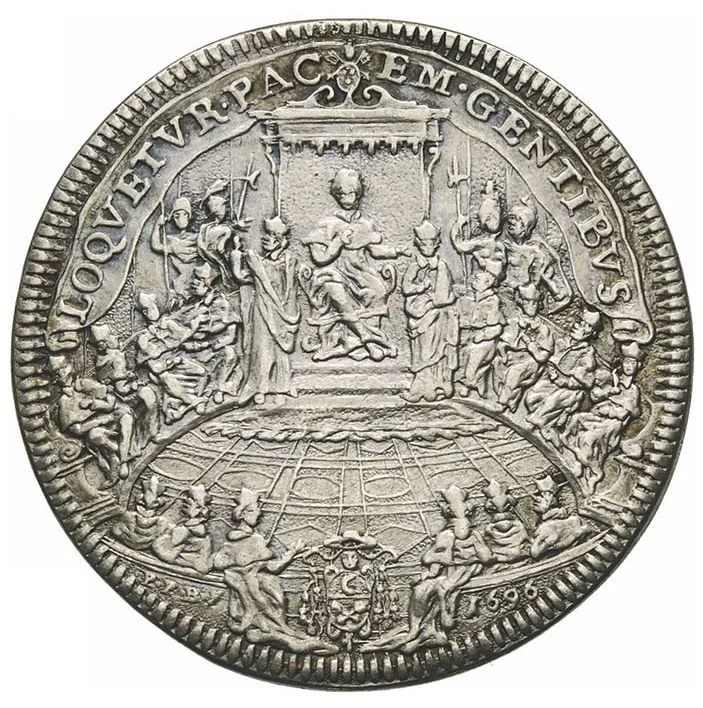
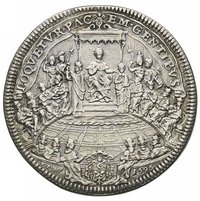
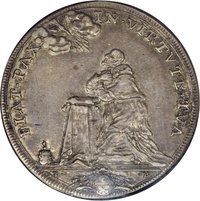
Description:
Pope presiding over Consistory.
Inscription:
LOQVETVR PAC EM·GENTIVBS
P·P·B·F· 1696
P·P·B·F· 1696
Script: Latin
Engraver: Peter Paul Borner
Edge
Plain
Mints
| Name | Mark |
|---|---|
| Rome | — |
Mintings
| Year | Mint Mark | Mintage | Quality | Collection |
|---|---|---|---|---|
| 1696 | — | — |
Historical background
In 1696, the Papal States under Pope Innocent XII faced a significant monetary crisis rooted in decades of fiscal mismanagement and the widespread debasement of coinage. The primary currency, the papal scudo, had seen its silver content steadily reduced by previous pontiffs to fund lavish building projects, military expenditures, and to cover shortfalls in state revenue. This practice, combined with the circulation of a bewildering variety of older, foreign, and counterfeit coins, created a chaotic and unreliable monetary system that hampered trade and eroded public trust in the currency.
The immediate trigger for the crisis in the 1690s was a severe shortage of small-denomination coins, essential for daily market transactions. This scarcity, known as a "small change famine," forced the populace to use cut fragments of larger coins or private tokens, further destabilizing the economy. Concurrently, the value of the debased papal coinage fell sharply against stronger foreign currencies like the Florentine florin or the Venetian ducat, leading to inflation, hoarding of good silver, and significant hardship for ordinary citizens.
Recognizing the threat to both economic stability and papal authority, Innocent XII initiated a major monetary reform in 1696. He ordered a recoinage, issuing new silver scudi and subsidiary coins with restored precious metal content. This decisive move aimed to restore confidence, standardize the currency, and reassert the temporal sovereignty of the Papal States by reclaiming control over its mint. While successful in the short term, the underlying structural fiscal weaknesses of the Papal States meant that monetary stability would remain a recurring challenge for his successors.
The immediate trigger for the crisis in the 1690s was a severe shortage of small-denomination coins, essential for daily market transactions. This scarcity, known as a "small change famine," forced the populace to use cut fragments of larger coins or private tokens, further destabilizing the economy. Concurrently, the value of the debased papal coinage fell sharply against stronger foreign currencies like the Florentine florin or the Venetian ducat, leading to inflation, hoarding of good silver, and significant hardship for ordinary citizens.
Recognizing the threat to both economic stability and papal authority, Innocent XII initiated a major monetary reform in 1696. He ordered a recoinage, issuing new silver scudi and subsidiary coins with restored precious metal content. This decisive move aimed to restore confidence, standardize the currency, and reassert the temporal sovereignty of the Papal States by reclaiming control over its mint. While successful in the short term, the underlying structural fiscal weaknesses of the Papal States meant that monetary stability would remain a recurring challenge for his successors.
✨ Legendary