

1 shilling – England
Add to wishlist
United Kingdom
Context
Years: 1703–1705
Country: United Kingdom
Issuer: England
Ruler: Anne
Currency:
(1158—1970)
Demonetized: Yes
Material
References
KM: #
Numista: #13061
Value
Bullion value: $14.07
Obverse
Description:
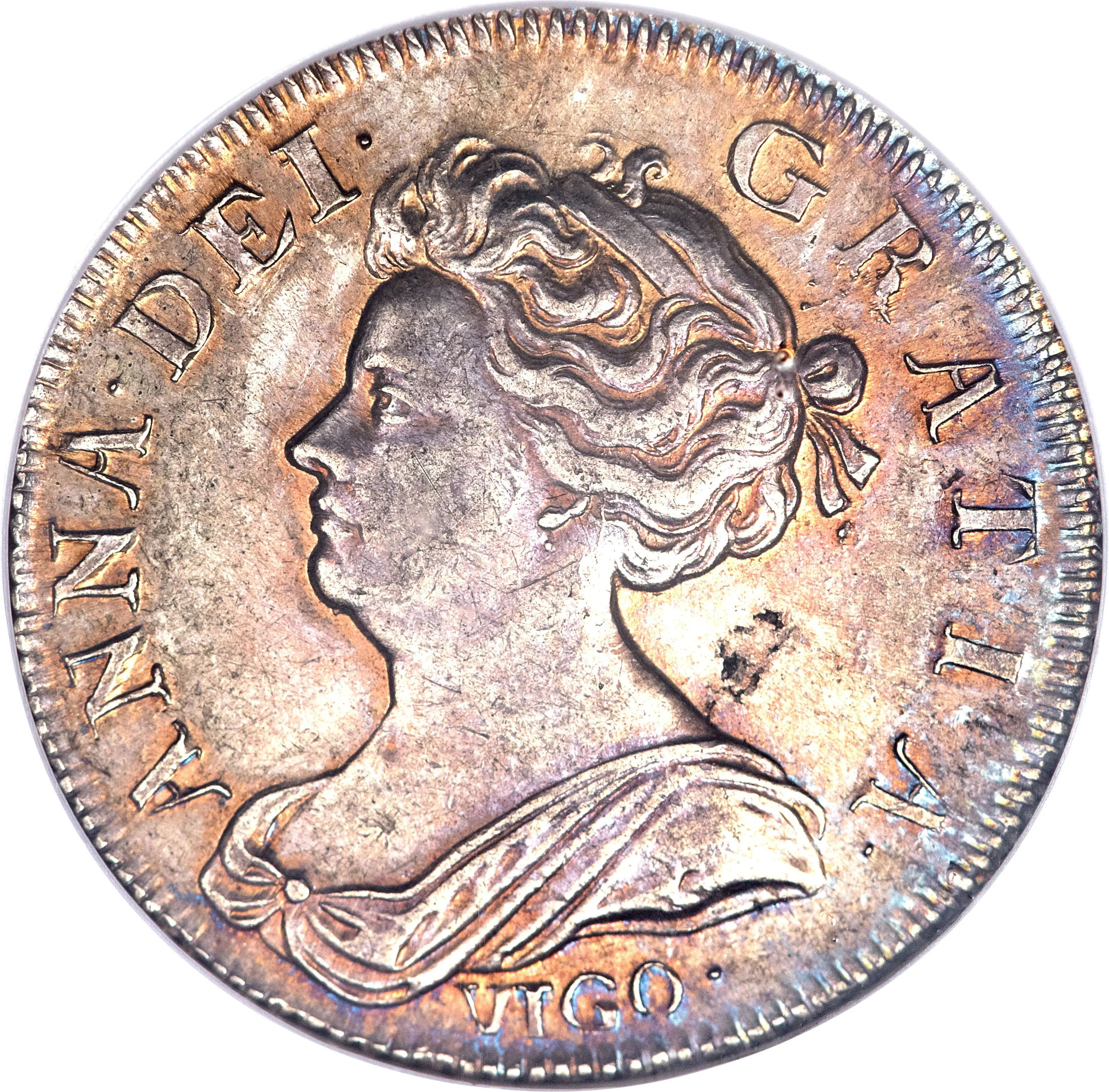
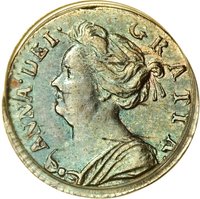
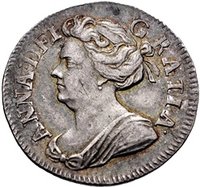
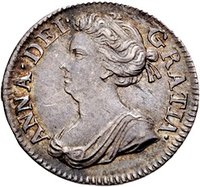
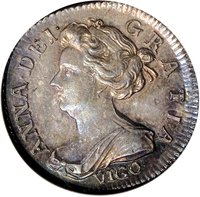
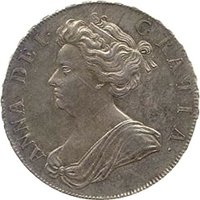
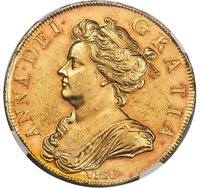
Queen Anne left, draped bust, with surrounding legend.
Inscription:
ANNA·DEI· GRATIA·
VIGO·
VIGO·
Script: Latin
Engraver: John Croker
Reverse
Description:
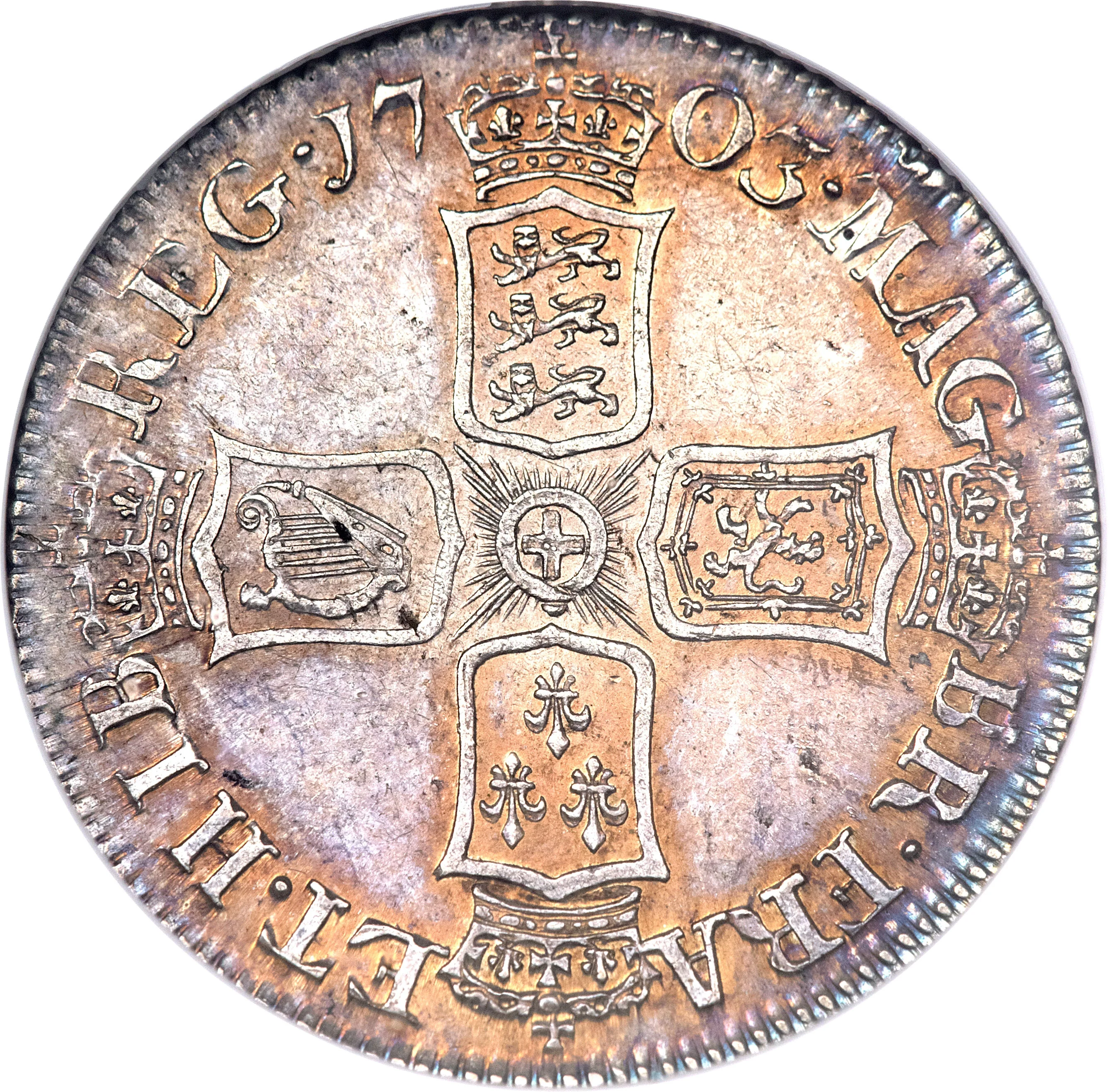
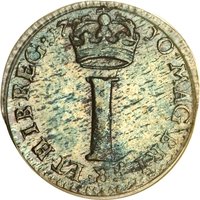
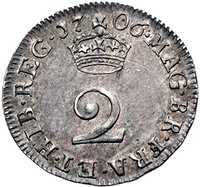
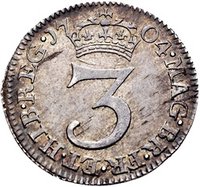
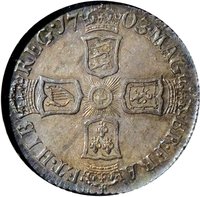
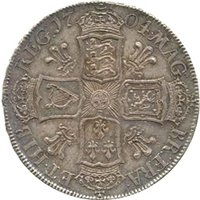
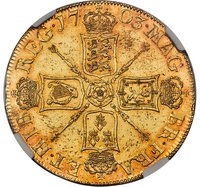
Crowned cruciform shields flanking central Garter star, date above, legend surrounding.
Inscription:
MAG· BR·FRA· ET·HIB REG·1703·
Script: Latin
Edge
Mintings
| Year | Mint Mark | Mintage | Quality | Collection |
|---|---|---|---|---|
| 1703 | VIGO | — | BU | |
| 1704 | — | — | ||
| 1705 | — | — |
Historical background
In 1703, England’s currency was in a state of profound crisis, a direct consequence of the "Great Recoinage" of 1696. That earlier effort had sought to replace old, worn, and clipped silver coins with new, milled-edge currency, but it was only a partial success. The fundamental problem was that the official mint price for silver was set below its market value, causing newly minted full-weight silver coins to be either hoarded or melted down and exported as bullion. Consequently, the circulating medium was dangerously deficient, consisting largely of lightweight and foreign coins, which crippled everyday trade and created widespread economic uncertainty.
This monetary instability was exacerbated by the ongoing War of the Spanish Succession (1701-1714), which placed immense financial strain on the Treasury. The government, under Queen Anne, was funding the war through innovative but burdensome methods like lotteries and the growing national debt, managed by the newly founded Bank of England. The shortage of reliable specie made it difficult to pay soldiers and suppliers, threatening the war effort itself. Furthermore, the rise of gold in commerce, particularly the Portuguese moidore and the guinea (valued by proclamation), highlighted the de facto shift toward a gold standard, though this was not yet official policy.
The situation demanded urgent action, and by 1703, intense debates were underway in Parliament and among financiers like Isaac Newton (soon to become Warden of the Mint). The core issue was finding a way to retain silver coinage in circulation. The discussions of 1703 would ultimately lead to Newton's recommendation in 1717 to lower the guinea's value, a pivotal step in formally establishing gold as the principal measure of value. Thus, 1703 represents a critical juncture—a year of lingering distress from the previous recoinage and of mounting pressure for the decisive reforms that would shape Britain's modern monetary system.
This monetary instability was exacerbated by the ongoing War of the Spanish Succession (1701-1714), which placed immense financial strain on the Treasury. The government, under Queen Anne, was funding the war through innovative but burdensome methods like lotteries and the growing national debt, managed by the newly founded Bank of England. The shortage of reliable specie made it difficult to pay soldiers and suppliers, threatening the war effort itself. Furthermore, the rise of gold in commerce, particularly the Portuguese moidore and the guinea (valued by proclamation), highlighted the de facto shift toward a gold standard, though this was not yet official policy.
The situation demanded urgent action, and by 1703, intense debates were underway in Parliament and among financiers like Isaac Newton (soon to become Warden of the Mint). The core issue was finding a way to retain silver coinage in circulation. The discussions of 1703 would ultimately lead to Newton's recommendation in 1717 to lower the guinea's value, a pivotal step in formally establishing gold as the principal measure of value. Thus, 1703 represents a critical juncture—a year of lingering distress from the previous recoinage and of mounting pressure for the decisive reforms that would shape Britain's modern monetary system.
Series: 1703 England circulation coins
💎 Extremely Rare