

5 lire – Vatican City
Add to wishlist
Vatican City
Context
Year: 1966
Issuer: Vatican City
Ruler: Paul VI
Currency:
(1929—2001)
Demonetized: Yes
Total mintage: 90,000
Material
References
KM: #
Numista: #12075
Value
Exchange value: 5 VAL
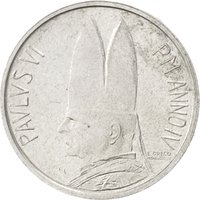
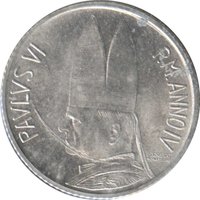
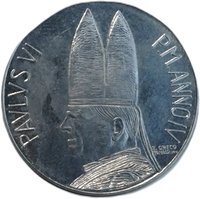
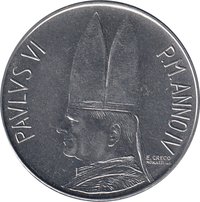
Obverse
Description:
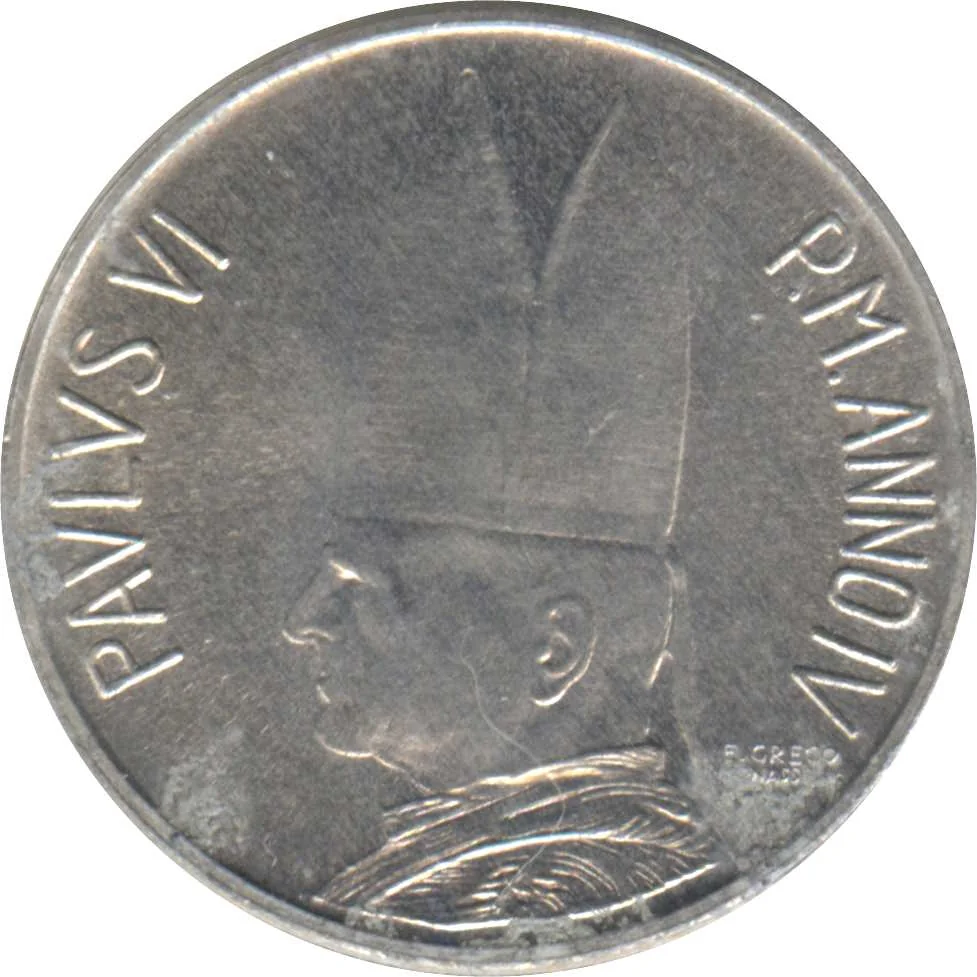
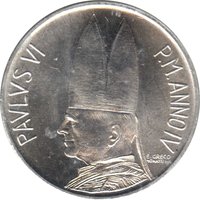
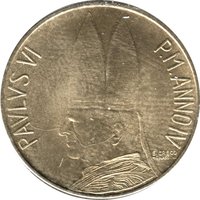
Left-facing portrait in a tall religious hat.
Inscription:
PAVLVS VI
P.M.ANNO IV
P.M.ANNO IV
Script: Latin
Engraver: Emilio Greco
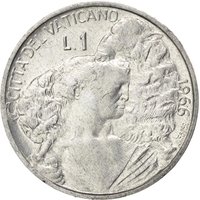
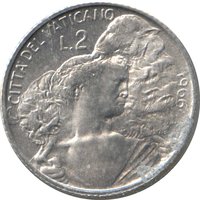
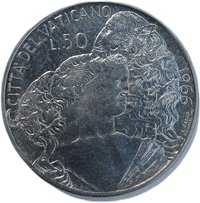
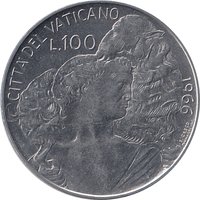
Reverse
Description:
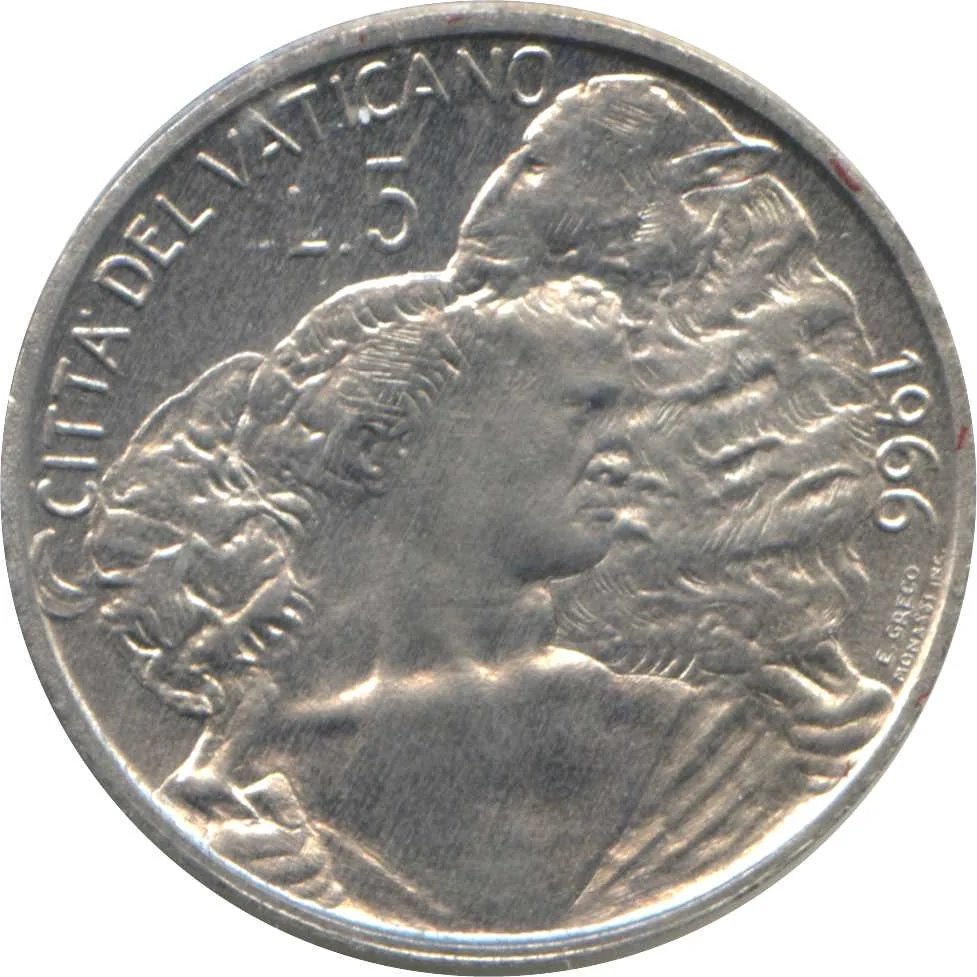
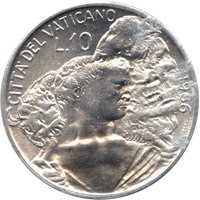
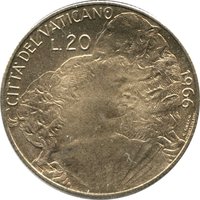
Right-facing portrait, date on right.
Inscription:
CITTA' DEL VATICANO
1966
L.5
1966
L.5
Script: Latin
Engraver: Emilio Greco
Edge
Categories
| Animal> Sheep |
| Person> Religious figure |
| Object> Hat |
| Religion> Religious objects |
Mintings
| Year | Mint Mark | Mintage | Quality | Collection |
|---|---|---|---|---|
| 1966 | — | 90,000 |
Historical background
In 1966, Vatican City found itself in a unique and complex currency situation, operating under the terms of the 1929 Lateran Treaty with Italy. This treaty granted the Holy See the right to issue its own coinage, the Vatican lira, which was legally equivalent to the Italian lira and circulated interchangeably within the Italian monetary zone. However, this arrangement came with a significant constraint: the volume of Vatican coinage was strictly limited by a quota agreed upon with the Italian government, intended to prevent the Vatican from influencing the Italian money supply and to curb potential numismatic speculation.
The year 1966 was particularly notable as it marked the final year of the pontificate of Pope Paul VI and saw the issuance of the last series of Vatican lire coins bearing his effigy. These coins, minted in denominations from 1 to 500 lire, were produced at the Italian State Mint in Rome. The restrictive quota meant that Vatican coinage was primarily symbolic and intended for collectors, pilgrims, and ceremonial purposes, rather than as a driver of the local economy. The city-state's practical, day-to-day financial transactions overwhelmingly relied on the Italian lira.
This dependent monetary system reflected Vatican City's broader geopolitical and economic reality as a sovereign micro-state entirely enclosed within Rome. Its currency was a symbol of its political autonomy, yet its economic viability was inextricably tied to Italy. The 1966 context was one of stability under the longstanding treaty, a situation that would persist until the introduction of the Euro in 2002, which eventually replaced both the Italian and Vatican lira.
The year 1966 was particularly notable as it marked the final year of the pontificate of Pope Paul VI and saw the issuance of the last series of Vatican lire coins bearing his effigy. These coins, minted in denominations from 1 to 500 lire, were produced at the Italian State Mint in Rome. The restrictive quota meant that Vatican coinage was primarily symbolic and intended for collectors, pilgrims, and ceremonial purposes, rather than as a driver of the local economy. The city-state's practical, day-to-day financial transactions overwhelmingly relied on the Italian lira.
This dependent monetary system reflected Vatican City's broader geopolitical and economic reality as a sovereign micro-state entirely enclosed within Rome. Its currency was a symbol of its political autonomy, yet its economic viability was inextricably tied to Italy. The 1966 context was one of stability under the longstanding treaty, a situation that would persist until the introduction of the Euro in 2002, which eventually replaced both the Italian and Vatican lira.
🌱 Fairly Common