

1 guinea – England
Add to wishlist
United Kingdom
Context
Years: 1697–1701
Country: United Kingdom
Issuer: England
Ruler: William III
Currency:
(1158—1970)
Demonetized: Yes
Material
References
KM: #
Numista: #12974
Value
Bullion value: $1178.85
Obverse
Description:
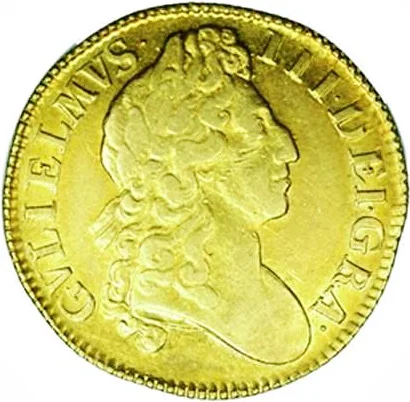
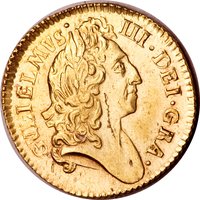
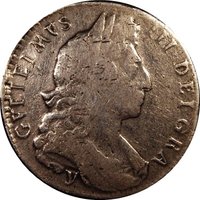
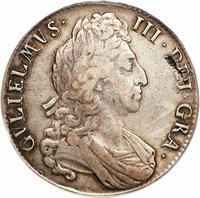
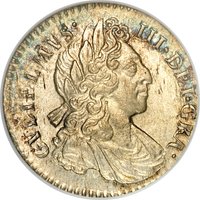
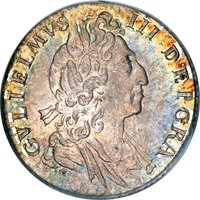
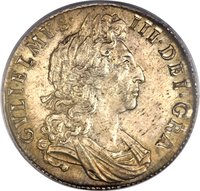
King William III laureate bust right, legend surrounding.
Inscription:
GVLIELMVS· III·DEI·GRA·
Script: Latin
Engraver: John Croker
Reverse
Description:
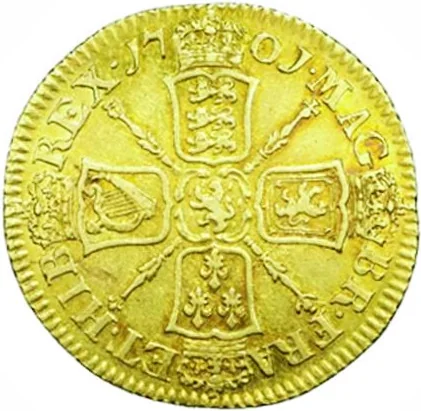
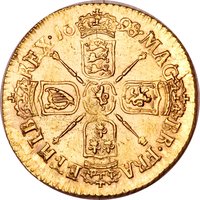
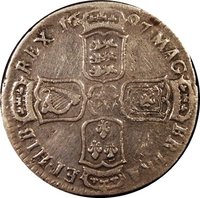
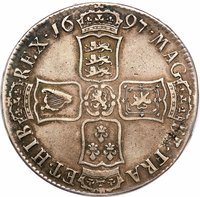
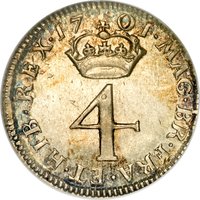
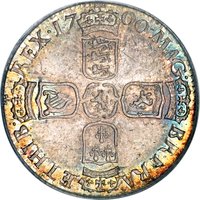
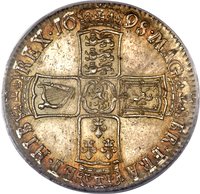
Crowned shields flank a central lion; sceptres with national emblems in corners, date above, legend around.
Inscription:
MAG· BR·FRA· ET·HIB REX·1701·
Script: Latin
Engraver: John Croker
Edge
Milled
Mintings
| Year | Mint Mark | Mintage | Quality | Collection |
|---|---|---|---|---|
| 1697 | — | — | ||
| 1698 | — | — | ||
| 1699 | — | — | ||
| 1700 | — | — | ||
| 1701 | — | — |
Historical background
In 1697, England’s currency was in a state of profound crisis, a direct consequence of the Nine Years' War (1688-1697). To finance the conflict against France, the government under King William III had heavily debased the silver coinage. Widespread clipping and counterfeiting of hammered coins had drastically reduced the average silver content of coins in circulation, separating their bullion value from their face value. This led to Gresham’s Law in action: "bad money drives out good." People hoarded full-weight coins or melted them for profit, leaving only the worn and clipped pieces in everyday use, which eroded public trust and crippled commerce.
The government’s response was the Great Recoinage of 1696-1699, a mammoth and costly undertaking masterminded by the Chancellor of the Exchequer, Charles Montagu, with advice from intellectuals like Isaac Newton (who would later become Warden of the Mint). The process involved recalling all the old hammered silver coins and replacing them with new, machine-milled coins with milled edges to prevent clipping. By 1697, the recoinage was underway but causing severe short-term economic pain. A critical shortage of circulating currency persisted, credit contracted, and the Treasury was strained by the cost of subsidizing the exchange of old coin for new.
This monetary turmoil directly influenced the financial revolution of the era. The state’s need for war funding, combined with the recoinage crisis, accelerated the establishment of the Bank of England in 1694 and the rise of a system of public credit and paper instruments. By 1697, while the physical currency was being painfully restored, England was transitioning toward a modern financial system less reliant on the intrinsic value of specie. Thus, the currency situation was not merely a tale of coinage but a pivotal moment forcing the nation toward the use of banknotes and government debt, laying the foundations for its future economic power.
The government’s response was the Great Recoinage of 1696-1699, a mammoth and costly undertaking masterminded by the Chancellor of the Exchequer, Charles Montagu, with advice from intellectuals like Isaac Newton (who would later become Warden of the Mint). The process involved recalling all the old hammered silver coins and replacing them with new, machine-milled coins with milled edges to prevent clipping. By 1697, the recoinage was underway but causing severe short-term economic pain. A critical shortage of circulating currency persisted, credit contracted, and the Treasury was strained by the cost of subsidizing the exchange of old coin for new.
This monetary turmoil directly influenced the financial revolution of the era. The state’s need for war funding, combined with the recoinage crisis, accelerated the establishment of the Bank of England in 1694 and the rise of a system of public credit and paper instruments. By 1697, while the physical currency was being painfully restored, England was transitioning toward a modern financial system less reliant on the intrinsic value of specie. Thus, the currency situation was not merely a tale of coinage but a pivotal moment forcing the nation toward the use of banknotes and government debt, laying the foundations for its future economic power.
Series: 1697 England circulation coins
✨ Legendary