

1 crown – England
Add to wishlist
United Kingdom
Context
Year: 1700
Country: United Kingdom
Issuer: England
Ruler: William III
Currency:
(1158—1970)
Demonetized: Yes
Material
References
KM: #
Numista: #12971
Value
Bullion value: $67.76
Obverse
Description:
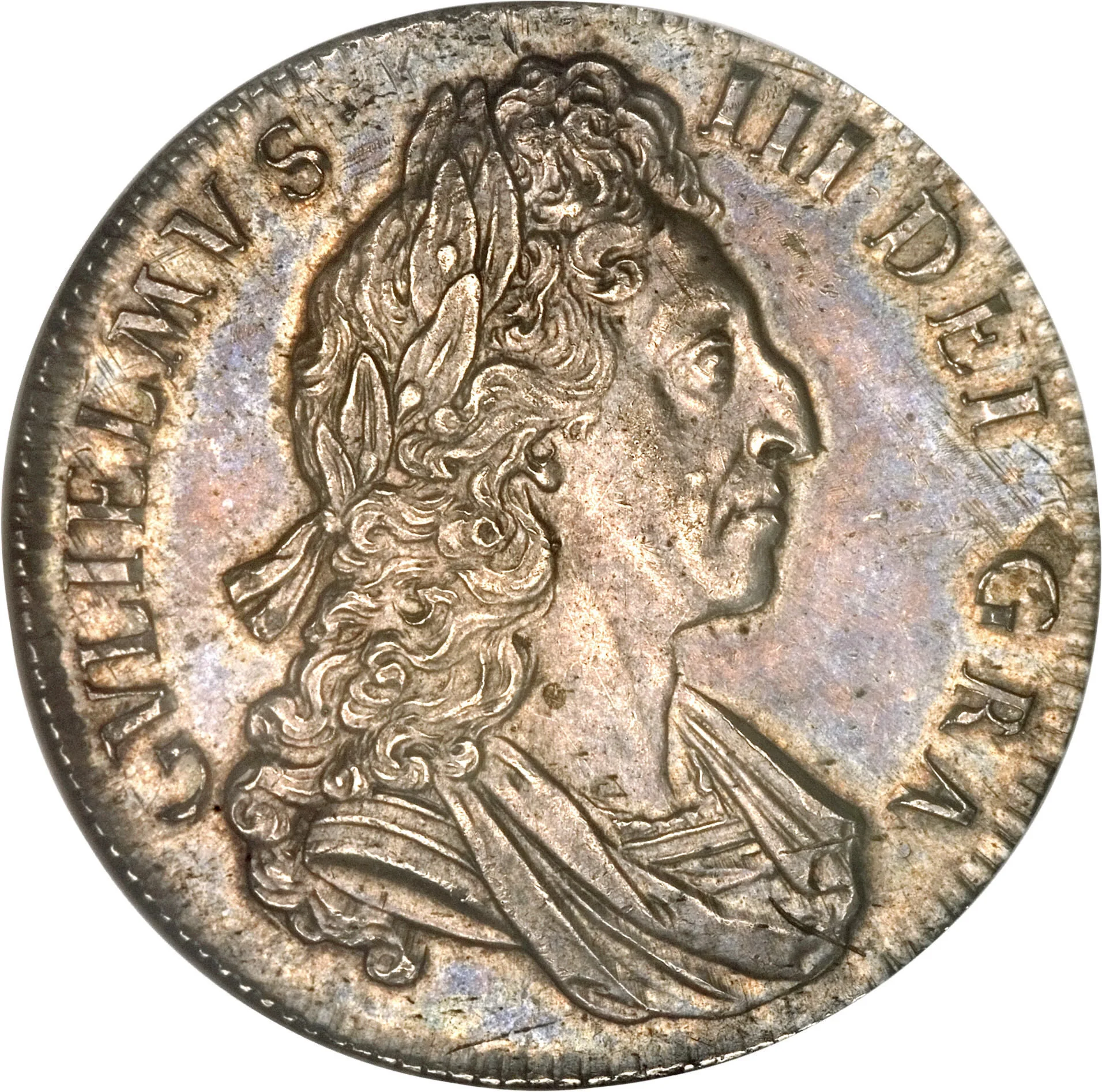
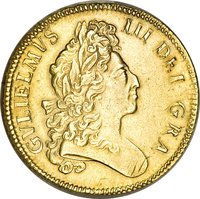
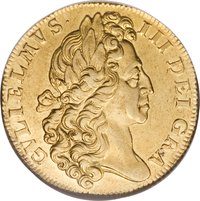
Third laureate, draped bust of William III right, legend around. Note: straight breastplate or drapery.
Inscription:
GVLIELMVS · III · DEI · GRA ·
Script: Latin
Engraver: James Roettier
Reverse
Description:
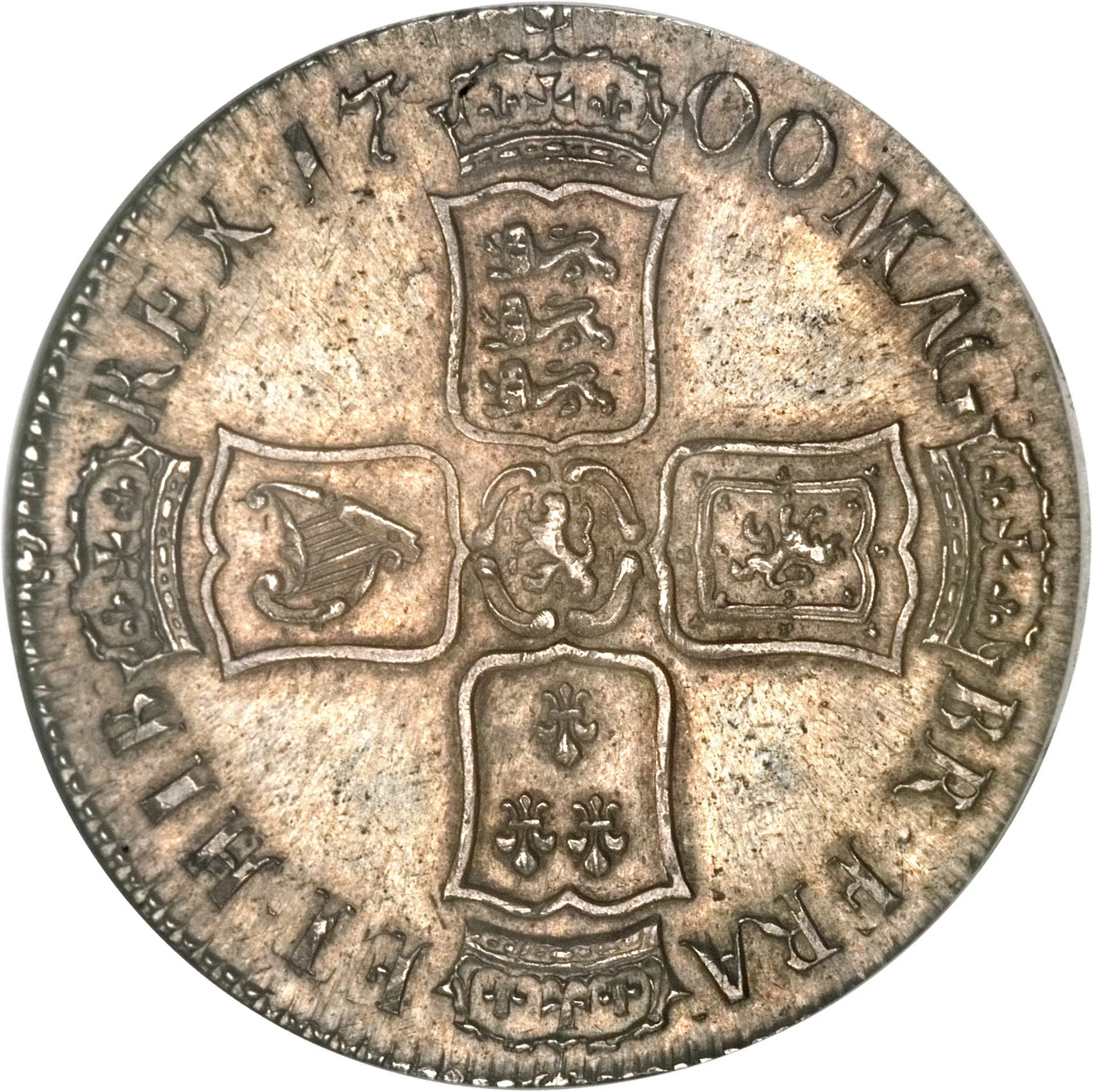
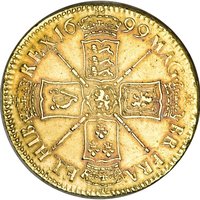
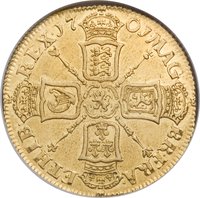
Crowned shields flank central lion, divided date above, third harp in left shield.
Inscription:
MAG BR·FRA ET·HIB REX·17 00·
Script: Latin
Engraver: John Roettier
Edge
Regnal year in Latin
Legend:
DVODECIMO
Mintings
| Year | Mint Mark | Mintage | Quality | Collection |
|---|---|---|---|---|
| 1700 | — | — |
Historical background
In 1700, England’s currency system was in a state of profound crisis and transition. The nation operated on a bimetallic standard, relying on both silver and gold coins, but the system was fundamentally broken. A key problem was the widespread clipping and counterfeiting of silver coins, which had reduced the average silver content in circulation to perhaps only half of their official face value. This debasement eroded public trust, crippled commerce, and caused Gresham’s Law to operate in earnest: "bad" underweight coins circulated freely, while "good" full-weight coins were hoarded or melted down for their higher bullion value. The situation reached a nadir in the 1690s, causing severe economic dislocation and hampering government finance, especially during the expensive Nine Years' War (1688-1697).
Recognizing the crisis, the government undertook a radical solution. In 1696, under the guidance of the Chancellor of the Exchequer, Charles Montagu, and the scientist Isaac Newton (who would later become Master of the Mint), a Great Recoinage was launched. This ambitious project involved recalling all the old, damaged silver currency and reminting it into new, milled-edge coins that were much harder to counterfeit. However, the process was chaotic and expensive, partly financed by the establishment of the Bank of England in 1694. Crucially, the government fixed the silver coinage at its old, pre-debasement standard, which inadvertently set the official price of silver too low compared to its market value, leading to the continued drainage of silver bullion from the country.
By the dawn of the 18th century, the immediate crisis had passed, but the recoinage had lasting consequences. The shortage of silver in practice began to solidify a de facto gold standard, a shift formally recognized later in 1717 when Newton, as Master of the Mint, set the guinea’s value in silver. This period thus marked the pivotal moment when England began its accidental but decisive move away from silver as the principal monetary metal and toward the gold standard that would underpin its financial power for the next two centuries. The successful stabilization, alongside the emerging institutions of public credit like the Bank of England, laid the essential financial foundations for the coming Georgian era and the rise of the British Empire.
Recognizing the crisis, the government undertook a radical solution. In 1696, under the guidance of the Chancellor of the Exchequer, Charles Montagu, and the scientist Isaac Newton (who would later become Master of the Mint), a Great Recoinage was launched. This ambitious project involved recalling all the old, damaged silver currency and reminting it into new, milled-edge coins that were much harder to counterfeit. However, the process was chaotic and expensive, partly financed by the establishment of the Bank of England in 1694. Crucially, the government fixed the silver coinage at its old, pre-debasement standard, which inadvertently set the official price of silver too low compared to its market value, leading to the continued drainage of silver bullion from the country.
By the dawn of the 18th century, the immediate crisis had passed, but the recoinage had lasting consequences. The shortage of silver in practice began to solidify a de facto gold standard, a shift formally recognized later in 1717 when Newton, as Master of the Mint, set the guinea’s value in silver. This period thus marked the pivotal moment when England began its accidental but decisive move away from silver as the principal monetary metal and toward the gold standard that would underpin its financial power for the next two centuries. The successful stabilization, alongside the emerging institutions of public credit like the Bank of England, laid the essential financial foundations for the coming Georgian era and the rise of the British Empire.
💎 Extremely Rare