

10 scudi – Malta
Add to wishlist
Malta
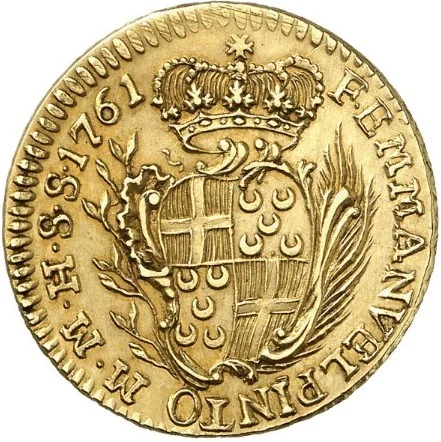
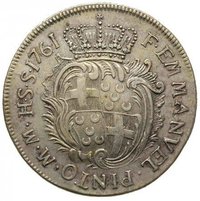
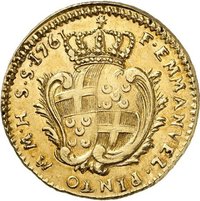
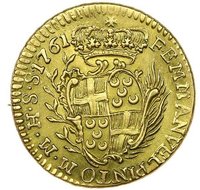
Obverse
Description:
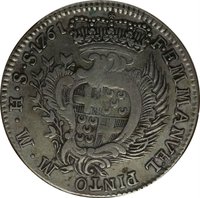
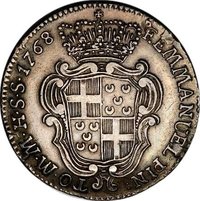
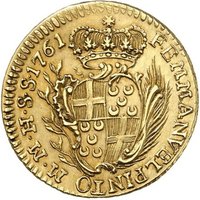
Ornate shield with crowned date.
Inscription:
F·EMMANVEL PINTO M·M·H·S·S·1761
Script: Latin
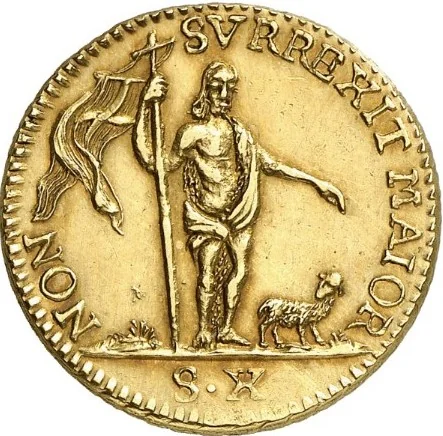
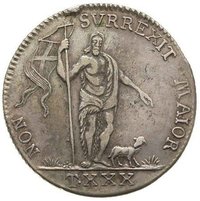
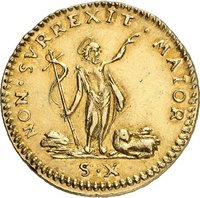
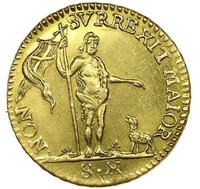
Reverse
Description:
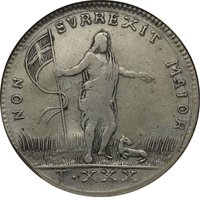
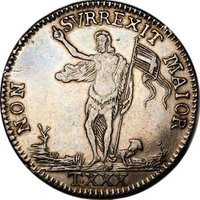
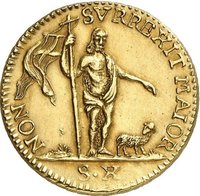
John the Baptist with banner, lamb facing right, value below.
Inscription:
NON SVRREXIT MAIOR
S·X
S·X
Script: Latin
Edge
Mintings
| Year | Mint Mark | Mintage | Quality | Collection |
|---|---|---|---|---|
| 1761 | — | — |
Historical background
In 1761, Malta’s currency situation was a complex and fragmented system, a direct legacy of its strategic position and history. The islands were ruled by the Sovereign Military Order of St. John of Jerusalem (the Knights Hospitaller), who issued their own coinage. However, the most dominant and trusted currency in daily commerce was not the local coin but the Spanish silver piastre or piece of eight (often called the "scudo" in Malta). Its widespread acceptance was due to Malta’s role as a bustling port in the central Mediterranean, where trade with merchants from across Europe and the Barbary States necessitated a strong, internationally recognized silver coin.
Alongside the Spanish piastre, a multitude of other foreign coins circulated, including Sicilian, Neapolitan, French, and Venetian issues. This created a chaotic environment for exchange, as the value of these coins fluctuated based on their silver content and wear. The Order attempted to regulate this by periodically issuing official bando proclamations that fixed the exchange rates between these foreign coins and the local Maltese scudo, the scudo maltese. However, these official rates often conflicted with market realities, leading to confusion, arbitrage, and frequent complaints from merchants and the public.
This monetary instability was a source of economic tension and administrative difficulty for the Order. The reliance on foreign silver made the local economy vulnerable to external flows of specie, and the constant need for revaluation proclamations highlighted the government's struggle to impose order. The situation underscored the limitations of the Knights' sovereignty in economic matters, as the real power lay with the internationally traded Spanish silver, setting the stage for future monetary reforms that would eventually come under British rule in the following century.
Alongside the Spanish piastre, a multitude of other foreign coins circulated, including Sicilian, Neapolitan, French, and Venetian issues. This created a chaotic environment for exchange, as the value of these coins fluctuated based on their silver content and wear. The Order attempted to regulate this by periodically issuing official bando proclamations that fixed the exchange rates between these foreign coins and the local Maltese scudo, the scudo maltese. However, these official rates often conflicted with market realities, leading to confusion, arbitrage, and frequent complaints from merchants and the public.
This monetary instability was a source of economic tension and administrative difficulty for the Order. The reliance on foreign silver made the local economy vulnerable to external flows of specie, and the constant need for revaluation proclamations highlighted the government's struggle to impose order. The situation underscored the limitations of the Knights' sovereignty in economic matters, as the real power lay with the internationally traded Spanish silver, setting the stage for future monetary reforms that would eventually come under British rule in the following century.
Series: 1761 Malta circulation coins
✨ Legendary