

1 Medin – Aleppo Eyalet
Syria
Context
Year: 1618
Islamic (Hijri) Year: 1027
Country: Syria 
Issuer: Aleppo Eyalet
Ruler: Osman II
Currency:
(1534—1687)
Demonetized: Yes
Material
References
KM: #Click to copy to clipboard34
Numista: #103074
Value
Bullion value: $3.52
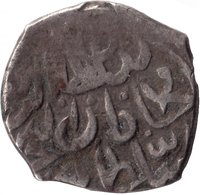
Obverse
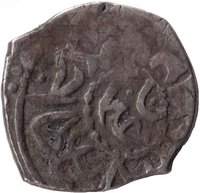
Reverse
Edge
Mints
| Name | Mark |
|---|---|
| Haleb | — |
Mintings
| Year | Mint Mark | Mintage | Quality | Collection |
|---|---|---|---|---|
| 1618 | — | — |
Historical background
In 1618, the currency situation in Aleppo Eyalet, a vital Ottoman province encompassing northern Syria and southeastern Anatolia, was characterized by a complex and often unstable monetary environment. The province served as the terminus of the great Asian silk and spice caravans, making its capital, Aleppo, a hub of international finance where European merchant companies (like the English Levant Company) operated alongside local Armenian, Jewish, and Muslim traders. This global trade necessitated the circulation of a multitude of coins: Ottoman silver akçes and gold sultanis, Spanish silver reales (pieces of eight), Venetian ducats, and various Persian and Mughal coins, all competing and fluctuating in value against one another.
The primary challenge was a severe shortage of high-quality Ottoman specie, exacerbated by the "Great Debasement" period (1585–1650). The central mint in Istanbul frequently reduced the silver content of the akçe to finance state expenditures, causing inflation and a loss of confidence. In Aleppo's markets, merchants therefore preferred reliable foreign coins, especially the Spanish real, which became a de facto trade currency. This created a two-tiered system: official accounting in Ottoman currency for tax purposes, and actual commercial transactions conducted in a medley of more trusted foreign and regional coins, exchanged at daily-determined market rates.
Consequently, monetary authority in the eyalet was diffuse. The provincial governor and local judges (qadis) attempted to enforce official exchange rates and purity standards through periodic decrees (narh), but these were often ignored in the pragmatic world of the suq. Money changers (sarrafs) wielded significant economic power, acting as essential intermediaries who assessed, exchanged, and provided credit in this heterogeneous system. Thus, in 1618, Aleppo's currency situation was one of pragmatic adaptation to imperial fiscal decline, where global trade flows and local market forces ultimately dictated monetary practice more than the commands of the distant Sultan.
The primary challenge was a severe shortage of high-quality Ottoman specie, exacerbated by the "Great Debasement" period (1585–1650). The central mint in Istanbul frequently reduced the silver content of the akçe to finance state expenditures, causing inflation and a loss of confidence. In Aleppo's markets, merchants therefore preferred reliable foreign coins, especially the Spanish real, which became a de facto trade currency. This created a two-tiered system: official accounting in Ottoman currency for tax purposes, and actual commercial transactions conducted in a medley of more trusted foreign and regional coins, exchanged at daily-determined market rates.
Consequently, monetary authority in the eyalet was diffuse. The provincial governor and local judges (qadis) attempted to enforce official exchange rates and purity standards through periodic decrees (narh), but these were often ignored in the pragmatic world of the suq. Money changers (sarrafs) wielded significant economic power, acting as essential intermediaries who assessed, exchanged, and provided credit in this heterogeneous system. Thus, in 1618, Aleppo's currency situation was one of pragmatic adaptation to imperial fiscal decline, where global trade flows and local market forces ultimately dictated monetary practice more than the commands of the distant Sultan.

✨ Legendary