

1 Medin – Aleppo Eyalet
Syria
Context
Year: 1603
Islamic (Hijri) Year: 1012
Country: Syria 
Issuer: Aleppo Eyalet
Ruler: Ahmed I
Currency:
(1534—1687)
Demonetized: Yes
Material
References
KM: #Click to copy to clipboard12
Numista: #103061
Value
Bullion value: $3.66
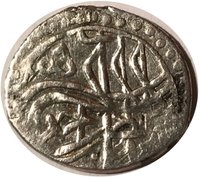
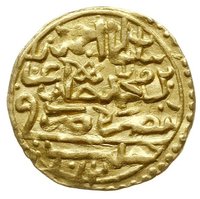
Obverse
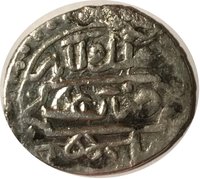
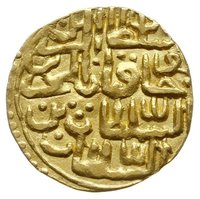
Reverse
Edge
Mints
| Name | Mark |
|---|---|
| Haleb | — |
Mintings
| Year | Mint Mark | Mintage | Quality | Collection |
|---|---|---|---|---|
| 1603 | — | — |
Historical background
In 1603, the currency situation in Aleppo Eyalet, a pivotal Ottoman province and global trade hub, was defined by severe instability and a profound monetary crisis. This was part of a wider empire-wide phenomenon known as the "Great Debasement," where the state, facing immense fiscal pressure from prolonged wars (particularly with the Habsburgs and Safavids) and internal rebellions, repeatedly reduced the silver content of the primary coin, the akçe. The result was rampant inflation, a loss of public confidence in coinage, and chaotic exchange rates that disrupted the very foundations of commerce.
For Aleppo, a city at the crossroads of international caravans, this crisis was acutely felt. The city's sophisticated financial markets, which dealt in a multitude of currencies including Venetian ducats, Spanish reals, and Safavid mohrs, now had to constantly recalibrate values against a rapidly depreciating Ottoman currency. Long-term contracts and tax farming (iltizam) agreements, calculated in nominal akçe, became sources of confusion and conflict as the real value of payments plummeted. This environment bred uncertainty among the local merchants, foreign factors (especially English and Dutch Levant Company agents), and artisans, threatening the efficiency of the region's famed textile and silk trades.
The Ottoman central government attempted corrective measures, including the introduction of a new, higher-value silver coin, the para, and occasional efforts to fix prices. However, these were largely ineffective in Aleppo's deep and internationally integrated market. Consequently, the mercantile community increasingly relied on stable foreign specie for large transactions, while the local populace suffered from rising prices for basic goods. Thus, the currency turmoil of 1603 was not merely a financial issue but a destabilizing force that eroded economic trust and strained the social and administrative fabric of the eyalet.
For Aleppo, a city at the crossroads of international caravans, this crisis was acutely felt. The city's sophisticated financial markets, which dealt in a multitude of currencies including Venetian ducats, Spanish reals, and Safavid mohrs, now had to constantly recalibrate values against a rapidly depreciating Ottoman currency. Long-term contracts and tax farming (iltizam) agreements, calculated in nominal akçe, became sources of confusion and conflict as the real value of payments plummeted. This environment bred uncertainty among the local merchants, foreign factors (especially English and Dutch Levant Company agents), and artisans, threatening the efficiency of the region's famed textile and silk trades.
The Ottoman central government attempted corrective measures, including the introduction of a new, higher-value silver coin, the para, and occasional efforts to fix prices. However, these were largely ineffective in Aleppo's deep and internationally integrated market. Consequently, the mercantile community increasingly relied on stable foreign specie for large transactions, while the local populace suffered from rising prices for basic goods. Thus, the currency turmoil of 1603 was not merely a financial issue but a destabilizing force that eroded economic trust and strained the social and administrative fabric of the eyalet.

✨ Legendary