

1 Mangir – Aleppo Eyalet
Syria
Context
Year: 1595
Islamic (Hijri) Year: 1003
Country: Syria 
Issuer: Aleppo Eyalet
Ruler: Mehmed III
Currency:
(1534—1687)
Demonetized: Yes
Material
References
KM: #Click to copy to clipboard1
Numista: #103053
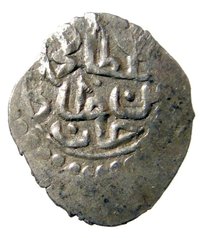
Obverse
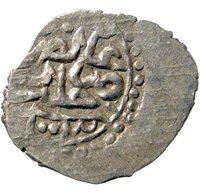
Reverse
Edge
Mints
| Name | Mark |
|---|---|
| Haleb | — |
Mintings
| Year | Mint Mark | Mintage | Quality | Collection |
|---|---|---|---|---|
| 1595 | — | — |
Historical background
In 1595, the currency situation in Aleppo Eyalet, a vital Ottoman province encompassing northern Syria and southeastern Anatolia, was defined by a complex and often unstable bimetallic system. The empire officially operated on a silver akçe and a gold sultani, but their values fluctuated based on internal minting policies and, crucially, external economic pressures. Aleppo, as a global hub for the silk and spice trades, was particularly exposed to these pressures. A persistent "price revolution" caused by massive inflows of Spanish-American silver into the Mediterranean via European merchants was devaluing silver-based coins, while the Ottoman treasury, engaged in costly wars, frequently debased the akçe to raise short-term revenue, further eroding its purchasing power.
This monetary instability manifested in daily commerce as a "currency chaos." The market was flooded with a plethora of coins: not only Ottoman-minted pieces of varying purity but also a wide array of foreign currencies, most notably the Spanish silver real (known as the riyal gurush or piastre), Venetian ducats, and Persian shahis. These foreign coins, often of more reliable weight and fineness, circulated freely and were frequently preferred in large-scale international transactions. This created a dual reality where official state accounting used the nominal akçe, while the bustling souqs and caravan trades of Aleppo increasingly relied on heavier silver gurush and gold coins for practicality.
Consequently, the provincial administration in Aleppo faced significant challenges in tax collection and salary payments. Soldiers and officials, paid in devalued akçes, saw their real incomes decline, leading to discontent and demands for payment in more stable currency. The state attempted to regulate exchange rates through periodic narh (official price) decrees, but these were difficult to enforce in such a dynamic and international marketplace. Thus, in 1595, Aleppo's currency situation was one of profound transition, caught between an eroding traditional Ottoman monetary order and the hard realities of an integrating early modern global economy.
This monetary instability manifested in daily commerce as a "currency chaos." The market was flooded with a plethora of coins: not only Ottoman-minted pieces of varying purity but also a wide array of foreign currencies, most notably the Spanish silver real (known as the riyal gurush or piastre), Venetian ducats, and Persian shahis. These foreign coins, often of more reliable weight and fineness, circulated freely and were frequently preferred in large-scale international transactions. This created a dual reality where official state accounting used the nominal akçe, while the bustling souqs and caravan trades of Aleppo increasingly relied on heavier silver gurush and gold coins for practicality.
Consequently, the provincial administration in Aleppo faced significant challenges in tax collection and salary payments. Soldiers and officials, paid in devalued akçes, saw their real incomes decline, leading to discontent and demands for payment in more stable currency. The state attempted to regulate exchange rates through periodic narh (official price) decrees, but these were difficult to enforce in such a dynamic and international marketplace. Thus, in 1595, Aleppo's currency situation was one of profound transition, caught between an eroding traditional Ottoman monetary order and the hard realities of an integrating early modern global economy.

✨ Legendary