

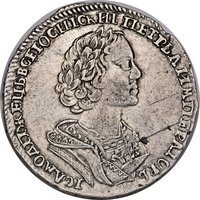
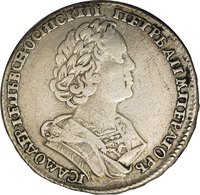
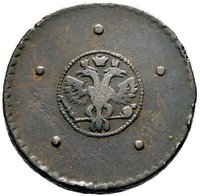
Obverse
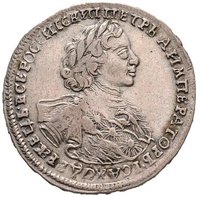
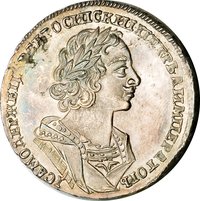
Description:
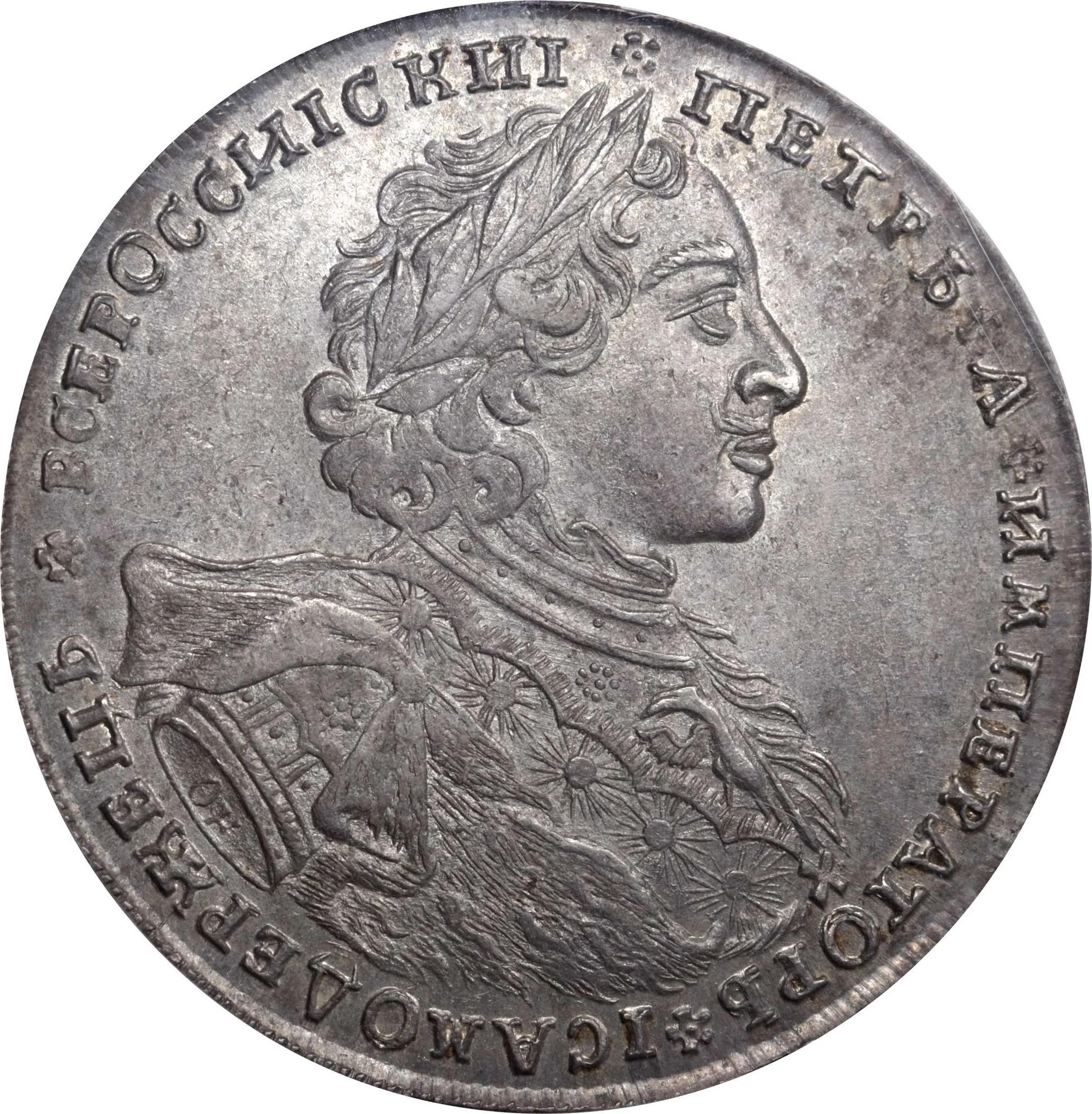
Peter I bust with encircling legend.
Inscription:
ПЕТРЬ · А · ИМПЕРАТОРЬ · IСАМОДЕРЖЕЦЬ · ВСЕРОССИIСКИI
ОК
ОК
Script: Cyrillic
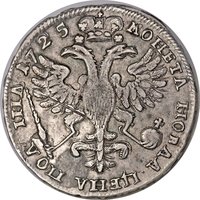
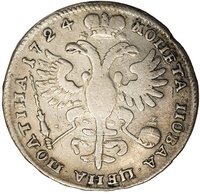
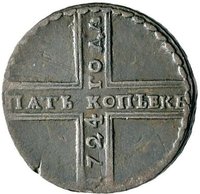
Reverse
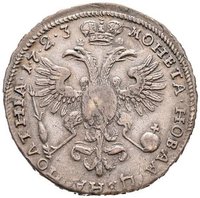
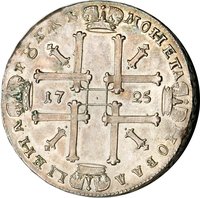
Description:
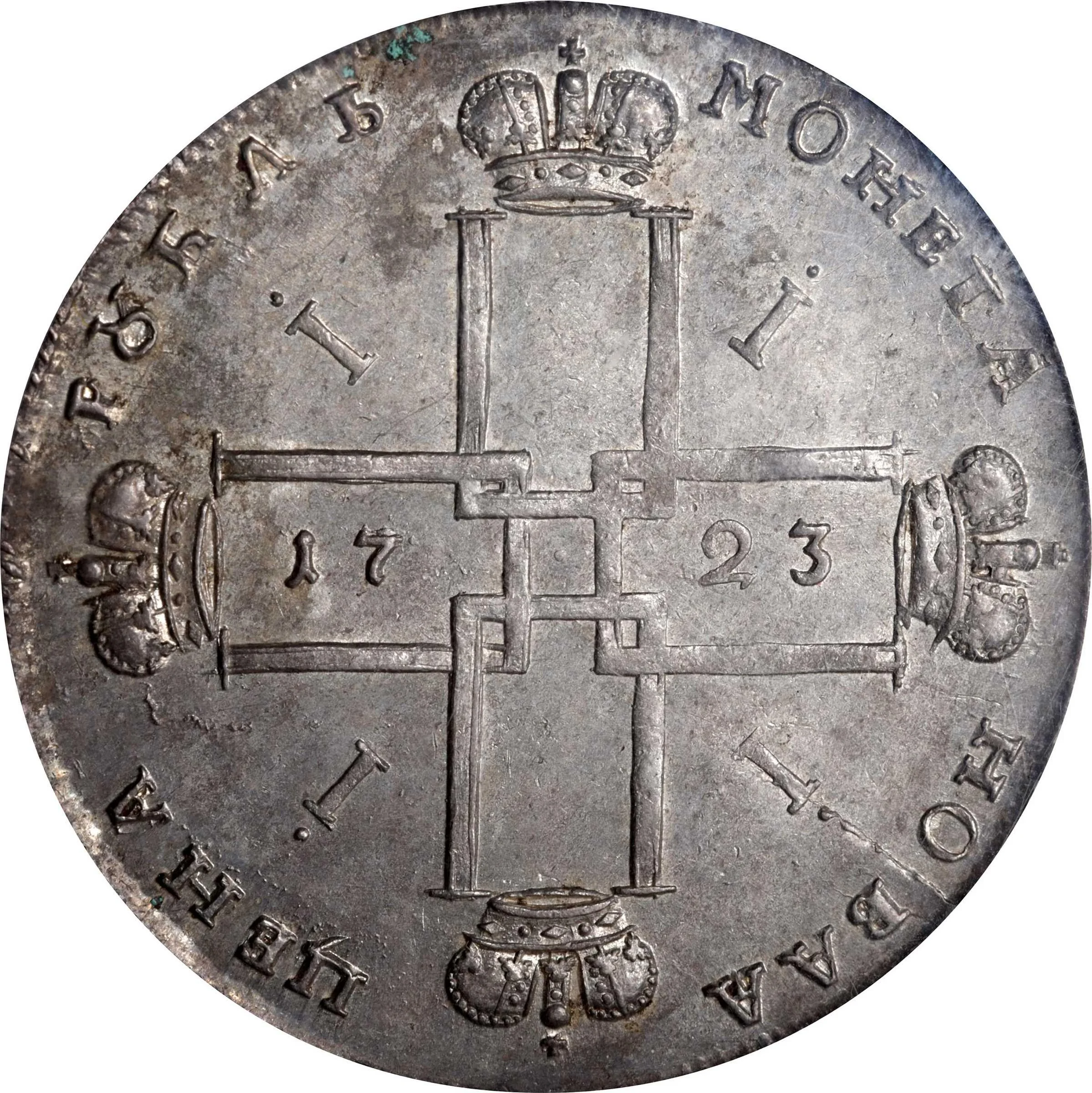
Cross of four "П" letters, "I" at corners. Side crowns. Denomination and date.
Inscription:
МОНЕТА НОВАѦ ЦЕНА РƔБЛЬ
17 23
17 23
Script: Cyrillic
Edge
Smooth with inscription
Legend:
РОССИСКОI РУБЛЬ МОСКОВСКОГО ДВАРА
Mints
| Name | Mark |
|---|---|
| Krasny Mint (Red Mint) | — |
Mintings
| Year | Mint Mark | Mintage | Quality | Collection |
|---|---|---|---|---|
| 1723 | ОК | — |
Historical background
In 1723, the currency system of the Russian Empire was in a state of profound transition, directly shaped by the fiscal and military demands of Peter the Great’s reign. The cornerstone was the silver kopeck, a small, hand-hammered coin that was the primary unit of everyday exchange. However, the Great Northern War (1700-1721) had placed an enormous strain on state finances, leading to repeated debasement. To fund the war, the government had drastically reduced the silver content of these coins, leading to severe inflation, a loss of public trust, and a chaotic monetary environment where the nominal value of coins far exceeded their intrinsic metal worth.
Recognizing this crisis, Peter had initiated a sweeping monetary reform beginning in the late 1710s, which was still being implemented in 1723. The reform introduced machine-struck, round coins of standardized weight and fineness, produced at new mints in Moscow and Saint Petersburg. Most significantly, it created a new decimal-based system: the ruble was now officially divided into 100 kopecks, replacing the old and complex system. In 1723, key new coins like the copper polushka (¼ kopeck) and denga (½ kopeck) were being minted from copper, marking a crucial step in establishing a stable, fractional coinage to facilitate small-scale trade.
Thus, the currency situation in 1723 was one of moving from crisis to controlled order. The old, debased wire kopecks were being phased out, while the new, regulated coinage—including gold chervonets, silver rubles and kopecks, and the new copper denominations—was gradually entering circulation. This reform was not just economic but also a symbol of Peter’s modernizing vision, seeking to align Russia with European financial practices, stabilize the state treasury, and provide a reliable monetary foundation for imperial expansion and administration.
Recognizing this crisis, Peter had initiated a sweeping monetary reform beginning in the late 1710s, which was still being implemented in 1723. The reform introduced machine-struck, round coins of standardized weight and fineness, produced at new mints in Moscow and Saint Petersburg. Most significantly, it created a new decimal-based system: the ruble was now officially divided into 100 kopecks, replacing the old and complex system. In 1723, key new coins like the copper polushka (¼ kopeck) and denga (½ kopeck) were being minted from copper, marking a crucial step in establishing a stable, fractional coinage to facilitate small-scale trade.
Thus, the currency situation in 1723 was one of moving from crisis to controlled order. The old, debased wire kopecks were being phased out, while the new, regulated coinage—including gold chervonets, silver rubles and kopecks, and the new copper denominations—was gradually entering circulation. This reform was not just economic but also a symbol of Peter’s modernizing vision, seeking to align Russia with European financial practices, stabilize the state treasury, and provide a reliable monetary foundation for imperial expansion and administration.
💎 Extremely Rare