

2 Zecchini – Malta
Malta
Context
Material
References
KM: #Click to copy to clipboard190
Numista: #129612
Value
Bullion value: $1124.49
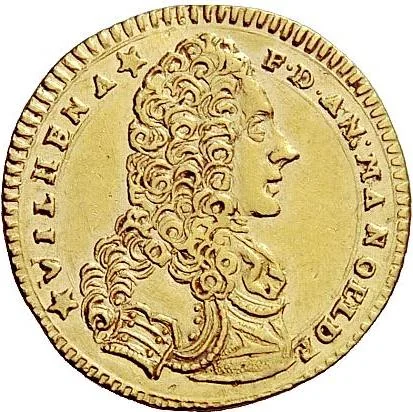
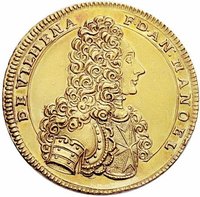
Obverse
Description:
Armored bust right, two stars in lettering.
Inscription:
F · D · AN : MANOEL DE ★ VILHENA ★
Script: Latin
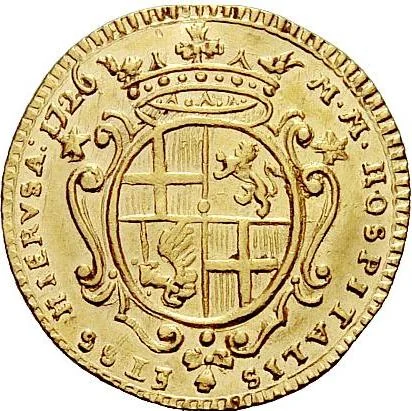
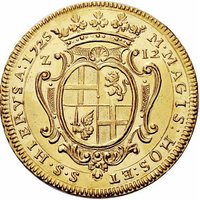
Reverse
Description:
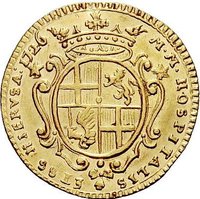
Crowned arms of the master and Order quartered, a star flanking each side.
Inscription:
M · M · HOSPITALIS ET S S HIERVSA : 1726
Script: Latin
Edge
Mintings
| Year | Mint Mark | Mintage | Quality | Collection |
|---|---|---|---|---|
| 1726 | — | — |
Historical background
In 1726, Malta’s currency situation was complex and challenging, reflecting its position as a bustling Mediterranean hub under the rule of the Knights of St. John. The islands were awash with a multitude of foreign coins, a common reality in major trading ports of the era. Spanish pieces of eight, Venetian sequins, French écus, and Turkish piastres all circulated alongside local issues, leading to constant difficulties in exchange rates, valuation, and commerce. This monetary chaos created fertile ground for fraud and clipped coinage, frustrating both merchants and the general populace.
The official currency system was theoretically based on the Maltese scudo, divided into 12 tari, each of 20 grani. However, the scarcity of small-denomination local coinage for everyday transactions was a persistent problem. To address this, the Order of St. John regularly issued copper grani and tari coins, but these were often insufficient and could be easily counterfeited. Consequently, people frequently resorted to cutting foreign silver coins into pieces to make change, a practice that further degraded the monetary environment.
Recognizing the detrimental impact on the economy and public order, the Order’s treasury actively sought solutions. The year 1726 fell within a period of ongoing monetary reforms initiated by Grand Master Antonio Manoel de Vilhena. His administration worked to stabilize the system by standardizing the value of foreign coins in circulation and increasing the minting of reliable local currency. These efforts aimed to reduce reliance on chaotic foreign specie and assert greater sovereign control over Malta’s financial life, a crucial step for the island’s economic stability.
The official currency system was theoretically based on the Maltese scudo, divided into 12 tari, each of 20 grani. However, the scarcity of small-denomination local coinage for everyday transactions was a persistent problem. To address this, the Order of St. John regularly issued copper grani and tari coins, but these were often insufficient and could be easily counterfeited. Consequently, people frequently resorted to cutting foreign silver coins into pieces to make change, a practice that further degraded the monetary environment.
Recognizing the detrimental impact on the economy and public order, the Order’s treasury actively sought solutions. The year 1726 fell within a period of ongoing monetary reforms initiated by Grand Master Antonio Manoel de Vilhena. His administration worked to stabilize the system by standardizing the value of foreign coins in circulation and increasing the minting of reliable local currency. These efforts aimed to reduce reliance on chaotic foreign specie and assert greater sovereign control over Malta’s financial life, a crucial step for the island’s economic stability.
✨ Legendary